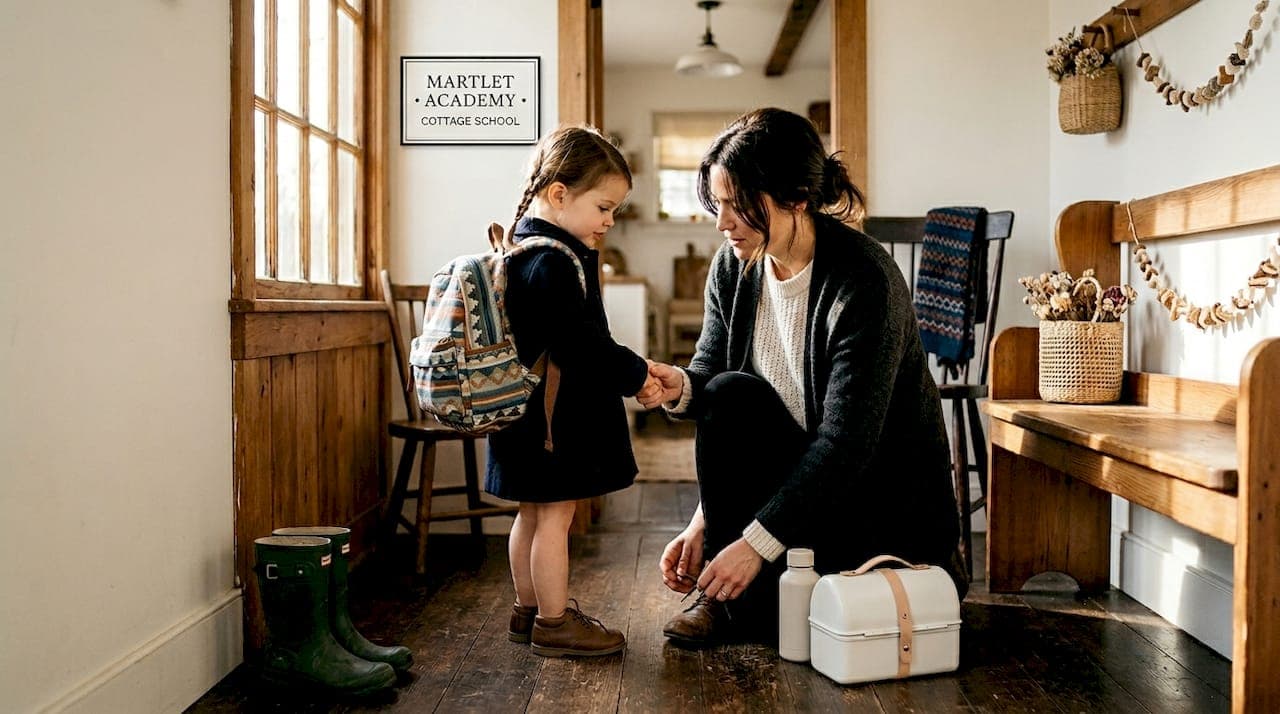
Deciding whether your child is ready for preschool is one of those parenting moments that feels bigger than it probably should, but also completely reasonable to stress over. You watch your three-year-old negotiate a crayon trade at the park and think, "Maybe they're ready." Then you watch them melt down because their sandwich was cut in triangles instead of squares, and suddenly you're not so sure. The truth is, school readiness isn't a single switch that flips on. It's a layered picture of skills that develop gradually, unevenly, and differently in every child. This guide will help you see that picture clearly.
Table of Contents
- How preschool readiness is defined: Key domains and why they matter
- Preschool readiness checklist: Milestones by age (2-5 years))
- Top predictors of preschool and kindergarten success
- What to do if your child isn't meeting milestones (and common worries))
- Practical strategies to nurture preschool readiness every day
- Our perspective: The readiness conversation nobody is having
- Supporting your child's journey with Martlet Academy
- Frequently asked questions
Key Takeaways
| Point | Details |
|---|---|
| Readiness is holistic | Preschool readiness includes social, emotional, language, cognitive, and physical growth, not just academic skills. |
| Checklists are guides | Milestone lists show what most children do at each age, but variations and individual pacing are normal. |
| Social-emotional skills matter most | Self-regulation and peer interaction predict school success more strongly than early academics. |
| Everyday activities nurture readiness | Simple routines and play experiences at home support developmental progress. |
| Seek early screening if unsure | If your child misses several milestones or regresses, consult your pediatrician for guidance. |
How preschool readiness is defined: Key domains and why they matter
Most parents assume preschool readiness is about knowing colors, reciting the alphabet, or counting to ten. Those things are charming. But they're not what educators and pediatricians actually look for when they talk about readiness.
True readiness spans four main areas:
- Social and emotional development: Can your child manage basic feelings, separate from you without extreme distress, and show interest in other children?
- Language and communication: Can they express needs, follow simple directions, and be understood by people outside the family?
- Cognitive development: Can they engage with simple problems, pretend play, and remember short sequences?
- Physical development: Can they handle basic tasks like holding a crayon, climbing, and using the bathroom?
The CDC's developmental milestones organize readiness exactly this way, with checklists covering what about 75% of children can do by each age. That 75% figure matters. It means these benchmarks aren't a perfect score everyone should hit. They're signals. They help you see whether your child is developing in the broad range typical for their age, not whether they're "passing" some hidden entrance exam.
The American Academy of Pediatrics is equally clear that school readiness spans multiple domains, including social, emotional, behavioral, sensory, and early language development, shaped by experiences starting at birth. Screenings exist to guide support, not to gatekeep who gets to walk through the door.
"Readiness is not a fixed destination. It is a continuum of growth that educators and families can actively support together."
Here's the insight that changes how most parents think about this: social-emotional skills in preschool are a stronger predictor of long-term outcomes than early academic knowledge. A child who can regulate emotions, recover from disappointment, and connect with peers will outperform the child who can write their name but falls apart when asked to share. This is why focusing solely on ABCs and 123s misses the point of what preschool actually builds.
With the importance of knowing the big-picture areas of readiness in mind, let's break down what parents can look for at specific ages.
Preschool readiness checklist: Milestones by age (2-5 years)
Developmental milestones don't arrive on a perfect schedule, but research gives us a reliable roadmap. Here's what to watch for from ages two through five.
Ages 2-3 years
Zero to Three highlights several significant markers between 24 and 36 months. Socially, children this age begin showing empathy, engage in pretend play, and make early attempts at conflict resolution. Language-wise, they use two to three word phrases, can follow two-step directions, and their vocabulary grows rapidly. Fine motor skills like gripping a crayon with thumb and fingers also appear around this time.
Ages 3-4 years (typical preschool entry)
By age three, the CDC milestones include several concrete benchmarks you can observe at home:
- Social/emotional: Calms down within 10 minutes after a parent leaves; notices other children and moves toward them
- Language: Says their first name when asked; speaks clearly enough for strangers to understand most of what they say
- Cognitive: Completes puzzles with three to four pieces; engages in simple pretend play
- Physical: Climbs stairs using alternating feet; holds a crayon or pencil with fingers rather than a fist
Ages 4-5 years (pre-kindergarten readiness)
By age five, the CDC's 5-year milestones describe a child who wants to be like their friends, agrees with rules, keeps a conversation going for more than three back-and-forth exchanges, and tells simple stories with a beginning and end. Cognitively, they count to ten, write some letters from their name, and sustain attention for five to ten minutes. Physically, they stand on one foot for up to ten seconds and use a fork and knife.
Here's a summary table to make comparisons easier:
| Age | Social/Emotional | Language | Cognitive | Physical |
|---|---|---|---|---|
| 2-3 years | Empathy, pretend play | 2-3 word phrases, follows 2-step directions | Simple problem solving | Crayon grip with thumb and fingers |
| 3-4 years | Separates within 10 min, joins peers | Name, understood by strangers | 3-4 piece puzzles | Alternating feet on stairs |
| 4-5 years | Follows rules, wants peer connection | Sustained conversation, tells stories | Counts to 10, writes letters | Stands on one foot, uses utensils |
You can also track more specific benchmarks through the early literacy milestones guide, which pairs nicely with what you see in this table.
Pro Tip: You'll get the most accurate read on your child's skills by watching them in relaxed, natural settings like mealtimes, bath time, or free play, not when you're formally "testing" them. Stress suppresses performance, and children show their true capabilities when they feel safe and comfortable.
For parents who want a fuller guide to the preschool milestones across all domains, age-specific resources can be especially reassuring when you're comparing what you see at home.
Top predictors of preschool and kindergarten success
Now that we've covered age-specific milestones, let's explore what research highlights as the true drivers of preschool and academic success.
It turns out the strongest predictors aren't flashcards or workbooks. They're behavioral and relational skills.
According to HighScope research benchmarks, self-regulation and attention are the most predictive factors for kindergarten success. Children who can focus for 10 to 15 minutes, follow two to three step instructions, and manage impulses are dramatically better prepared than children who simply know academic content. Vocabulary also plays a large role, with entering kindergartners ideally drawing from a working vocabulary of roughly 2,000 to 5,000 words built through conversation and story time.
Here's a side-by-side look at what actually predicts outcomes versus what parents often focus on:
| Social-emotional predictors | Academic-only focus |
|---|---|
| Self-regulation and impulse control | Letter recognition |
| Attention span (10-15 min) | Counting ability |
| Following multi-step directions | Writing name |
| Peer engagement and cooperation | Worksheet completion |
| Emotional recovery after upsets | Early reading drills |
The research supports prioritizing the left column. The AAP's guidance is consistent on this: social-emotional readiness predicts outcomes more strongly than academic preparation, and these skills are built through everyday experiences starting at birth.
Key skills to nurture before preschool:
- Attention and focus: Can they stick with a simple activity for several minutes without constant redirection?
- Vocabulary: Are they hearing and using a wide variety of words in daily conversation?
- Instruction-following: Can they complete a two or three step request without needing it repeated?
- Peer interaction: Do they show interest in other children, even if they're not fully cooperative yet?
- Emotional recovery: Do they bounce back from small disappointments within a reasonable timeframe?
Understanding these kindergarten readiness foundations gives you a clearer framework for what to work toward. For a step-by-step breakdown of building these skills, the kindergarten prep steps outline exactly how families can approach this at home.
What to do if your child isn't meeting milestones (and common worries)
Even so, parents may worry if their child isn't "on track." Here's how to navigate that uncertainty.
First, a grounding reality check: missing one milestone at any given checkpoint is rarely cause for alarm. These checklists, as the CDC emphasizes, reflect what 75% of children can do at a given age. That means 25% of perfectly healthy, typically developing children are not yet doing that thing. One gap isn't a pattern.
What warrants closer attention:
- Missing multiple milestones across more than one domain
- Regression, meaning losing skills they clearly had before
- Complete absence of interest in other children by age three
- Significant difficulty being understood by people outside the family by age three or four
- Loss of language skills at any age
The AAP clarifies that toilet training is not always a strict preschool requirement, as many programs provide support for children still developing this skill. Peer engagement also develops at highly varied paces. Shy or cautious children often blossom once they feel safe and settled. However, a complete absence of social interest, or a loss of previously demonstrated social skills, does warrant a conversation with your pediatrician.
"Early support is not a label. It is a bridge. The sooner a concern is addressed, the less it shapes what a child can do."
Pro Tip: If you're unsure whether what you're seeing is a true developmental concern or a temporary phase, write down what you observe and bring it to your child's well-child visit. Your pediatrician can screen quickly and refer you to the right specialist if needed. You do not need to diagnose anything yourself.
The concept of emotional safety in preschool is also deeply relevant here. Children who feel emotionally supported often display readiness that wasn't visible at home because anxiety was masking it.
Practical strategies to nurture preschool readiness every day
For parents ready to take action, here are simple ways to nurture readiness every day.
The most effective readiness-building happens in the spaces you're already occupying: breakfast, getting dressed, the drive to the grocery store. The CDC's holistic approach to development reinforces this. Readiness is built through play, routine, and relationship, not through structured drills or academic prep. Pressure to perform actually inhibits the very skills you're trying to grow.
Here's a practical daily routine framework:
- Morning routine: Let your child choose between two breakfast options. This builds decision-making and language while reducing power struggles.
- Getting dressed: Have them manage simple clothing themselves, like pulling on socks. This develops fine motor skills and independence.
- Mealtimes: Use the table for back-and-forth conversation. Ask open questions, wait for their answer, and respond meaningfully. This is vocabulary and conversational fluency in action.
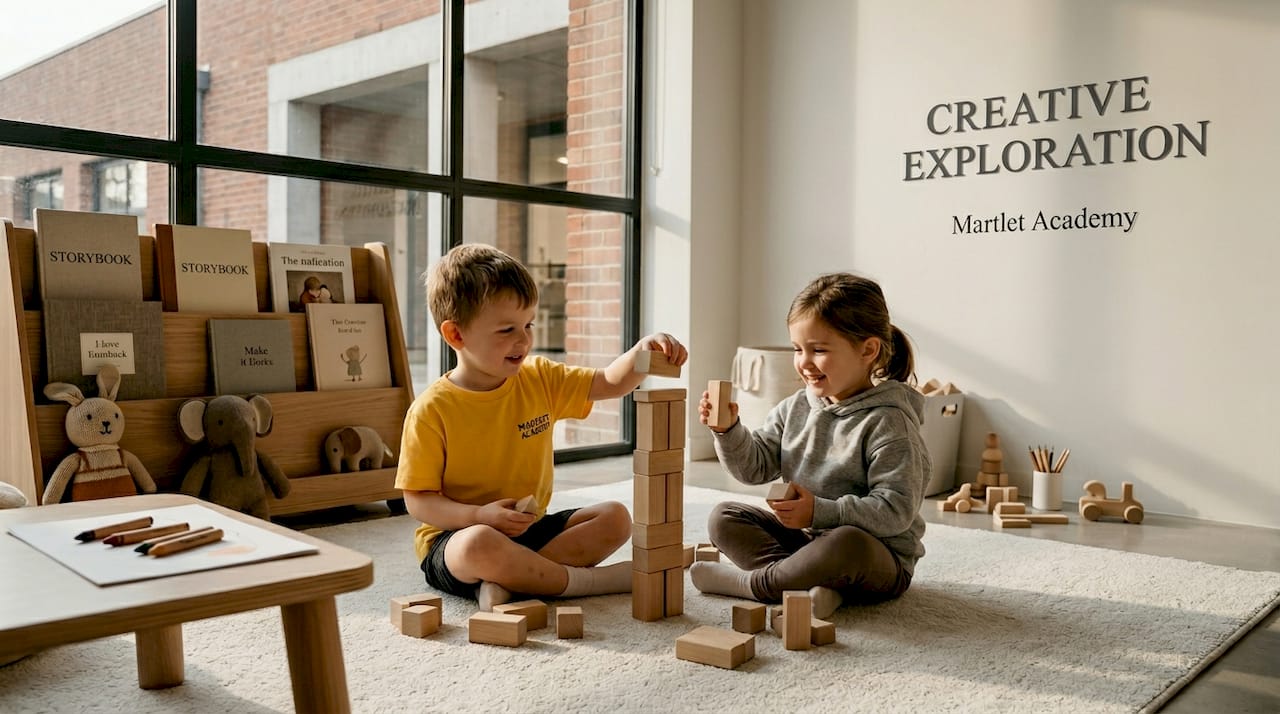
- Playtime: Prioritize unstructured, imaginative play. Playing house, building blocks, and pretending to run a store all build cognitive flexibility, language, and emotional regulation.
- Story time: Read together every day. Pause to ask "what do you think happens next?" This builds narrative thinking and comprehension.
- Transition moments: Warn your child before switching activities. "Five more minutes, then we clean up." This directly supports self-regulation and reduces meltdowns.
Pro Tip: Resist the urge to buy expensive workbooks or flashcard sets. Research consistently shows that rich play experiences, responsive conversations, and stable daily routines do far more for readiness than any worksheet. If you want structured activity, try building a block tower together and talking through what you're doing.
The helping your child thrive resource provides more detailed play-based activity ideas that align directly with what preschool teachers are looking for.
Our perspective: The readiness conversation nobody is having
Here's something that gets overlooked almost universally in conversations about preschool readiness: the question should also be "is this program ready for my child?" not only "is my child ready for preschool?"
Readiness is a two-way street. A child who struggles to separate, who needs extra time to transition, or who communicates in shorter phrases than expected is not broken. They are exactly where many children their age are. What matters enormously is whether the program they enter is designed to meet children where they are, rather than demanding that children arrive pre-shaped to fit the program.
We've seen families hold their child back a year because they panicked over a single milestone, only to watch that same child thrive in a responsive, emotionally attuned classroom where the educator built trust slowly. We've also seen children who "checked every box" struggle in settings that were too rigid or too loud for their nervous system. The social-emotional examples on this topic reinforce that readiness is not fixed. Context shapes it.
So when you use this checklist, use it as a conversation starter, not a verdict. Ask yourself not only what your child can do, but what kind of environment will help them do more. A calm, play-based setting with consistent caregivers and a genuine family partnership approach is often the variable that turns "not quite ready" into "thriving."
Supporting your child's journey with Martlet Academy
At Martlet Academy, we designed every one of our programs around exactly the kind of readiness picture this article describes, prioritizing emotional safety, responsive relationships, and play-based learning over academic performance.
Whether your child is two and just beginning to reach key milestones, or four and getting ready for kindergarten, our age-specific programs in toddler care, preschool, and kindergarten prep are built to meet them where they are. Our educators understand that readiness is not a gate. It is a garden. We also believe families are partners in that growth, not just observers. If you're curious about what the right fit might look like for your child, explore our choosing a preschool program guide or reach out to connect with our admissions team directly.
Frequently asked questions
Do children need to be fully toilet trained to start preschool?
Not always. Many programs provide support if a child is still learning, though policies on toilet training vary, so checking with your specific school is a smart first step.
Is it a problem if my child is shy or doesn't play with others yet?
Some children take more time to warm up to peers, and that's normal. However, if you notice a loss of previously shown social skills or a complete disinterest in other children by age three, talking to your pediatrician is worth doing.
What should I do if my child isn't speaking as much as other kids their age?
If your child is missing several communication milestones, bring your observations to their next well-child visit. Early screening can open the door to helpful support before school even begins.
Are academic skills like counting or letter recognition necessary for preschool entry?
These skills are not typically required. Social-emotional readiness predicts preschool and kindergarten outcomes more strongly than early academic knowledge, so that's where your energy is better spent.
How can I keep track of my child's progress toward preschool readiness?
Use trusted milestone checklists and observe your child in relaxed, everyday settings. Remember that these benchmarks reflect ranges, not requirements, and every child follows their own pace.