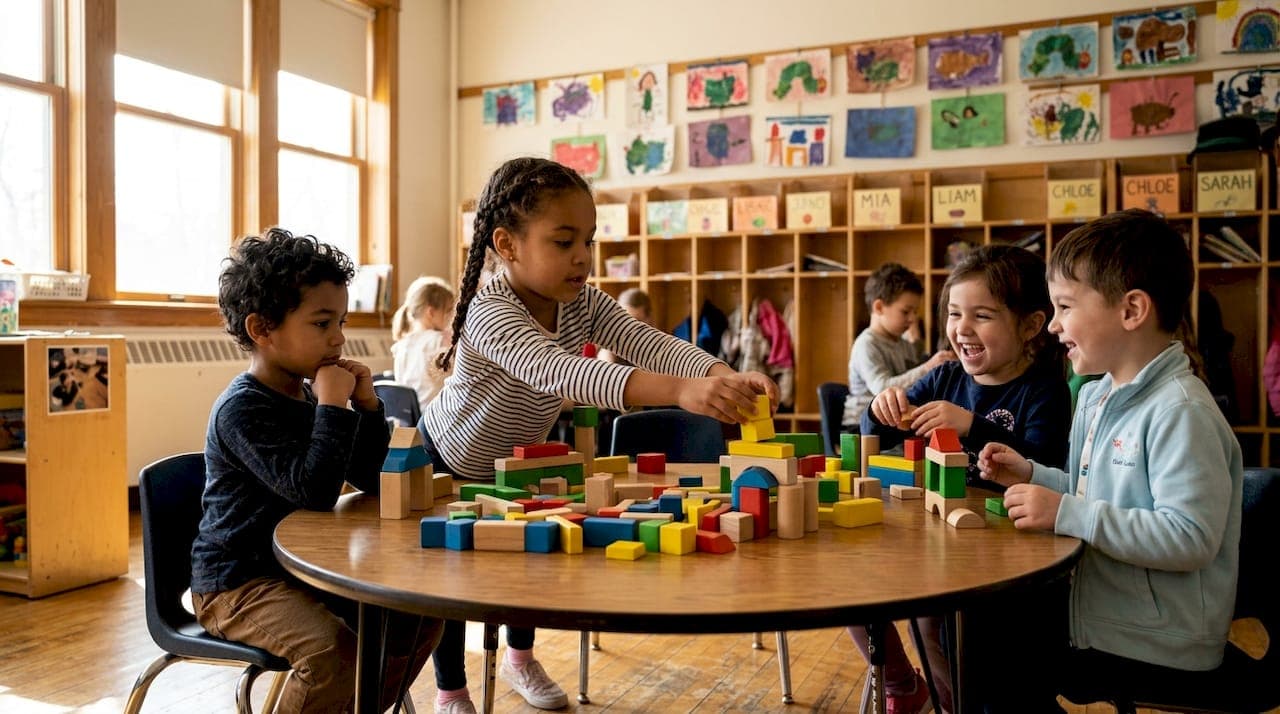
Kindergarten prep is one of those phrases that gets tossed around a lot, but it's often misunderstood. Many parents assume it means drilling letters, numbers, and sight words before the first day of school. In reality, the most effective programs focus on something far more meaningful: helping children feel confident, curious, and emotionally ready to learn. This guide breaks down what quality kindergarten prep actually looks like, what to prioritize when choosing a program, and how you can actively support your child's growth every single day.
Table of Contents
- Understanding kindergarten prep: Not just academics
- Core components of quality kindergarten prep programs
- How kindergarten prep supports emotional and social development
- Practical ways parents can support kindergarten readiness at home
- Beyond checklists: What most parents miss about kindergarten prep
- Start your child's journey with a trusted kindergarten prep program
- Frequently asked questions
Key Takeaways
| Point | Details |
|---|---|
| Not just academics | True kindergarten prep nurtures emotional, social, and practical school readiness. |
| Quality program features | Look for small class sizes, caring teachers, and a child-centered curriculum. |
| Home involvement matters | Parents can reinforce learning with daily routines, reading, and encouraging independence. |
| Emotional development is key | Fostering confidence and regulation prepares children to thrive in kindergarten and beyond. |
Understanding kindergarten prep: Not just academics
When most people picture kindergarten prep, they imagine flashcards and worksheets. But that picture is incomplete. True kindergarten readiness is about far more than recognizing letters or counting to twenty. It's about helping your child develop the inner tools they need to navigate a classroom, build friendships, and face challenges without falling apart.
At its core, kindergarten prep helps children build confidence and the ability to function more independently. That means learning how to take turns, manage frustration, follow multi-step directions, and ask for help when they need it. These are not small things. They are the skills that determine whether a child walks into kindergarten feeling ready or overwhelmed.
Kindergarten readiness is a broad concept that includes emotional, social, and academic growth all working together. Programs that focus only on academics miss the bigger picture. A child who knows their ABCs but struggles to sit through a group activity or regulate their emotions will face real challenges in a kindergarten classroom.
Quality programs also prioritize a love of learning over rote memorization. When children are curious and engaged, they absorb information naturally. That curiosity is a skill worth developing. So is the ability to tolerate not knowing something yet, which is actually a form of resilience.
Here is what a well-rounded kindergarten prep program actively builds:
- Self-regulation: The ability to manage emotions and impulses in group settings
- Social awareness: Understanding how to interact kindly and cooperatively with peers
- Early literacy foundations: Phonemic awareness, storytelling, and a love of books
- Basic numeracy: Counting, sorting, and recognizing patterns through hands-on play
- Independence: Handling personal tasks like putting on shoes, opening a lunch box, or asking to use the restroom
- Curiosity and problem-solving: Approaching new challenges with interest rather than anxiety
"Quality kindergarten prep programs foster emotional, social, and academic skills" in ways that prepare children for the full experience of school life, not just the academic parts.
Building routine and structure in preschool is one of the most underrated tools in kindergarten prep. Predictable daily patterns help children feel safe, which frees up mental energy for learning and exploring.
With a clear idea of what kindergarten prep isn't, let's look at what it actively does for children.
Core components of quality kindergarten prep programs
Once you know why kindergarten prep matters, it's important to recognize what actually makes a program effective. Not all programs are created equal, and knowing what to look for gives you the confidence to make the right choice for your child.
Here is a quick comparison of what a strong program offers versus a weaker one:
| Program feature | Strong program | Weak program |
|---|---|---|
| Curriculum approach | Play-based with structured skill-building | Primarily worksheet-driven |
| Class size | Small, allowing individual attention | Large, with limited one-on-one time |
| Educator qualifications | Trained in early childhood development | General teaching background only |
| Emotional support | Embedded in daily routines | Reactive, not proactive |
| Family communication | Regular, partnership-driven | Infrequent or one-way |
Small class sizes in early childhood education lead to more individualized support, which matters enormously at this age. When a teacher knows each child's learning style, emotional triggers, and strengths, they can tailor their approach in ways that simply aren't possible in a crowded room.
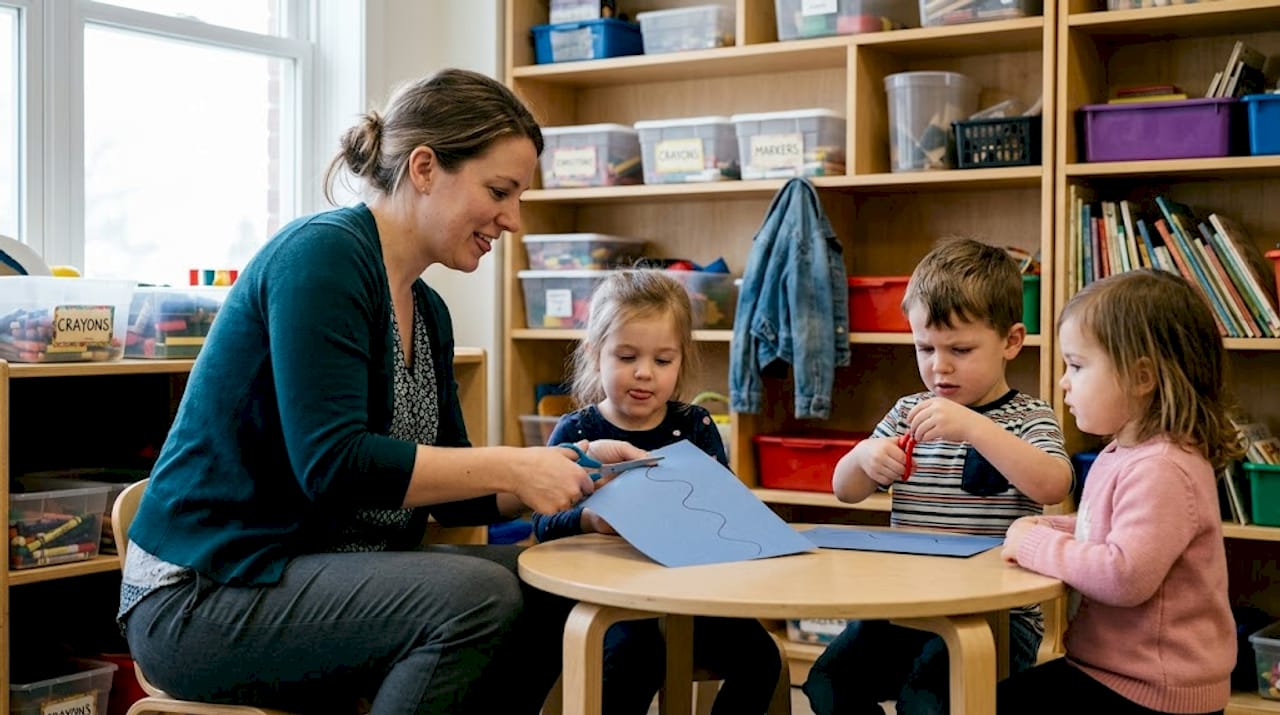
Experienced educators are another non-negotiable. Teachers trained specifically in early childhood development understand how young minds work. They know how to guide without pushing, support without hovering, and challenge without overwhelming.
Age-appropriate routines are also essential. Children this age thrive when they know what comes next. A predictable schedule builds independence because children learn to anticipate transitions and prepare themselves mentally. That skill transfers directly to the kindergarten classroom.
Pro Tip: When touring a kindergarten prep program, watch how teachers respond when a child is upset. A calm, empathetic response is a strong sign that emotional development is genuinely prioritized, not just listed on a brochure.
The Martlet Academy Kinder Prep program is built around exactly these principles, combining structured learning with play-based exploration in a nurturing environment. If you want a detailed framework for evaluating options, a quality preschool checklist can help you ask the right questions during your search.
How kindergarten prep supports emotional and social development
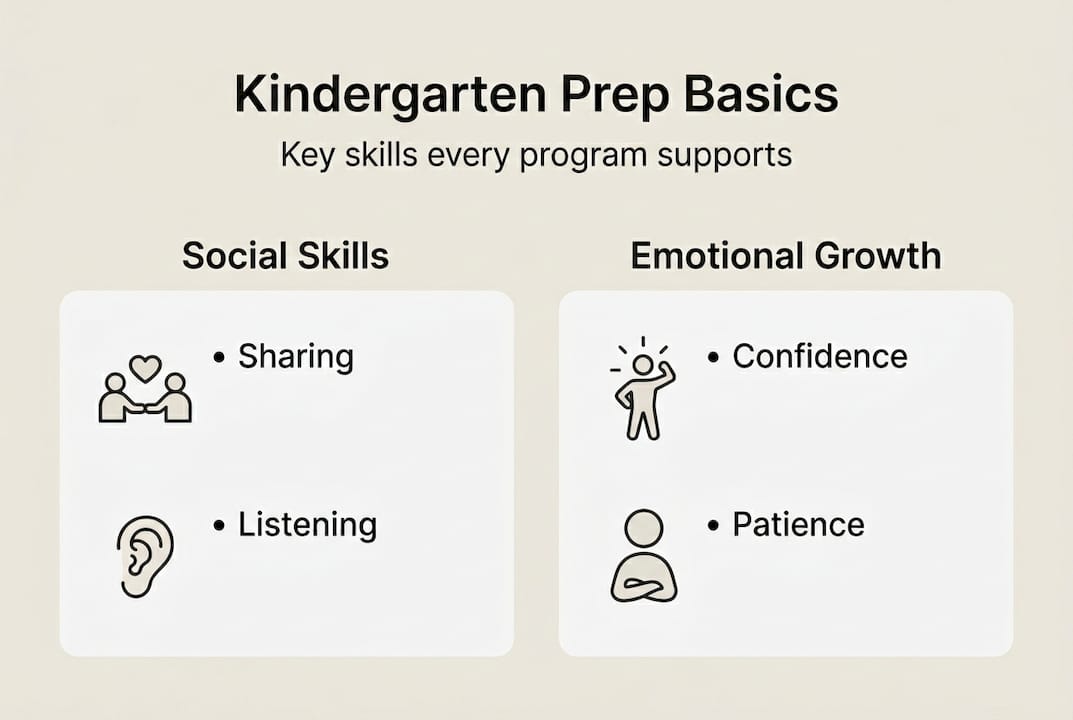
Beyond academics and class structure, emotional and social growth is a cornerstone of effective kindergarten prep. In fact, many child development experts consider emotional readiness the single most important factor in a smooth kindergarten transition.
Here is how strong programs build these skills intentionally:
- Teaching conflict resolution: Children practice using words to express feelings and work through disagreements with guidance from educators.
- Building empathy: Group activities and storytelling help children understand perspectives different from their own.
- Cooperative play: Working together on projects teaches children how to share, negotiate, and celebrate each other's contributions.
- Daily self-regulation practice: Transitions between activities, waiting turns, and managing excitement or disappointment all build emotional muscle over time.
- Classroom community rituals: Morning circles, group songs, and shared responsibilities give children a sense of belonging and accountability.
A nurturing learning environment is not just a nice-to-have. Safe and nurturing early environments contribute to children's emotional resilience, which is the foundation for everything else. A child who feels secure is a child who is free to take risks, try new things, and recover from setbacks.
Strong parent-teacher communication also plays a significant role in supporting emotional development. When families and educators share observations and strategies, children receive consistent support across both environments. That consistency is incredibly powerful.
Pro Tip: Ask your child's teacher what specific strategies they use to help children calm down when they're overwhelmed. The answer will tell you a lot about how seriously the program takes emotional development.
Social skills built during kindergarten prep do not disappear when children enter formal schooling. They compound. Children who learn to navigate friendships and group dynamics early tend to be more adaptable, more confident, and more engaged learners throughout their school years.
Practical ways parents can support kindergarten readiness at home
While programs lay a foundation, your role at home can be just as powerful in preparing your child for kindergarten success. The good news is that supporting readiness does not require structured lessons or expensive materials. It requires intentional habits and a supportive environment.
Here are some of the most effective things you can do:
- Read together every day: Even 15 minutes of shared reading builds vocabulary, listening skills, and a love of stories that no flashcard can replicate.
- Ask open-ended questions: Instead of "Did you have fun today?" try "What was the hardest part of your day?" This builds language skills and emotional reflection.
- Practice independence: Let your child dress themselves, pour their own water, and tidy up their belongings. These small acts build enormous confidence.
- Establish consistent routines: Regular wake times, mealtimes, and bedtimes help children feel grounded and ready to engage.
- Encourage unstructured play: Free play is where children practice creativity, problem-solving, and social negotiation on their own terms.
Here is a simple weekly home readiness plan:
| Day | Activity focus | Example |
|---|---|---|
| Monday | Language and literacy | Read a picture book together and retell the story |
| Tuesday | Independence skills | Let your child pack their own bag or choose their outfit |
| Wednesday | Social skills | Arrange a playdate or cooperative game with a sibling |
| Thursday | Curiosity and exploration | Visit a library, park, or museum and ask questions together |
| Friday | Emotional check-in | Talk about feelings from the week using simple words |
Parental involvement strengthens children's confidence and enthusiasm for learning in ways that extend far beyond any single program. Understanding how communication and development intersect can also help you tune into your child's cues and respond in ways that build trust and language skills simultaneously.
Exploring the preschool program benefits available to your child can also help you identify how formal and home-based learning can work together seamlessly.
Beyond checklists: What most parents miss about kindergarten prep
Here is something we see often: parents arrive with a list of skills they want their child to master before kindergarten starts. Can they write their name? Do they know their colors? Can they count to 100? These are not bad questions, but they are incomplete ones.
The children who transition most smoothly into kindergarten are not always the ones who can recite the most facts. They are the ones who feel emotionally safe enough to try something new, resilient enough to recover when something goes wrong, and curious enough to stay engaged even when a task is hard.
Checklist thinking treats kindergarten prep as a destination. But it is really a process. A child who has developed a genuine love of learning and a sense of their own capability will outperform a child who has memorized foundational skills without the emotional scaffolding to use them confidently.
We believe the most important thing you can do is help your child feel good about who they are as a learner. Everything else follows from that.
Start your child's journey with a trusted kindergarten prep program
Choosing the right program is one of the most meaningful decisions you will make for your child's early education. At Martlet Academy, we designed our Kinder Prep Program to support the whole child, not just their academic skills. Every child deserves a space where they feel seen, supported, and genuinely excited to learn.
Our programs, including our Preschool Program and Toddler Program, are built around play-based learning, small class sizes, and educators who truly understand early childhood development. If you are ready to give your child a strong, joyful start, we would love to connect with your family and find the right fit.
Frequently asked questions
What age should a child start kindergarten prep?
Most children begin kindergarten prep between ages 3 and 5, depending on their developmental readiness and program offerings. Preschool and pre-kindergarten programs typically accept children in this age range.
What skills are taught in kindergarten prep?
Kindergarten prep teaches early math and literacy, social skills, emotional regulation, independence, and classroom routines. Quality kindergarten prep builds all of these areas together rather than in isolation.
Is kindergarten prep the same as preschool?
While both focus on early childhood development, kindergarten prep specifically prepares children for the transition to a kindergarten classroom. Preschool and kindergarten prep share similarities but serve slightly different developmental purposes.
How can I support my child's readiness at home?
Create consistent routines, read together daily, encourage independence, and help your child practice social skills through play. Parental involvement boosts learning confidence in meaningful and lasting ways.
What should I look for in a kindergarten prep program?
Look for small class sizes, qualified teachers, a play-based curriculum, and a nurturing environment. Small class sizes and experienced teachers are hallmarks of programs that truly deliver on their promises.
Recommended
- How Preschool Prepares Children for Kindergarten Success — Martlet Academy
- Kinder Prep Program | Build Skills & Confidence — Enroll Now — Martlet Academy
- Blog — Martlet Academy
- The Importance of Routine and Structure in Preschool — Martlet Academy
- First day at nursery tips: ease your child's transition