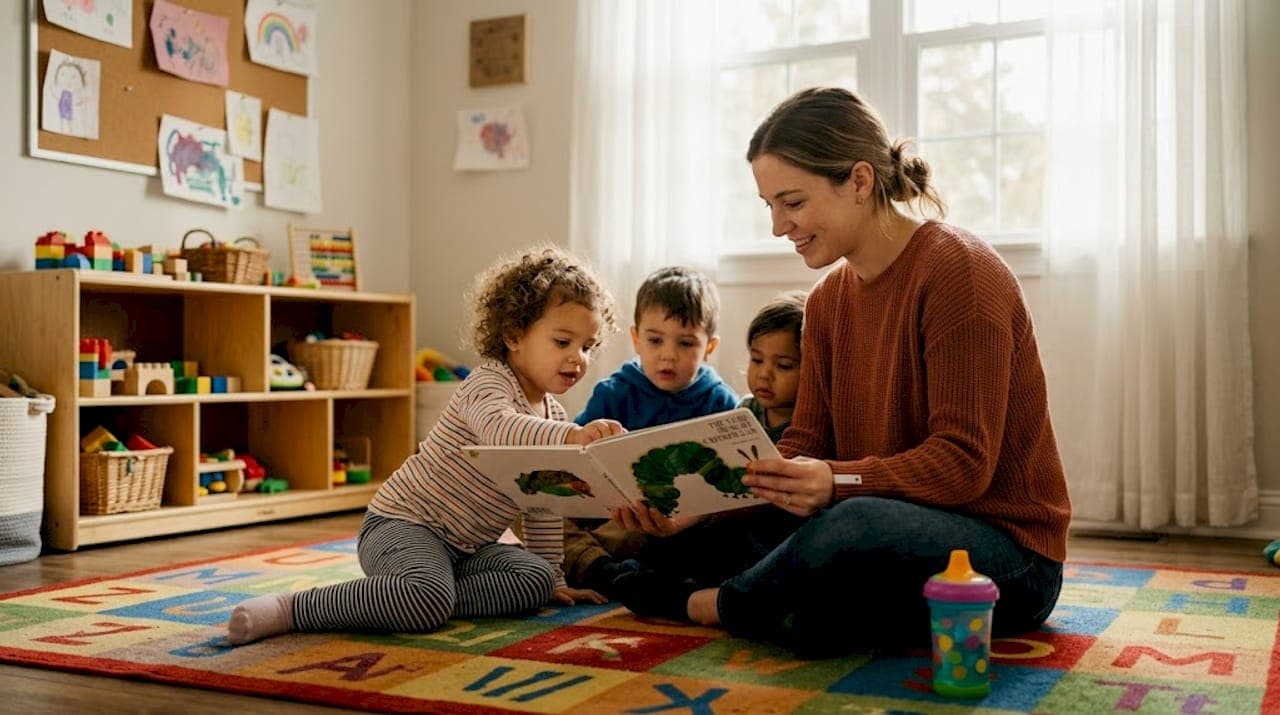
Most parents can describe what their infant looks like during a happy moment, but translating that into developmental language is a completely different challenge. Social-emotional skills are the foundation of how your child connects with others, manages feelings, and eventually thrives in preschool and beyond. Yet the gap between knowing this and actually seeing these skills in everyday life often leaves families uncertain about where their child stands. This article breaks down exactly what these skills look like in practice, by age, so you can spot them, celebrate them, and gently support more of them at home and at school.
Table of Contents
- What are social-emotional skills in early childhood?
- Social-emotional skills examples by age group
- Activities and strategies for building social-emotional skills
- Comparing approaches: What works best for early skill development?
- Why real-world examples matter more than generic milestones
- Support your child's social-emotional development with Martlet Academy
- Frequently asked questions
Key Takeaways
| Point | Details |
|---|---|
| Milestones are benchmarks | Most children reach key social-emotional milestones at specific ages, helping identify healthy development. |
| Daily behaviors are signs | Watching how infants smile, calm themselves, or interact gives real insight into their progress. |
| Consistent routines matter | Structured guidance and regular routines help children feel secure and build self-control. |
| Activities build skills | Reading, playing, and creative expression give kids ways to recognize and manage emotions. |
What are social-emotional skills in early childhood?
Social-emotional skills are the abilities that help young children understand and manage their own feelings, connect with caregivers and peers, and respond to the emotions of others. For infants and toddlers, this is not about being "well-behaved." It is about building the internal architecture for empathy, self-regulation (the ability to manage reactions and impulses), and healthy relationships. These skills are shaped by every interaction your baby has from the moment they are born.
Why do they matter so much in the early years? The brain is developing at an extraordinary rate between birth and age five. Positive emotional experiences during this window literally build neural pathways that support learning, resilience, and communication for a lifetime. Learning how preschool builds social-emotional skills that last into adulthood begins with these tiny, daily moments of connection.
Key social-emotional milestones in infancy include:
- Smiling at familiar people
- Calming when spoken to or picked up
- Making eye contact and looking at faces
- Showing visible happiness when seeing a familiar caregiver
- Beginning to imitate facial expressions
According to the CDC Milestone Checklists, social-emotional skills for infants include smiling at people, calming when spoken to or picked up, looking at faces, and showing happiness upon seeing familiar caregivers. These behaviors might seem small, but each one signals your child's growing capacity to connect and communicate before words exist.
Important stat: The CDC milestones are designed as benchmarks that 75% or more of children reach by a specific age, and pediatricians use them during well-child visits to screen for developmental differences early.
This matters because early identification of delays leads to earlier intervention, which dramatically improves outcomes. Knowing the benchmarks does not mean your child needs to hit every box on schedule. It means you and your child's pediatrician have a shared language for tracking progress.
For additional guidance tailored to your family, explore these emotional development tips for infants and toddlers.
Social-emotional skills examples by age group
Understanding broad definitions is helpful, but nothing clarifies things like seeing what these skills actually look like on a Tuesday morning. Here is how social-emotional development typically unfolds across the first two years of life.
Ages 0 to 6 months
In the earliest months, your baby is already a social being. They track your face with their eyes, return your smile, and stiffen or calm in response to your tone of voice. These behaviors are not accidental. They are purposeful, relationship-building acts. A baby who gazes at your face during feeding is practicing connection. A baby who stops crying when you speak in a soothing tone is learning that relationships bring relief.
Ages 6 to 12 months
By around four months, most infants smile spontaneously, chuckle, and engage to get a caregiver's attention. By six months, they recognize familiar people, laugh in response to interaction, and show delight when looking at their reflection in a mirror. This is the beginning of self-awareness and social responsiveness working together.
Ages 12 to 24 months
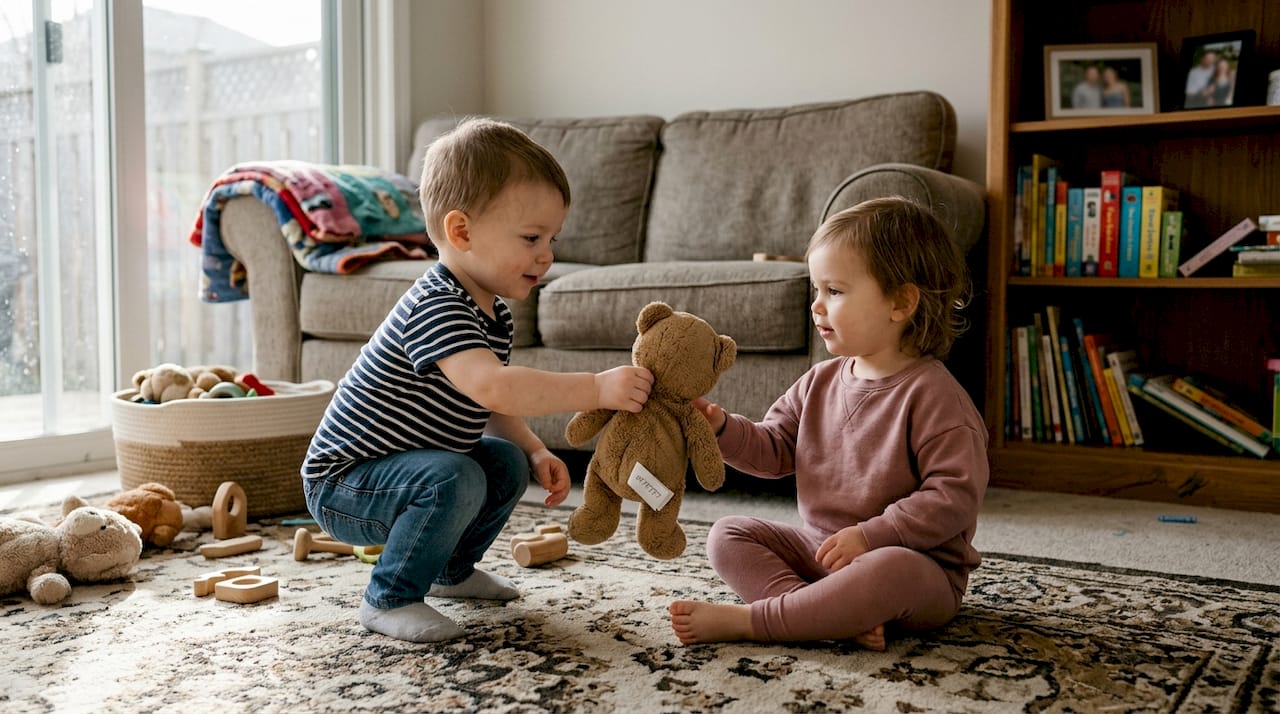
Toddlers in this range begin to show more complex emotional behaviors. They may show frustration when blocked from something they want, seek comfort from a specific person when upset, show affection with hugs and pats, and notice when other children are crying or distressed. They are also starting to test limits, which is itself a social-emotional skill in development.
| Age range | Key social-emotional behaviors |
|---|---|
| 0 to 6 months | Smiles at faces, calms when held, makes eye contact, tracks familiar voices |
| 6 to 12 months | Laughs, recognizes caregivers, enjoys mirrors, seeks attention from familiar adults |
| 12 to 24 months | Shows affection, expresses frustration, notices peers' emotions, tests limits |
Daily behavior highlights by age:
- 0 to 6 months: Watches your mouth move while you talk; cries differently for hunger vs. discomfort; settles when held
- 6 to 12 months: Reaches arms up to be picked up; plays peek-a-boo; shows stranger wariness
- 12 to 24 months: Brings you toys to share; pushes away unwanted items; waves goodbye with genuine awareness
To learn more about supporting these behaviors at home, the guide to social-emotional learning at home offers practical, family-friendly ideas.
Pro Tip: Observe how your child reacts to familiar people versus strangers. A toddler who clings to you when a new face appears is actually showing healthy social awareness, not shyness to be corrected. That stranger wariness is a sign their attachment system is working well.
Understanding these age-specific behaviors gives you a realistic picture to compare against, and helps you recognize the often-quiet milestones your child is reaching every single day. Play-based learning in preschool extends this natural progression into more structured group settings.
Activities and strategies for building social-emotional skills
Knowing what skills look like is one thing. Actively supporting their development is where your role as a caregiver becomes truly powerful. The good news is that the most effective strategies are also the most natural.
The PA Keys framework for social-emotional development identifies several practical activities that genuinely build these skills in young children: reading emotion books and discussing feelings, making faces and naming emotions together, using pretend play and puppets to explore social roles, drawing or painting as a form of emotional expression, and applying positive guidance such as staying calm, keeping rules consistent, and verbally acknowledging your child's feelings.
Top 5 activities for building social-emotional skills:
- Read emotion books together. Books like The Feelings Book give children language for what they feel inside. Pause and ask simple questions: "How does the rabbit look right now?" You are building emotional vocabulary one page at a time.
- Play the mirror game. Make a surprised face, then a happy one. Watch your toddler copy you. This simple game builds facial recognition, imitation, and emotional awareness simultaneously.
- Use puppets or dolls in pretend play. Set up a scenario where the puppet is scared of the dark or excited about a birthday. Ask your child what the puppet should do. This kind of expressive play gives children a safe distance to process real emotions.
- Draw or paint emotions. For toddlers who cannot yet verbalize big feelings, offering paper and crayons after a frustrating moment channels emotional energy into something tangible. You do not need an art degree. You need a patient, curious presence.
- Create consistent goodbye rituals. Separation anxiety is a social-emotional milestone, not a problem. A repeated, calm goodbye routine (same words, same hug, same wave) teaches your child that goodbyes are safe because hellos always follow.
"The most powerful social-emotional tool a parent has is not a specific activity. It is the consistency of how they respond when their child is upset, delighted, or confused. Predictable emotional responses from caregivers are the true curriculum in the first two years."
Pro Tip: Use puppets or role-play to help kids express feelings in a safe, imaginative way. Children who resist talking about difficult emotions will often speak freely through a puppet because the emotional distance makes it feel less vulnerable.
You can explore more ideas in the parent's guide to social-emotional learning to build on what you try at home.
Comparing approaches: What works best for early skill development?
Parents often wonder whether structured activities or simply being present and warm makes a bigger difference. The research is clear: both matter, and they work best together. But when time is short, prioritizing the relationship over the activity is always the right call.
The PA Keys guidelines recommend prioritizing responsive, nurturing relationships as the foundation, layering in play-based activities for skill-building, and using consistent routines and clear limits to support security and self-control. Think of it as a three-part recipe, where the relationship is the main ingredient and everything else adds flavor.
| Approach | Strengths | Best used when |
|---|---|---|
| Nurturing relationships | Builds core attachment and emotional security | Every moment, especially during distress |
| Play-based learning | Develops empathy, cooperation, and self-expression | Daily unstructured and guided play |
| Consistent routines | Reduces anxiety and supports self-regulation | Transitions, mealtimes, bedtime, drop-off |
Tips for choosing the right approach for your child:
- If your child is highly sensitive or slow to warm up, lean hard on nurturing relationships first. Activities come second.
- If your child is energetic and seeks stimulation, play-based learning will naturally draw them in to practice social skills.
- If your child struggles with transitions, routines with predictable steps are the highest-value investment you can make.
- All three approaches can and should coexist. On any given day, you may use all three without even realizing it.
A safe and nurturing preschool environment extends this same layered approach into the classroom, where trained educators build on the foundation you create at home.
Understanding why these early experiences shape everything later is worth exploring. Research on early childhood education's impact on lifelong learning confirms that what happens between ages zero and five lays the groundwork for academic success, emotional health, and social competence well into adulthood.
The key insight is that no single approach owns the outcome. Caring relationships, meaningful play, and predictable structure are not competing philosophies. They are three legs of the same stool.
Why real-world examples matter more than generic milestones
After years of working alongside families in early education settings, we have learned one thing that no checklist can fully capture: the most meaningful moments of social-emotional growth are almost never dramatic. They are the baby who reaches up for a hug after a frustrating toy, the toddler who offers a cracker to a crying classmate, the two-year-old who waves "bye-bye" and then goes back to playing without dissolving into tears.
Milestone checklists are genuinely useful tools. But they describe the floor, not the ceiling. They tell you the minimum expected behavior, not the full, beautiful complexity of what your child is learning every day through their relationships with you.
We have seen parents dismiss real growth because it did not match a checklist description, and we have seen parents panic over a missed box that the child achieved quietly and privately a week later. The truth is that practical tips for emotional development are only as powerful as the relationship in which they are practiced.
Celebrate the small stuff. The shared smile across a room. The toddler who says "sad" instead of screaming. The infant who calms when you walk in. These are not minor moments. They are the real curriculum of early childhood, and they happen in your arms before they ever happen in a classroom.
Support your child's social-emotional development with Martlet Academy
At Martlet Academy, every program is built around the understanding that social-emotional development is the core of early learning, not a side note.
Whether your child is just starting out in our infant program or growing their confidence in our preschool program, every interaction with our educators is designed to strengthen exactly the skills this article describes. For families approaching kindergarten readiness, our kinder prep program bridges play-based emotional learning with foundational academic skills. We would love to partner with your family to celebrate every milestone, big and small. Reach out to learn more about how we can support your child's growth.
Frequently asked questions
What are three practical social-emotional skills for infants?
Smiling at people, calming when spoken to or picked up, and showing happiness when seeing familiar caregivers are three of the earliest and most observable social-emotional skills in healthy infants.
When should parents be concerned about delays in social-emotional development?
If your child is not meeting most CDC milestone benchmarks by the listed age, bring it up at your next well-child visit, as early intervention can make a meaningful difference in long-term outcomes.
What activities help toddlers develop social-emotional skills?
Emotion books, pretend play, drawing, and consistent routines are all well-supported activities that help toddlers build emotional vocabulary, empathy, and self-regulation skills.
Why are nurturing relationships important for social-emotional skill building?
Responsive, nurturing relationships give children a secure base from which to explore, model healthy emotional expression, and teach children that their feelings are recognized and valid, which is the foundation of all future emotional growth.