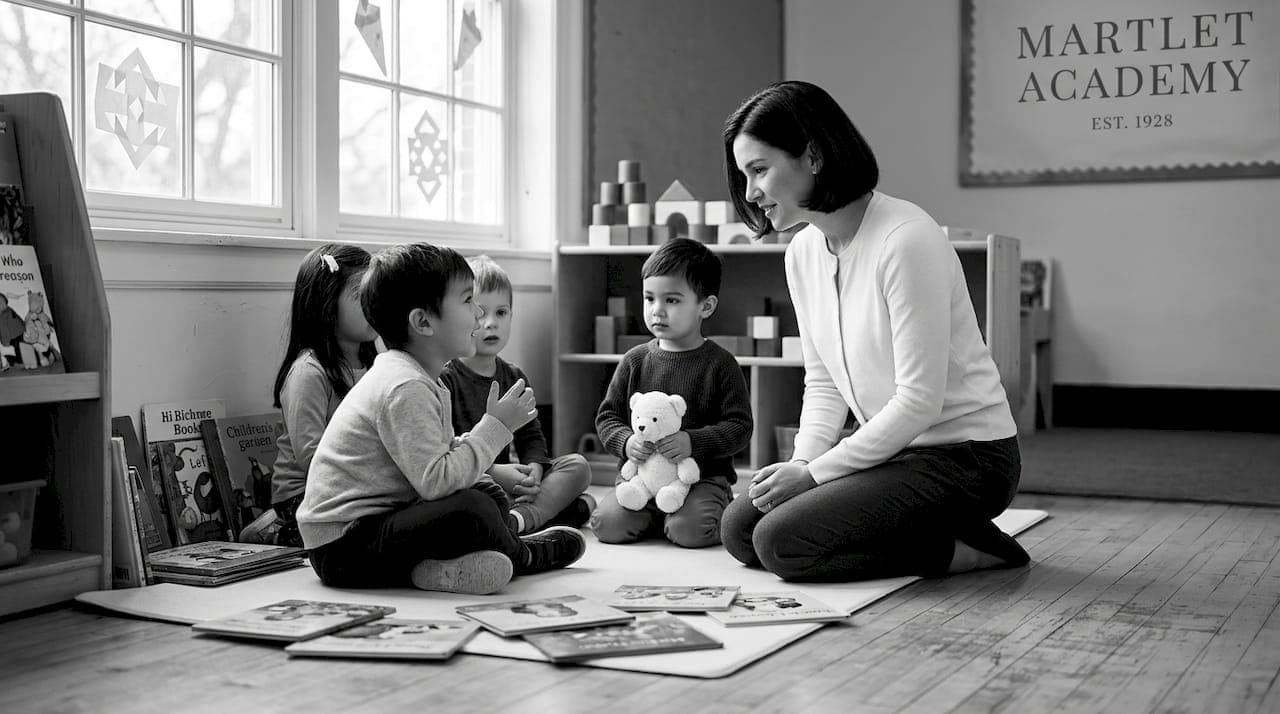
Emotional safety in preschool is not about keeping children comfortable or avoiding hard moments. It is the foundational condition that makes real learning, healthy relationships, and long-term success possible. When children feel genuinely secure to express their feelings without fear of shame or rejection, they build the internal scaffolding needed for everything from self-control to academic curiosity. This guide breaks down what emotional safety actually means, what the research shows about its impact, and what you can look for when evaluating or partnering with a preschool program.
Table of Contents
- What does emotional safety in preschool mean?
- How emotional safety fuels healthy development
- What emotionally safe preschool classrooms look like
- How emotional safety is implemented: Frameworks and real-world examples
- Supporting emotional safety for every child, including those at risk
- Why emotional safety is often misunderstood, and what actually works
- How Martlet Academy prioritizes emotional safety in early learning
- Frequently asked questions
Key Takeaways
| Point | Details |
|---|---|
| More than comfort | Emotional safety means children feel secure to express feelings and learn, far beyond simple comfort or discipline avoidance. |
| Drives development | Research shows emotional safety is essential for social skills, behavior, and school readiness in preschoolers. |
| Classroom features matter | Supportive adults, emotion validation, and clear routines are strong signals of emotionally safe preschool environments. |
| System vs. tools | Effective emotional safety is rooted in evidence-based, whole-classroom systems, not just individual interventions. |
| Parent partnerships help | Working with teachers and modeling emotional safety at home benefit all children, especially those with higher needs. |
What does emotional safety in preschool mean?
Emotional safety is not simply a warm tone or a friendly teacher. In the preschool context, it is a measurable climate where children feel secure enough to express a wide range of emotions, including frustration, sadness, and fear, without expecting punishment, shame, or exclusion in return.
Many parents assume that as long as their child seems happy at drop-off, the emotional environment is fine. But emotional safety runs much deeper than surface comfort. A child might comply quietly out of fear rather than genuine security. That compliance can mask stress, suppress emotional development, and create lasting anxiety about self-expression.
The key ingredient in a truly emotionally safe classroom is the quality of adult-child relationships. Emotional safety in preschool classrooms maps onto having supportive, responsive adult-child relationships and classrooms that are safe enough for children to express feelings and regulate. When these relationships are strong, children do not just feel better, they measurably improve in protective factors like initiative and self-regulation.
What does this actually look like inside a safe and nurturing classroom? Here are the practical features to watch for:
- Consistent, warm teacher presence that responds to emotional cues rather than ignoring or dismissing them
- A calm emotional climate where adults model regulation and avoid reactive responses to conflict or distress
- Predictable routines that help children feel that their world is understandable and manageable
- Language that names and validates feelings rather than rushing past them
- Space and time for children to regulate before re-engaging with activities
Research from a randomized controlled trial of an infant and early childhood mental health consultation model found measurable improvements in children's protective factors, including initiative and self-regulation, when emotional safety practices were embedded in the program. This is not a soft outcome. These gains predict school readiness, social competence, and reduced behavioral problems.
How emotional safety fuels healthy development
With a definition in hand, let's connect emotional safety to the specific gains your child can make in the right environment.
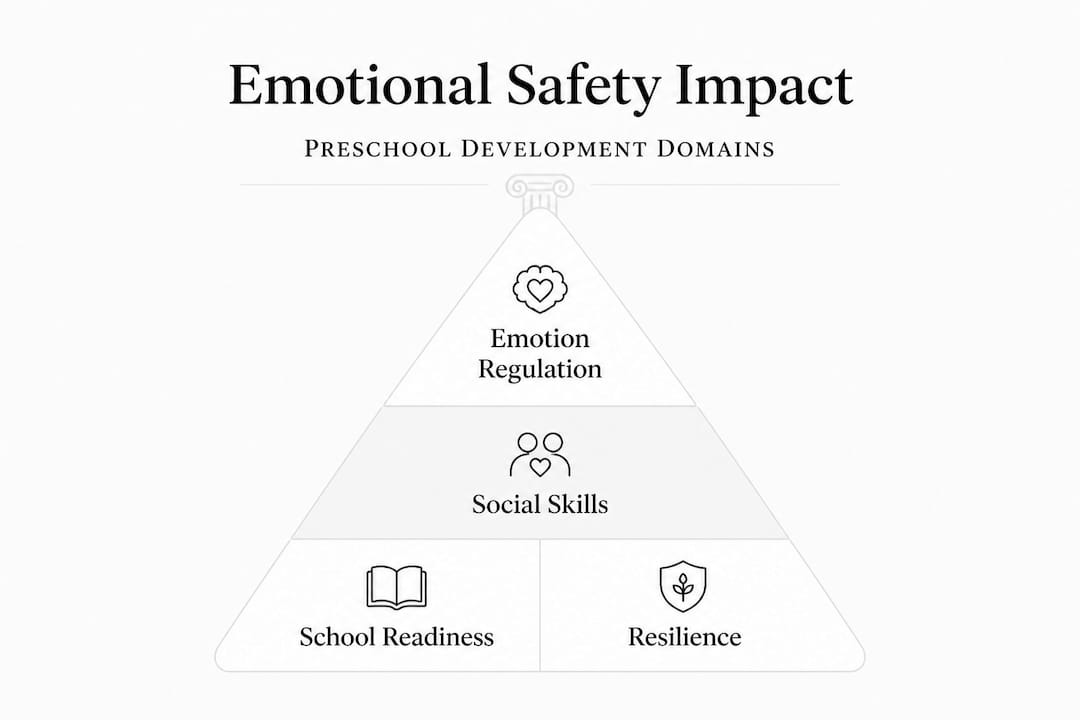
The impact of emotional safety touches virtually every developmental domain that matters for preschool-aged children. When children feel secure, they are not spending cognitive and emotional energy managing anxiety or bracing for unpredictable adult responses. That freed-up energy goes directly into learning, exploring relationships, and building self-awareness.
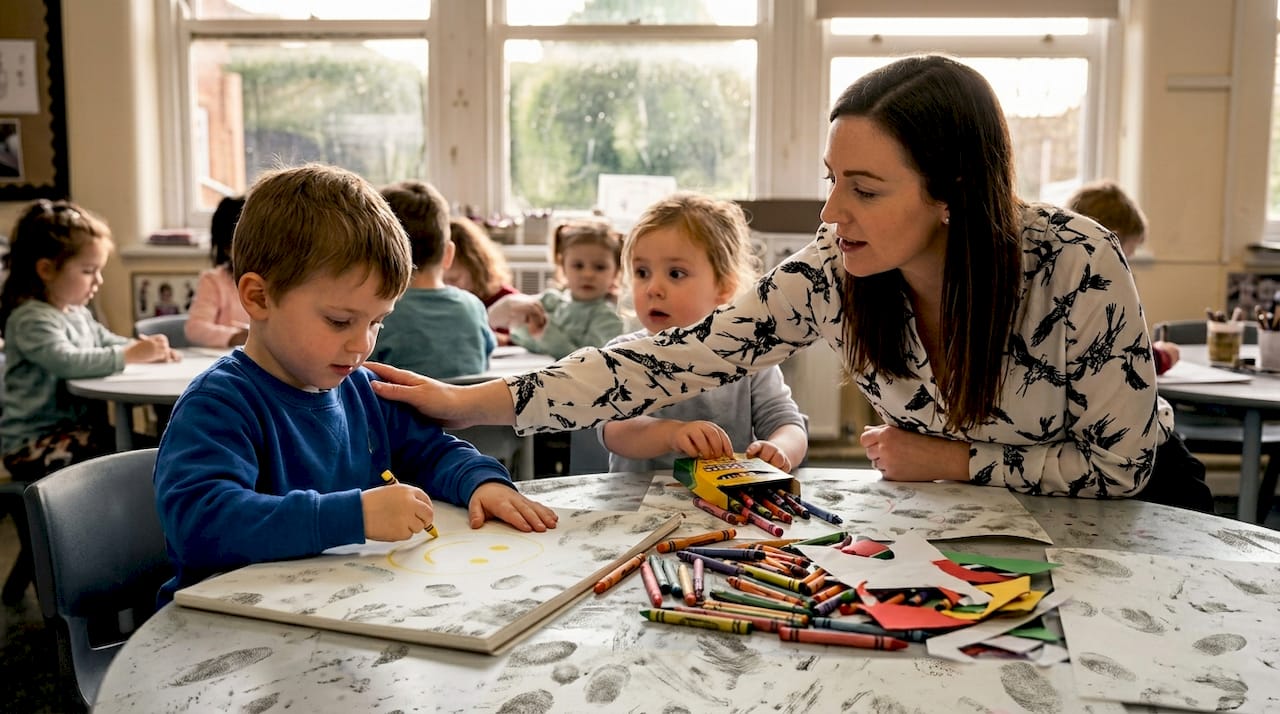
Social-emotional learning programs have shown significant improvements in SEL competence among at-risk preschoolers, including reductions in challenging behaviors. This evidence reinforces that emotional safety and social-emotional support are not optional enrichments but core elements of effective early education.
| Developmental domain | Impact of emotional safety |
|---|---|
| Emotion regulation | Children learn to manage feelings because adults model and support this process |
| Relationship-building | Secure children show more prosocial behavior and stronger peer connections |
| Initiative and curiosity | Feeling safe reduces fear of failure, encouraging children to take learning risks |
| Behavior | Emotionally safe classrooms show fewer disruptive and challenging behaviors |
| School readiness | Children enter kindergarten with stronger attention, flexibility, and communication skills |
One of the most important mechanisms at work here is teacher sensitivity, which refers to how accurately and reliably a teacher reads and responds to a child's emotional state. Teacher sensitivity serves as a bridge to emotion regulation, linking teacher responsiveness directly to children's attachment security and relational wellbeing. In practical terms, when a teacher notices a child getting overwhelmed before a meltdown occurs and offers support proactively, that child's nervous system learns that the environment is safe and responsive.
Here is how emotional safety builds on itself in a healthy developmental sequence:
- Security: The child trusts that adults will respond reliably and warmly.
- Emotional expression: Feeling safe, the child expresses a full range of emotions rather than suppressing them.
- Co-regulation: The teacher supports the child in managing big feelings, modeling the process over time.
- Self-regulation: The child internalizes regulation skills and begins applying them independently.
- Social engagement: Confident in their own emotional world, the child builds richer peer relationships.
- School readiness: All of the above create a child who is prepared to engage with structured learning.
Pro Tip: When visiting preschools, pay less attention to the physical environment and more attention to how teachers interact with children during transitions and stressful moments. The quality of those relationships is the single biggest lever for your child's development.
If you want to understand more about what children gain, read about building social and emotional skills and how social-emotional development unfolds in early childhood.
What emotionally safe preschool classrooms look like
Understanding the impact, let's get practical: here's what emotionally safe classrooms actually do, and how you can spot or ask about those qualities.
Knowing the theory is one thing. Recognizing it on a classroom tour or in a daily update from your child's teacher is another. The good news is that emotionally safe classrooms have concrete, observable features. Classroom mechanisms that signal emotional safety include calm adult regulation, emotion validation, predictable routines and transitions, and supportive reset spaces rather than purely punitive responses to dysregulation (when a child's emotional state becomes difficult to manage).
| Emotionally safe classroom | Traditional reactive classroom |
|---|---|
| Teacher stays calm and lowers voice when a child is upset | Teacher raises voice or sends child out of the room immediately |
| Feelings are named: "I can see you're really frustrated right now" | Feelings are dismissed: "Stop crying, it's fine" |
| Child has access to a calm-down corner with sensory tools | Child is placed in a punitive timeout with no support |
| Transitions are announced in advance with visual cues | Transitions happen abruptly without warning |
| Conflicts are used as teaching moments with guided problem-solving | Conflicts result in immediate consequences with no discussion |
| Proactive strategies prevent many behavioral issues | Adults react to behavior after it escalates |
When you visit a potential preschool, here is what to observe directly:
- Are adults calm and grounded, even when children are having difficult moments?
- Do teachers get down to children's eye level when talking to them about feelings?
- Is there a visible regulation space in the classroom, like a cozy corner with calming tools?
- Do routines feel predictable, with visual schedules or signal cues for transitions?
- How are conflicts handled? Look for guided conversations rather than automatic consequences.
Pro Tip: During tours, ask teachers directly: "Can you walk me through what happens when a child is really upset or acting out?" Teachers in emotionally safe programs will describe support, validation, and co-regulation first. Listen for the presence of language around feelings, not just behavior management.
A nurturing preschool environment is visible in these daily interactions, not just in posted policies. You can also explore quality preschool indicators and the role of routine and structure in preschool to deepen your understanding of what to ask.
How emotional safety is implemented: Frameworks and real-world examples
Visible classroom practices tie into broader frameworks. Here's how emotional safety is systematically built and maintained, not just left to chance.
Good intentions alone do not create emotionally safe classrooms at scale. Schools that do this well use structured, evidence-based frameworks that go beyond individual teacher personality or isolated classroom tools. One of the most widely adopted approaches is the Pyramid Model, a tiered framework specifically designed for early childhood settings.
The Pyramid Model organizes social-emotional and behavioral support into three tiers:
- Universal supports: Every child in every classroom receives high-quality, emotionally supportive practices. This includes nurturing relationships, engaging environments, and consistent social-emotional teaching.
- Secondary supports: Children showing early signs of social or behavioral difficulty receive more targeted group-level strategies and skill-building activities.
- Intensive supports: A small number of children with more significant needs receive individualized intervention, often in collaboration with families and specialists.
What makes this kind of framework effective rather than aspirational?
- Schoolwide buy-in: Every adult in the building, from lead teachers to administrators, understands and applies the same principles.
- Consistent practice: Emotional safety is embedded in daily routines, not pulled out for difficult moments only.
- Periodic fidelity checks: Programs measure whether the practices are being implemented as intended and adjust when gaps appear.
- Coaching and professional development: Teachers receive ongoing support, not just a one-time training session.
- Data-informed decisions: Programs track child outcomes and use that information to improve their approach.
Beware of programs that present a calm-down corner or a feelings chart as their full approach to emotional safety. Single tools are not systems. Genuine emotional safety requires consistent practices, trained and supported staff, and a shared framework that all adults follow every day.
When asking multi-tiered emotional safety supports questions of a prospective preschool, ask whether they use a named framework for social-emotional support and how they measure whether it is working. The answer will tell you a great deal about the program's commitment.
Supporting emotional safety for every child, including those at risk
Emotional safety isn't just about the average child. It's especially vital for those at risk of exclusion or behavioral challenges. Here's how schools and families can work together.
Children who are at higher risk for behavioral challenges, developmental differences, or stressful home circumstances need emotionally safe environments most urgently. And yet, these are often the children most likely to encounter punitive responses that undermine the very security they need.
The data here is stark. Reducing punitive responses and improving the adult-child relational context is critical for children at higher risk of exclusion or discipline, including preschool expulsion, which remains a serious and disproportionate problem for certain groups of young children. When schools default to reactive or punitive approaches, they increase the likelihood of exclusion for the children who have the most to gain from support.
This is where the family-school partnership becomes genuinely powerful. When families and teachers collaborate actively, outcomes improve for children and for teachers. Here is how that partnership can work:
- Share information proactively: Tell teachers about changes at home, stress, or events that might affect your child's emotional state on a given day.
- Ask about your child's emotional patterns at school, not just behavior reports, so you get a fuller picture.
- Reinforce similar language and strategies at home so your child gets consistent messages about emotions and regulation in both settings.
- Stay solutions-focused in conversations with teachers rather than waiting for crisis moments to connect.
- Express confidence in the teacher's ability to support your child. Research shows that teacher hopefulness increases when parents engage positively and constructively.
Learning how to support SEL at home gives you concrete strategies that reinforce what your child experiences in a well-designed classroom.
Why emotional safety is often misunderstood, and what actually works
Here is an uncomfortable truth: many parents and even some educators still think of emotional safety as "the soft stuff." The idea is that academics and skills are the real work of preschool, and emotional support is a pleasant backdrop. This view is not just incomplete. It is backwards.
The evidence is clear that emotional safety is the engine, not the decoration. Children cannot regulate attention, form cooperative relationships, tolerate frustration, or persist through challenges without the neurological foundation that emotionally safe environments build. You cannot teach a dysregulated child effectively. Emotional safety is what makes learning accessible.
The second common misunderstanding is that emotional safety is created by adding specific tools. A calm-down corner gets installed. A feelings poster goes on the wall. Teachers attend a workshop. The program is considered addressed. But tools without consistent, systems-level practice are largely ineffective. Real emotional safety requires every adult in the building to hold the same values and practices every single day, not just the teachers who personally prioritize it.
What actually works is a whole-program commitment where rethinking safe environments becomes part of the culture rather than a checklist item. It means hiring and coaching teachers on relational skills. It means measuring outcomes and adjusting practices. It means treating emotional safety as a professional discipline with the same rigor applied to literacy instruction.
Pro Tip: When evaluating preschools, do not just look for the presence of emotional safety tools. Ask how the whole school supports emotional wellbeing consistently. Ask about staff training, how new teachers are onboarded, and what happens when a child is persistently struggling. The depth of those answers will tell you whether emotional safety is a priority or a talking point.
How Martlet Academy prioritizes emotional safety in early learning
Everything covered in this guide points to one conclusion: emotional safety requires intentional, research-backed practice at every level of a program. That is not something that happens by accident. It requires a committed team, a thoughtful framework, and a genuine belief that children's emotional lives are inseparable from their development.
At Martlet Academy, emotional safety is not a feature of our classrooms. It is the foundation of everything we do. Our Preschool Program and Kinder Prep Program are built on research-supported frameworks for social-emotional growth, relational teaching, and family partnership. We invite you to visit, ask the hard questions you've learned to ask, and see our educators' responses in action. We believe every child deserves a classroom where they feel genuinely safe to grow.
Frequently asked questions
How can I tell if a preschool values emotional safety?
Look for warm, consistent adult-child interactions, predictable routines, and supportive responses when children are upset. Calm adult regulation, emotion validation, and accessible reset spaces are concrete signs of a program that takes emotional safety seriously.
What are the risks if emotional safety is lacking in a preschool?
Children may show more challenging behaviors, struggle with emotion regulation, and face a higher risk of punitive responses. Without relational safety, exclusion and discipline risks increase, particularly for children with higher needs.
How does emotional safety support school readiness?
Emotional safety builds the protective factors children need to succeed in school. Improvements in initiative and self-regulation, both linked to emotional safety practices, are among the strongest predictors of kindergarten readiness and long-term academic engagement.
Are some social-emotional programs more effective than others?
Programs that use consistent, whole-classroom frameworks with high implementation fidelity tend to produce stronger outcomes. Single tools or isolated strategies without systematic support are far less effective than tiered, schoolwide approaches.
What can parents do to help support emotional safety at home?
Model emotion validation by naming and accepting your child's feelings without rushing to fix them. Set consistent routines, communicate openly with teachers about your child's emotional world, and reinforce the same language for feelings that your child's classroom uses.