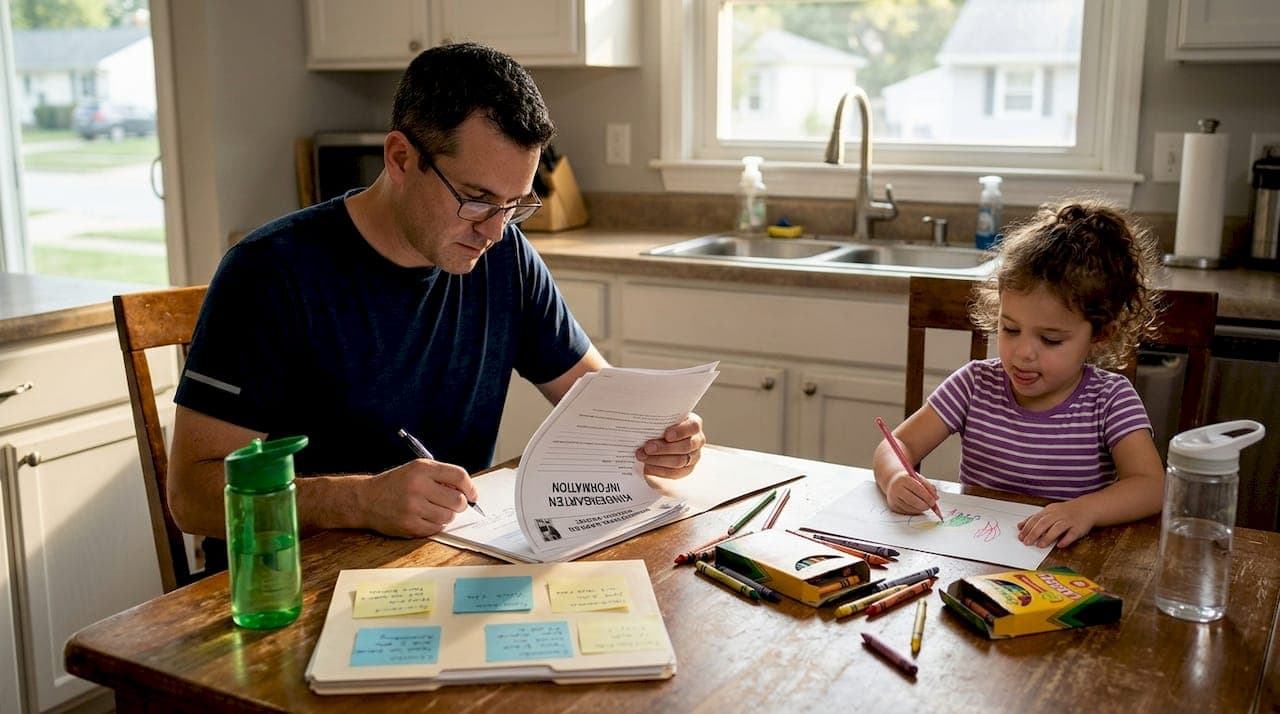
Will your child feel confident and ready on their first day of kindergarten? That worry is real, and it's one almost every parent carries. The good news is that preparation is a clear, manageable process when you know where to start. This guide walks you through a practical workflow that covers both social-emotional growth and foundational academic skills, built over several months before school begins. Follow these steps and your child won't just be ready for kindergarten. They'll walk in with genuine confidence.
Table of Contents
- What you need for effective kindergarten prep
- Step-by-step kindergarten prep workflow and timeline
- Integrating social-emotional learning into your prep routine
- Academic foundations and building lifelong learning skills
- Screening, adjustment, and troubleshooting for the journey
- Why readiness isn't a checklist and what truly matters for kindergarten success
- How Martlet Academy can support your kindergarten prep journey
- Frequently asked questions
Key Takeaways
| Point | Details |
|---|---|
| Multi-domain readiness matters | Focusing on social-emotional, physical, cognitive, and academic skills ensures a more confident transition to kindergarten. |
| Start early and go step-by-step | Begin preparation 6-12 months before kindergarten and follow a clear process for best results. |
| SEL outranks academics | Nurturing independence and self-regulation is more predictive of success than early academics alone. |
| Personalize the workflow | Adjust preparation to your child’s temperament, needs, and growth for less stress and greater progress. |
What you need for effective kindergarten prep
With the stage set, let's ensure you have everything you need to get started. Before diving into daily activities, it helps to understand the full picture of what kindergarten readiness actually means.
Kindergarten prep workflows typically follow a 6 to 12 month timeline starting about one year before entry. That's not a lot of time if you wait until spring. Starting early gives you room to build habits gradually without stress.
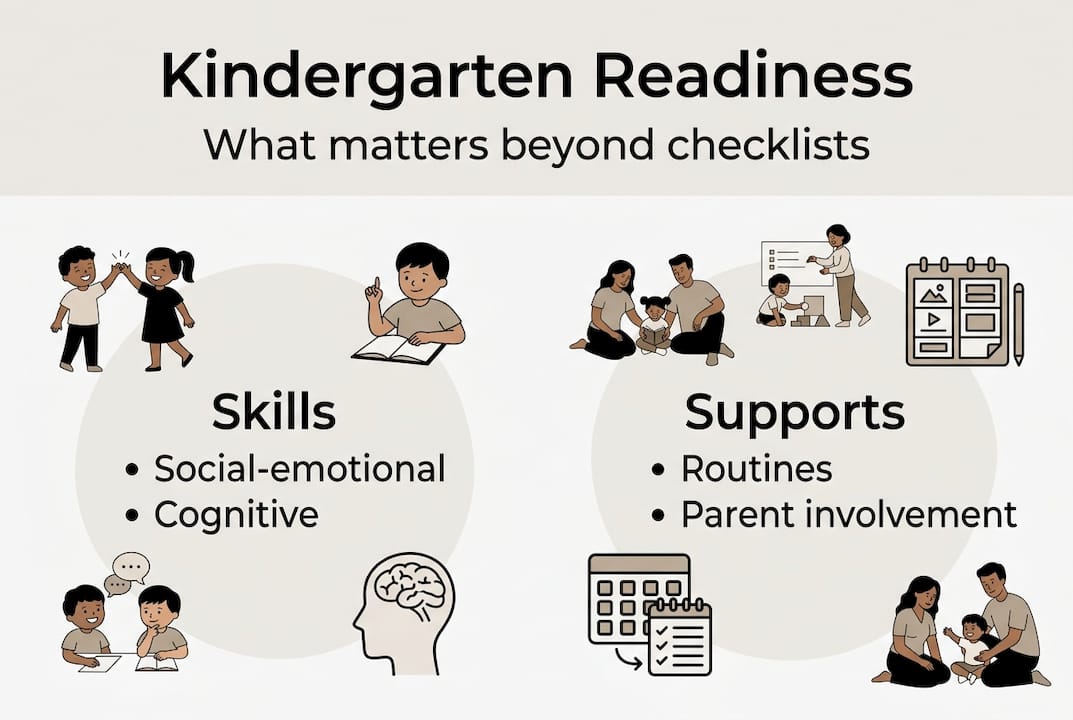
Readiness covers five key developmental domains:
- Physical development: Gross and fine motor skills, like holding a pencil or using scissors
- Cognitive development: Early problem-solving, memory, and curiosity
- Language and literacy: Vocabulary, listening comprehension, and print awareness
- Social-emotional development: Self-regulation, empathy, and independence
- Approaches to learning: Persistence, flexibility, and engagement
Researchers and educators agree that readiness is multi-domain, not a simple checklist, and that social-emotional development consistently predicts long-term school success more than early academics alone.
| Tool | What it measures | Who uses it |
|---|---|---|
| ASQ-3 | Developmental milestones across 5 domains | Parents and educators |
| DECA | Social-emotional strengths and concerns | Teachers and counselors |
| School readiness checklist | Basic self-care and communication skills | Families and preschools |
Understanding quality preschool essentials and the importance of routines in your child's current setting will also shape how you approach home prep.
Pro Tip: Resist the urge to fill prep time with worksheets. Self-regulation and resilience, meaning your child's ability to manage emotions and bounce back from frustration, will carry them further in kindergarten than knowing how to write their name.
Step-by-step kindergarten prep workflow and timeline
Now that you have your prep toolkit, let's break down the workflow itself. Think of this as a living plan you adjust as your child grows.
- Research schools (12 months out): Visit options, ask about curriculum philosophy, and note what feels like the right fit emotionally and academically.
- Complete registration (8 to 10 months out): Gather documents, meet deadlines, and confirm enrollment requirements.
- Schedule readiness screenings (6 to 8 months out): Use tools like the ASQ-3 or DECA to identify any areas that need extra support.
- Build consistent routines (6 months out): Establish regular sleep, meal, and morning schedules that mirror the school day.
- Focus on skill-building (4 to 6 months out): Blend SEL activities with early literacy and numeracy at home.
- Attend orientation events (1 to 2 months out): Familiarize your child with the building, teachers, and expectations.
- Practice runs (2 to 4 weeks out): Do dry runs of the morning routine, drop-off, and pickup.
This step-by-step prep program mirrors what research supports: prep spanning school exploration through practice runs produces the smoothest transitions.
| Approach | Focus | Long-term outcome |
|---|---|---|
| Play-based, SEL-first (NAEYC-aligned) | Curiosity, relationships, self-regulation | Sustained engagement and resilience |
| Academic-centric (traditional) | Letters, numbers, drills | Early gains that may fade without SEL support |
For children with late or summer birthdays, the decision to delay entry (sometimes called redshirting) is worth discussing with your child's preschool team. Post-pandemic gaps in language and emotional regulation are also real, and adjusting your timeline to address them is smart planning. Explore how preschool to kindergarten success is built over time, not overnight.
Aligning your pre-K and kindergarten sequencing carefully helps prevent transition losses that can occur when there's a mismatch between what children experienced in preschool and what kindergarten expects.
Integrating social-emotional learning into your prep routine
With the overall process in mind, let's zoom in on the heart of readiness: social-emotional growth.
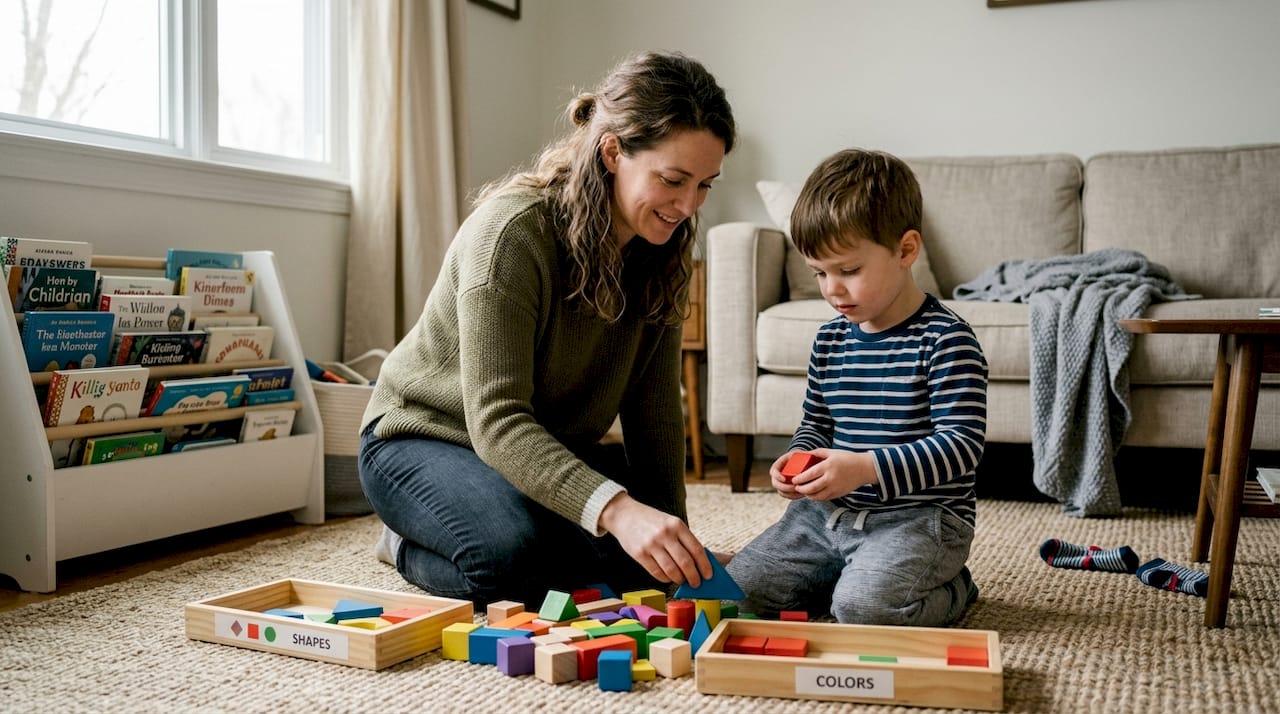
Social-emotional learning, or SEL, refers to the skills children use to understand their feelings, build relationships, and make responsible decisions. It is not a soft extra. It is the foundation everything else rests on.
Programs like Project KIND show how supportive environments integrate SEL through structured activities that teach emotion recognition, cooperation, and calm-down strategies. You can bring the same ideas home.
Sample SEL activities to try:
- Emotion labeling: Name feelings out loud during stories or daily moments. "You look frustrated. Is that right?"
- Cooperative games: Simple board games teach turn-taking, losing gracefully, and celebrating others
- Calm-down corners: Create a cozy spot with sensory tools like a stress ball or picture cards for when big feelings hit
- Role-playing: Practice school scenarios, like asking a teacher for help or joining a group at recess
- Feelings journals: Even pre-writers can draw their emotions each evening
"SEL-first, family engagement models consistently outperform purely academic approaches for sustained kindergarten benefit." — American Academy of Pediatrics
Building social-emotional skill building into daily life doesn't require a curriculum. It requires presence and intention. Pair these with play-based strategies and you're covering the most important ground there is.
Pro Tip: Celebrate small wins loudly and avoid over-scheduling. A child who feels successful and unhurried develops the internal confidence that no flashcard can teach.
Academic foundations and building lifelong learning skills
SEL is half the story. Let's ensure key academic skills are also nurtured.
Kindergarten teachers consistently report that the children who thrive are not necessarily those who already know the most. They're the ones who are curious, willing to try, and able to ask for help. That's the attitude you're cultivating.
Foundational academic skills to target before kindergarten:
- Pre-literacy: Recognizing letters, understanding that print carries meaning, rhyming, and retelling simple stories
- Numeracy: Counting to 20, recognizing numerals, basic sorting and patterns
- Problem-solving: Simple puzzles, building challenges, open-ended play
- Curiosity habits: Asking questions, noticing details, making predictions
Everyday activities that build these skills naturally:
- Daily story time with questions like "What do you think happens next?"
- Counting steps, snacks, or toys during regular routines
- Sorting laundry by color or size
- Cooking together and measuring ingredients
- Drawing and labeling pictures
Statistic callout: Full-day kindergarten and quality interactions significantly boost reading growth, particularly for children from lower-income households, with high-quality instructional interactions amplifying literacy gains well into first grade.
The key insight here is that academic skills and social skills are not separate tracks. A child who can regulate emotions is a child who can focus during a read-aloud. A child who knows how to cooperate is a child who learns better in group activities. Understanding the early education benefits of this integrated approach helps you see why play and learning belong together.
Screening, adjustment, and troubleshooting for the journey
With the groundwork set, let's address assessment and what to do when challenges arise.
Readiness screenings are not tests your child can fail. They're tools that help you and educators understand where your child is thriving and where a little extra support might help. The ASQ-3 covers communication, gross motor, fine motor, problem-solving, and personal-social skills. The DECA focuses specifically on social-emotional strengths and areas of concern.
Steps for navigating transitions and setbacks:
- Review screening results with your preschool teacher, not just on your own. Context matters.
- Identify one or two areas to focus on, rather than trying to address everything at once.
- Adjust your home routine to give those areas more natural practice, not formal drilling.
- Communicate with the receiving kindergarten about any specific needs or accommodations.
- Revisit the plan monthly and celebrate progress, even when it's small.
For children with late birthdays or summer-born timing, the research on delaying entry is genuinely mixed. Some children benefit from an extra year; others are ready regardless of birth month. Post-pandemic gaps in language and emotional regulation are real and worth screening for specifically.
Creating a nurturing environment at home during this period matters as much as any formal activity. If your child seems anxious or regressive, that's information, not failure.
Pro Tip: Progress in early childhood is rarely a straight line. Expect two steps forward and one step back, especially when new settings, people, or routines are introduced. That fluctuation is completely normal.
Why readiness isn't a checklist and what truly matters for kindergarten success
Having navigated the workflow, let's pause for a candid look at what really delivers lasting kindergarten success.
The checklist culture around kindergarten readiness is understandable. Parents want clarity. Schools want consistency. But the honest truth is that a child who can write their name but melts down when frustrated will struggle more than a child who can't yet write their name but knows how to ask for help and try again.
Academic gains often fade unless they're paired with strong SEL foundations and genuine family engagement. That's not a fringe opinion. It's a consistent finding across early childhood research.
What we've seen at Martlet Academy is that the children who carry their confidence into kindergarten are those who felt emotionally safe during their preschool years. They weren't drilled. They were supported. They were allowed to struggle a little, celebrated when they persisted, and never made to feel behind.
Every child's path is different. Use this workflow as a guide, not a rigid script. Adjust it for your child's temperament, your family's rhythm, and the specific school environment ahead. The lasting SEL benefits of a calm, curiosity-driven approach will outlast any academic head start. Confidence, emotional safety, and a genuine love of learning are the irreplaceable gifts you can give your child before kindergarten begins.
How Martlet Academy can support your kindergarten prep journey
You don't have to figure this out alone. At Martlet Academy, our programs are designed to cover every dimension of kindergarten readiness, from SEL and foundational academics to daily routines and family partnership.
Our Kinder Prep Program gives children a structured, play-based environment where they build the skills, habits, and confidence they need before day one. Our Preschool Program lays the social and emotional groundwork that makes that transition feel natural. Explore our full program offerings or reach out to our team for personalized guidance on the right path for your child and family. We'd love to be part of your story.
Frequently asked questions
When is the best time to start kindergarten prep?
Start 6 to 12 months before school entry to cover exploration, skill-building, and routines at an unhurried pace. Beginning early means less pressure and more time for genuine growth.
Should I focus more on academics or social-emotional skills?
Social-emotional skills like self-regulation and independence are the strongest predictors of kindergarten success. Academics matter, but they build better on a strong emotional foundation.
How do I know if my child is truly ready for kindergarten?
Use readiness screeners like the ASQ-3 and DECA and discuss results with your child's school or preschool staff. No single score tells the whole story.
What should I do if my child doesn't seem ready?
Consider more time, flexible entry options, or consult with educators to update your prep plan. Evidence on delaying entry is mixed, so personalized guidance matters most.
Can kindergarten prep be stress-free for my family?
Yes. Focusing on supportive routines and family engagement while reducing pressure leads to the best outcomes for children and parents alike.
Recommended
- How Preschool Prepares Children for Kindergarten Success — Martlet Academy
- Kinder Prep Program | Build Skills & Confidence — Enroll Now — Martlet Academy
- Preschool vs Daycare: What’s the Difference? — Martlet Academy
- Blog — Martlet Academy
- Guide to preschool learning at home for East London families