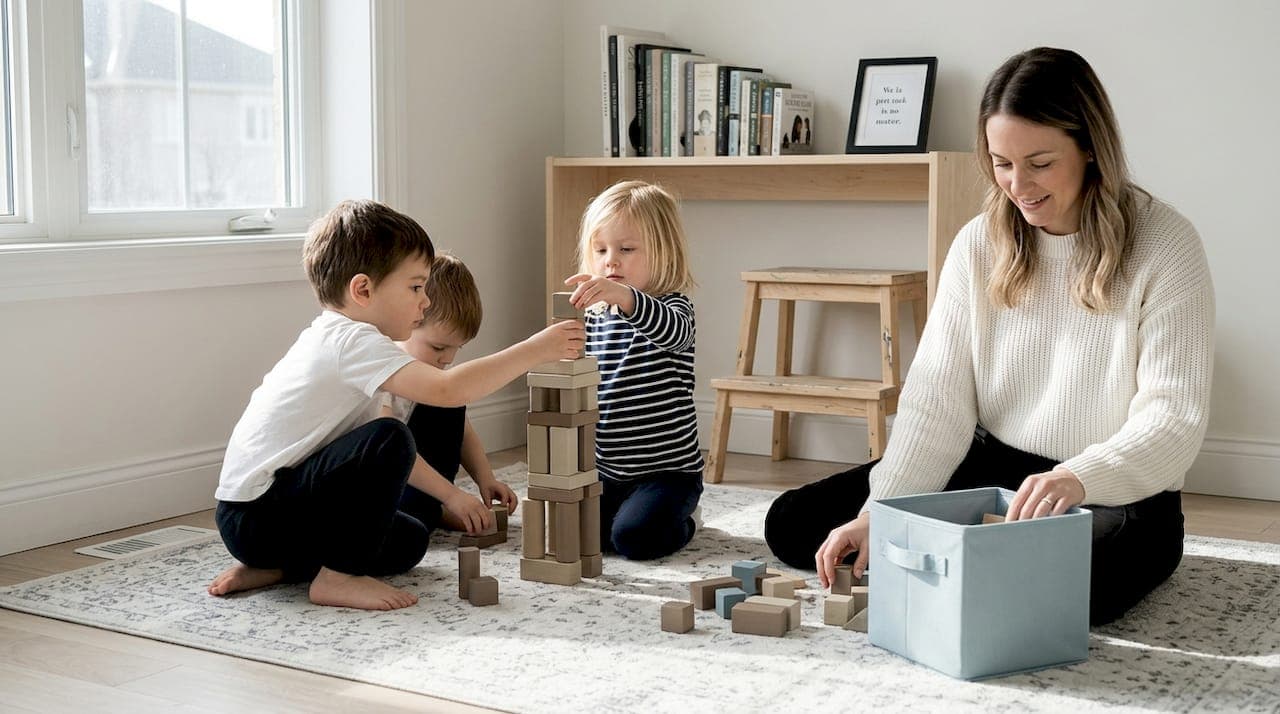
Most parents can spot when their toddler takes a first step, but what happens after that? By the time children reach preschool age, the developmental picture gets more nuanced, and it's easy to feel unsure about which abilities to nurture, which milestones to track, and how much guidance is actually needed. The good news is that supporting motor skill development doesn't require formal drills or complicated routines. A nurturing environment filled with purposeful play is genuinely one of the most powerful tools available, and the research backs this up. This guide walks you through exactly what to expect, how to set up a supportive space, and what activities make the biggest difference for children ages three to five.
Table of Contents
- Understanding motor skill milestones in preschoolers
- Preparing your environment for motor skill success
- Play-based activities to boost motor skills
- Tracking progress and screening for developmental delays
- What most guides miss about play-based motor skill development
- How Martlet Academy supports preschool motor skill growth
- Frequently asked questions
Key Takeaways
| Point | Details |
|---|---|
| Milestones vary by age | Preschoolers develop gross and fine motor skills at different rates between ages 3 and 4. |
| Play-based is best | Integrating playful, everyday activities is the most effective way to build motor skills. |
| Monitor progress | Regularly observe milestones and use early screening if delays are noticed. |
| Environment matters | Supportive routines and accessible tools make a big difference in skill development. |
| Celebrate small steps | Progress often comes in small increments, so acknowledge every improvement. |
Understanding motor skill milestones in preschoolers
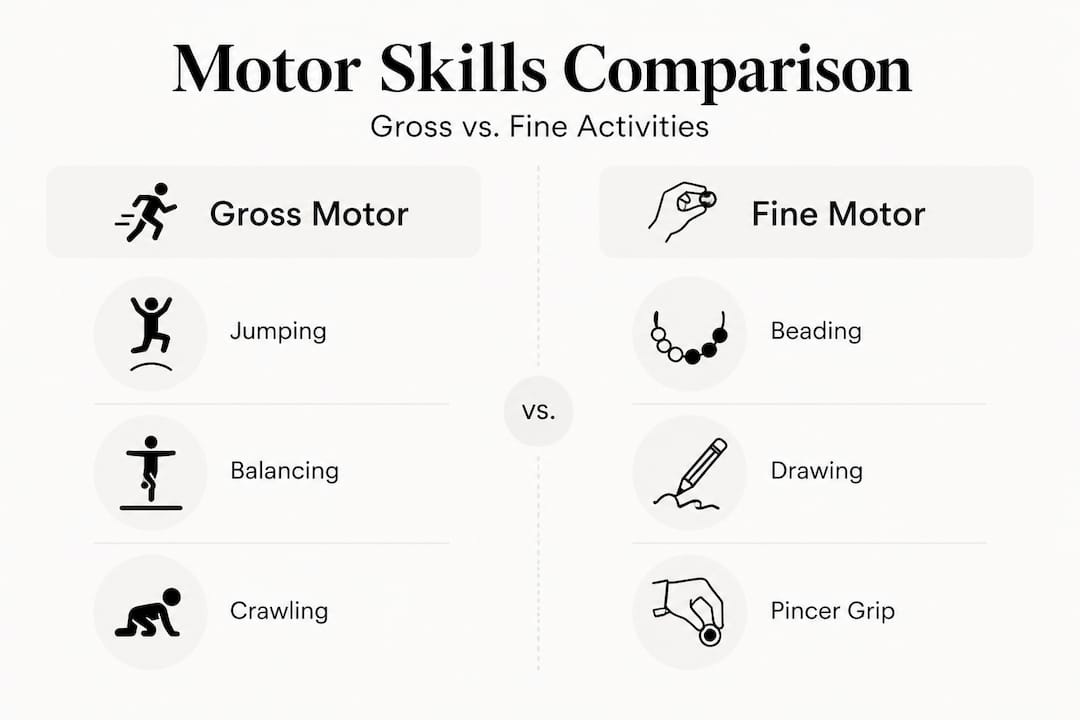
Motor skills fall into two broad categories that work together as a team. Gross motor skills involve the large muscle groups controlling the arms, legs, and core, and they power activities like running, jumping, and climbing. Fine motor skills involve the smaller muscles in the hands and fingers, and they support tasks like drawing, buttoning a shirt, or holding a spoon correctly. Both types develop in tandem, and progress in one area almost always supports progress in the other.
For three-year-olds, the milestones are more tangible than many parents expect. By age 3, most children can string items like large beads or macaroni, put on some clothes independently such as loose pants or a jacket, and use a fork. These are not just cute party tricks. They represent real neuromuscular coordination developing in real time.
By the time children turn four, the range of abilities expands significantly. By age 4, most children can catch a large ball most of the time, serve themselves food or pour water with supervision, unbutton some buttons, and hold a crayon or pencil with their fingers and thumb in what experts call a tripod grasp. That pencil grip is especially important because it sets the foundation for pre-writing skills that come into play in kindergarten and beyond. The lifelong learning impact of these early physical achievements often gets underestimated by parents focused on letter recognition or counting.
On the gross motor side, preschool physical milestones include running without tripping, jumping with two feet, hopping on one foot, climbing playground equipment, kicking and throwing a ball, and pedaling a tricycle. Not every child hits all of these on the same schedule, and that's completely normal. What matters is a general pattern of forward progress.
"Motor milestones are a range, not a deadline. The goal is consistent forward movement, not perfection on a timeline." — Developmental pediatrics consensus
Here's a quick reference for what to watch for:
| Skill area | Age 3 milestones | Age 4 milestones |
|---|---|---|
| Gross motor | Jumps with two feet, pedals tricycle | Hops on one foot, catches large ball |
| Fine motor | Strings large beads, uses a fork | Tripod pencil grip, unbuttons buttons |
| Self-care | Puts on loose clothing | Pours water with supervision |
Key abilities to look for between ages 3 and 4:
- Runs and changes direction without falling
- Balances briefly on one foot
- Draws simple shapes like circles and crosses
- Uses scissors with increasing control
- Manages zippers and buttons with some help
- Builds block towers of six or more blocks
If your child is missing several of these markers by the expected age, an early conversation with your pediatrician is a smart next step. Delays caught early respond far better to support and intervention than those identified later.
Preparing your environment for motor skill success
With a clear understanding of developmental milestones, let's focus on creating a space where your child can thrive physically and mentally.
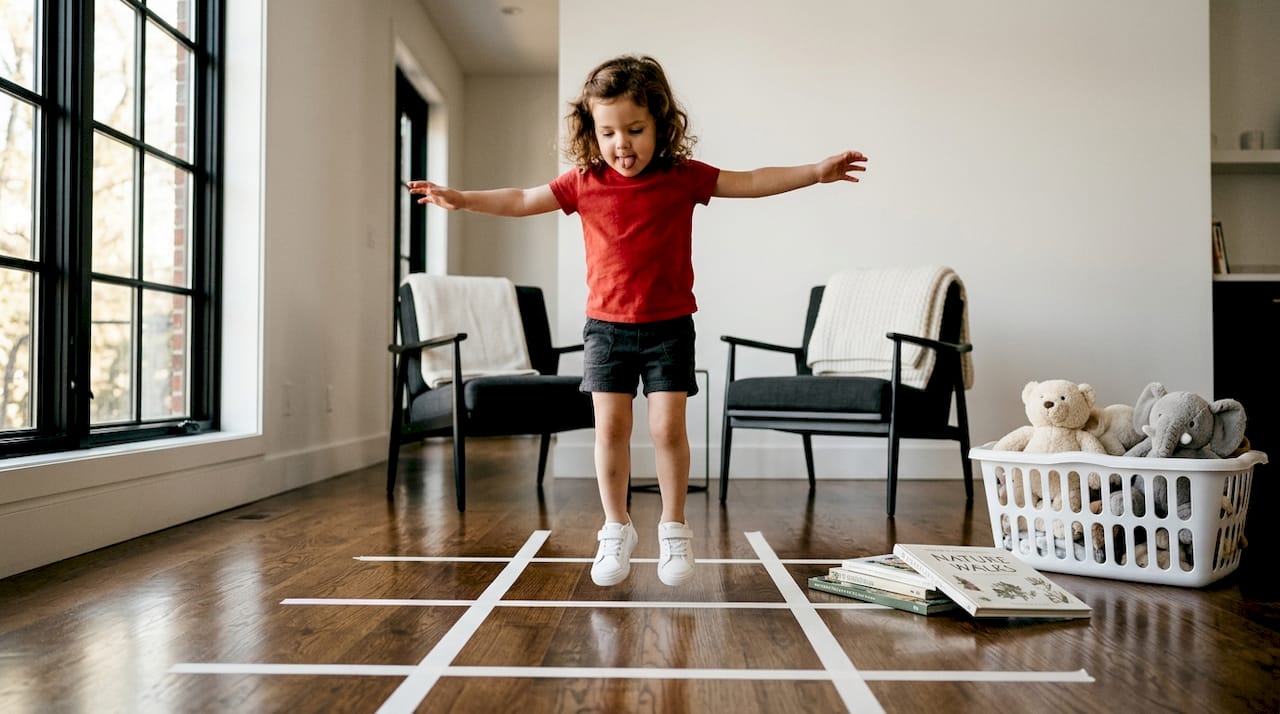
One thing many parents don't realize is that the body has to build from the ground up. Core and shoulder stability are essential before children can manage precise hand tasks. In practical terms, this means a child who hasn't developed strong postural control in their trunk and shoulders will struggle to hold a pencil steadily or cut paper accurately. Big body movement is the foundation, not just the warm-up.
Setting up your space doesn't require a big budget. It requires intentionality. Here's a comparison of what effective motor skill environments look like at home versus in a quality classroom setting:
| Feature | Home setup | Classroom setup |
|---|---|---|
| Open floor space | Clear a living room corner for movement | Dedicated gross motor zone with mats |
| Fine motor tools | Crayons, beads, clay, kid scissors | Art stations with varied grip tools |
| Climbing opportunities | Outdoor play structure or foam blocks | Indoor climbers, balance beams |
| Sensory materials | Playdough, sand bins, water play | Sensory tables with guided exploration |
| Ball play | Backyard or hallway with soft balls | Large open gym or outdoor field |
Building a routine for preschoolers around these materials makes a significant difference. When children know that "after lunch we play outside" or "mornings start with art time," they engage more deeply because the expectation is familiar and safe. Predictable routines also reduce the cognitive load on young children, freeing up mental energy to actually focus on the physical task at hand.
Pro Tip: Before spending money on specialized toys, check your kitchen and garage. A muffin tin and pom poms become a fine motor sorting game. A rolled-up pair of socks becomes a throwing target practice tool. Everyday objects often work just as well as store-bought tools, and sometimes better, because children find them more interesting and unexpected.
Knowing what to look for when choosing an organized setting for your child also matters. Understanding what quality preschool programs offer in terms of space, materials, and staff-to-child ratios gives you the right questions to ask when evaluating any care environment.
Play-based activities to boost motor skills
Once your environment is set up, it's time to get into hands-on play activities that are both fun and effective for building motor skills. The goal here is not a structured lesson plan. It's natural, joyful movement woven into the everyday rhythm of your child's day.
Evidence strongly supports this approach. Play-based gross motor activities like stick ladder jumps, obstacle courses, animal walks, balloon keep-up, and pool noodle sit-ups consistently produce motor skill gains in preschoolers because they tap into intrinsic motivation. When a child is laughing and competing against themselves to jump farther, they are also building coordination, balance, and strength without any awareness that "learning" is happening. This is how children actually learn best, and it applies to physical development just as powerfully as it does to language or math readiness.
Top 10 play-based activities for preschool motor development:
- Animal walks (bear crawl, crab walk, frog jumps): Build core strength, coordination, and bilateral movement.
- Obstacle courses: Combine crawling, jumping, balancing, and climbing in one activity.
- Balloon keep-up: Develops eye-hand coordination, timing, and tracking skills.
- Bead threading: Excellent fine motor practice using large wooden beads and thick laces.
- Playdough sculpting: Strengthens hand and finger muscles needed for writing.
- Ladder jumps: Use a stick ladder flat on the ground for two-foot and one-foot jumping patterns.
- Tong transfer games: Move small objects like cotton balls between containers using kid-safe tongs.
- Chalk drawing outdoors: Large arm movements support shoulder development; smaller marks build finger control.
- Ball kicking and rolling: Gross motor coordination, spatial awareness, and turn-taking built in.
- Cutting practice with kid scissors: Follow lines, cut fringe on paper, then advance to simple shapes.
Integrating these activities into daily routines rather than treating them as special scheduled events makes a measurable difference. A five-minute animal walk before settling in for a story, or a quick bead threading game while you make dinner, adds up over weeks and months into significant motor skill gains.
The social and emotional benefits run alongside the physical ones. When children play together in unstructured movement settings, they negotiate rules, take turns, and manage frustration. These experiences, detailed further in our social and emotional skill building resources, are not separate from motor development. They are woven into it.
Pro Tip: Follow your child's lead on activity choice. A child who is fascinated by dinosaurs will engage far more enthusiastically in "dinosaur stomps" and "pterodactyl wing stretches" than a generic exercise session. Adapting activities to your child's current interests doesn't reduce their effectiveness. It multiplies it. Our toddler program uses exactly this kind of interest-driven approach for younger children transitioning into preschool readiness.
Tracking progress and screening for developmental delays
With regular playful activity, you'll want to monitor your child's progress and know when to look for signs of concern. Tracking doesn't have to be clinical or stressful. A simple observation notebook where you jot down what you notice once a week is more than enough to spot patterns.
Use a checklist format tied to specific age milestones so you have a concrete reference point. The CDC's milestone checklists are free, parent-friendly, and cover both gross and fine motor skills alongside communication and social development. When you observe your child during play, ask yourself: Are they moving with more confidence than last month? Are they attempting more complex tasks? Even small shifts in what a child tries or tolerates are meaningful data.
Early signs that warrant a closer look:
- Not walking independently by 18 months
- Consistently avoiding activities that require balance or coordination
- Difficulty holding a crayon or spoon by age 3
- Not jumping with two feet by age 3.5
- Frequent falls or extreme clumsiness compared to peers
- Strong preference for one hand before age 2 (which may signal weakness on the other side)
"Early identification of developmental delays allows children to receive support during the most neurologically responsive period of their lives." — American Academy of Pediatrics
The AAP recommends developmental screening at 9, 18, 30, and 48 months, including motor skills, and suggests using structured tools like a Motor Delay checker when you have specific concerns. These screenings happen at routine pediatric visits, so staying current on well-child appointments is one of the most practical things you can do.
If your child is not walking by 18 months or is missing multiple milestones across categories, early screening per AAP and CDC guidelines is the recommended path forward. Early intervention services for children under age five are often publicly funded and highly effective when started promptly.
Open communication between parents and educators is equally important. Teachers observe children in structured and unstructured settings that parents don't always see, and those observations are valuable. Learn more about effective communication in early education to build that partnership with your child's care team. If you're also thinking ahead, understanding the kindergarten prep process can help you set appropriate expectations for what motor readiness looks like by age five.
What most guides miss about play-based motor skill development
Here's something worth saying plainly: most motor skill guides focus heavily on what children should be doing and not enough on how children actually get there. The dominant narrative is milestone focused, and while milestones serve a real purpose, they can inadvertently shift parents into a checking-boxes mindset rather than a noticing-and-celebrating mindset.
The research consensus is clear. Child-led, interest-driven movement outperforms scheduled training almost every time. A child who chooses to spin in circles for fifteen minutes is building vestibular processing, bilateral coordination, and body awareness. A child forced to practice balance drills for the same fifteen minutes, but who is bored and resistant, is getting a fraction of the developmental benefit. Engagement is not a bonus feature of good motor skill activities. It's the mechanism through which learning actually happens.
We've also seen, both in early childhood education research and in our own experience working with families, that parents tend to worry most about the periods of apparent plateau. Your child makes rapid gains for three weeks, then seems to stall. This is completely normal and actually represents consolidation, a period where the nervous system integrates what it has learned before building the next layer. Pushing harder during a plateau rarely helps and sometimes creates anxiety in the child that slows things down further.
The most productive thing you can do during a plateau is keep the environment rich and the pressure low. Celebrate small victories with genuine enthusiasm. Notice when your child tries something new, even if they don't succeed. The play-based learning insights that guide our approach at Martlet Academy are built around exactly this understanding: progress is uneven, curiosity is the engine, and joy is the fuel.
Pro Tip: Instead of praising results ("You did it!"), try narrating the effort ("You kept trying even when it was hard, and look what happened!"). This builds the kind of resilience that carries children far beyond any single motor skill achievement.
How Martlet Academy supports preschool motor skill growth
Supporting your child's motor development is one of the most meaningful investments you can make in their early years, and you don't have to figure it out alone.

At Martlet Academy, our play-based curriculum is designed specifically to build gross and fine motor skills through joyful, child-led experiences in a calm and emotionally safe setting. Our educators track developmental progress with trained eyes, create environments stocked with the right materials, and communicate regularly with families about what they observe. Whether your child is just beginning their preschool journey or preparing to move into kindergarten, our preschool program provides age-appropriate challenges within a warm, relationship-centered structure. Younger children starting to build foundational movement skills are also beautifully supported through our toddler program. We'd love to partner with your family.
Frequently asked questions
What are the earliest motor skill milestones for preschoolers?
By age 3, children typically string large beads, use a fork, and put on loose clothing independently. These abilities signal healthy coordination between muscles and the developing nervous system.
How can I encourage my child's motor development at home?
Set up short daily play routines using activities like animal walks and ladder jumps with simple household items. Consistency over time matters far more than the complexity of any single activity.
What signs should I look for to identify motor delays?
If your child isn't walking by 18 months or is consistently missing multiple milestones across age groups, seek a developmental screening from your pediatrician without delay.
When is professional screening recommended?
The AAP recommends screening at 9, 18, 30, and 48 months. If you observe notable gaps between your child and peers, don't wait for the next scheduled visit to ask your doctor.
Are formal drills necessary for motor skill development?
No. Expert consensus supports play-based, unstructured movement as the most effective approach for preschool motor development. Fun, engagement, and child-led choice consistently outperform structured training in this age group.
Recommended
- Play-Based Learning: How Children Learn Best in Preschool — Martlet Academy
- What to Look for in a Quality Preschool Program — Martlet Academy
- Why Early Childhood Education Shapes Lifelong Learning — Martlet Academy
- How Preschool Prepares Children for Kindergarten Success — Martlet Academy
- Activités sportives enfants : bienfaits, âges et astuces
- Kindergeburtstagsspiele: Pädagogisch wertvoll und praktisch