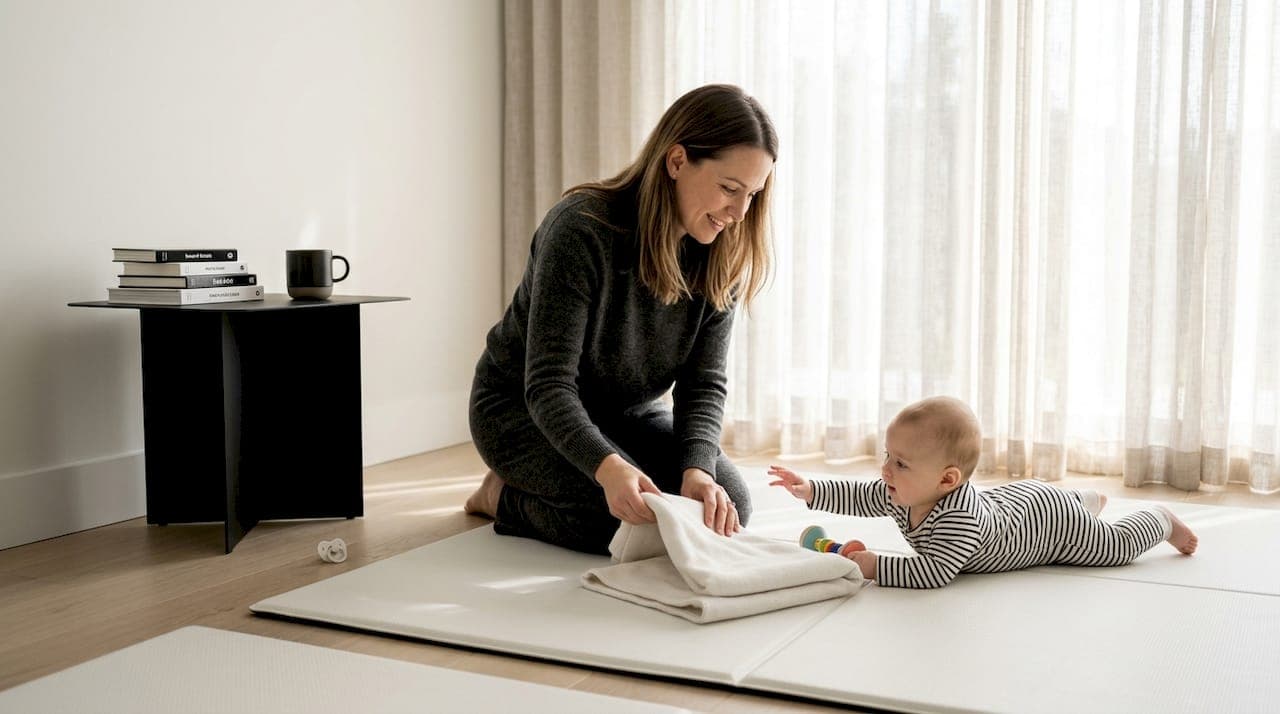
Most parents assume infant care is straightforward: keep the baby fed, dry, and safe. But what happens between those basic moments, the way a caregiver speaks during a diaper change, the calm response to a frustrated cry, the gentle eye contact during a bottle, shapes your child's brain, emotional health, and sense of the world far more than most people realize. Infant care philosophy is the intentional framework that turns every ordinary moment into a building block for lifelong learning. This guide explains what that philosophy is, why it matters deeply, and how you can recognize it working in a care setting you trust.
Table of Contents
- What is infant care philosophy?
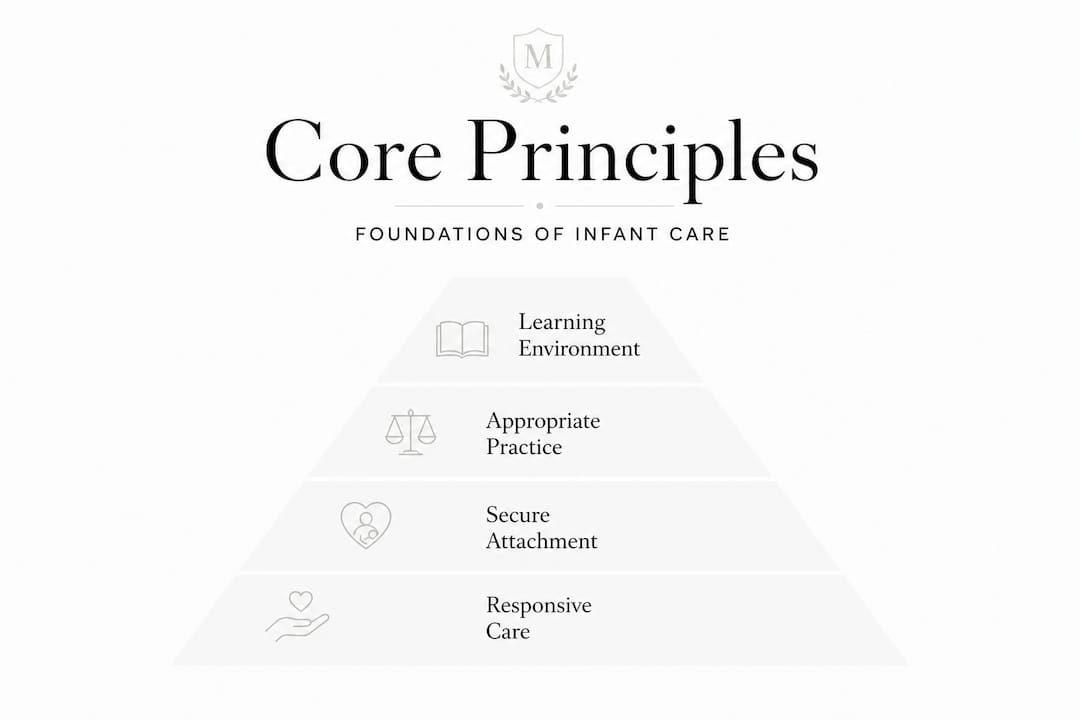
- Core principles of child-centered infant care
- Comparing infant care philosophies: Child-led vs. structured
- Why cultural responsiveness and temperament matter
- Spotting quality infant care: What parents should look for
- The real art of infant care: Beyond checklists
- Nurture your child's growth with Martlet Academy
- Frequently asked questions
Key Takeaways
| Point | Details |
|---|---|
| Care as learning | Daily routines like feeding and diapering are core opportunities for building emotional security and lifelong skills. |
| Responsive relationships | Tailoring care to each baby nurtures trust and emotional health above all. |
| Philosophy flexibility | Effective infant care adapts practices to your child’s temperament, culture, and unique needs. |
| Quality signs | Look for warm interactions, attuned routines, and culturally aware caregivers in any care setting. |
What is infant care philosophy?
To understand why daily moments matter so much, let's get clear on what "infant care philosophy" actually means in practice.
An infant care philosophy is not a curriculum binder or a posted list of rules. It is the underlying set of values and beliefs that guide every decision a caregiver makes, from how they greet your baby in the morning to how they respond when your child is overtired and inconsolable. A strong philosophy answers the question: Why do we do it this way? And the answer should always center on your child's emotional and developmental wellbeing.
One of the most powerful ideas in modern early childhood education is often called "care as curriculum." The principle is simple but profound. Routines like feeding, diapering, and soothing are not interruptions to learning. They are the learning. Each feeding is a language lesson, an exercise in trust, and a moment of emotional co-regulation. Each diaper change, when handled with warmth and narration, tells your baby: you are safe, I see you, and the world is predictable.
Responsive care sits at the heart of every quality philosophy. This means caregivers actively read your baby's cues and tailor their responses to that specific child's emotional and physical needs at that exact moment. It is not a one-size-fits-all approach. NAEYC's Developmentally Appropriate Practice makes this explicit, emphasizing individualized, responsive care that matches each child's age, culture, and personality, with responsive relationships identified as the single most important driver of social-emotional development in the first year of life.
Here is what a strong infant care philosophy looks like in action:
- Predictable but flexible routines that give babies a sense of security without rigidity
- Verbal narration during every routine, building early language exposure
- Warm physical responsiveness to crying, discomfort, and joy alike
- Individual observation so caregivers understand each baby's unique temperament
- Family partnership that keeps parents informed and involved as collaborators
"Relationships are the active ingredient in early care and education. When caregivers are consistently warm, responsive, and attuned, they are literally building the architecture of the developing brain." This insight from the early childhood research community reminds us that quality infant care is never incidental. It is always intentional.
Core principles of child-centered infant care
After grasping what these philosophies aim to do, let's see the practical principles that make them work day in and day out.
The most well-supported child-centered philosophies share a set of foundational principles. Understanding these gives you a lens you can apply wherever your child is cared for.
1. Responsive caregiving as the foundation
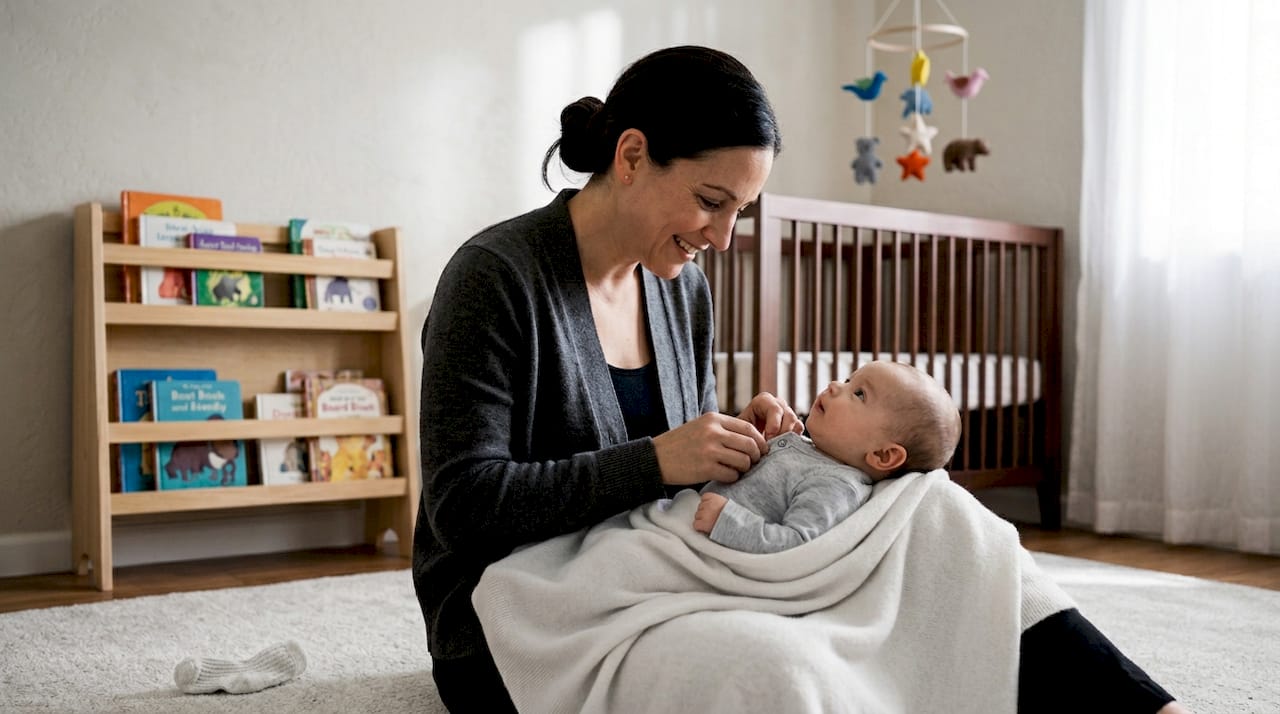
Responsive caregiving means noticing a baby's signal and responding with warmth, consistency, and attunement. Empirical data on responsive caregiving shows that maternal and caregiver sensitivity directly mediates how infants develop emotion regulation strategies, and that prompt, culturally attuned responses lead to faster recovery from distress. This is not soft science. It is measurable neurodevelopmental impact.
2. Secure attachment as a learning platform
Secure attachment is not just about babies feeling loved, though that matters immensely. A baby who trusts their caregiver uses that relationship as a safe base to explore, take risks, and eventually learn. Without that emotional security, cognitive development is actually compromised. Supporting emotion regulation strategies from day one builds the emotional resilience children carry into toddlerhood and beyond.
3. Developmentally Appropriate Practice (DAP)
DAP means every interaction, activity, and routine is matched to what a specific child is developmentally ready for, not what their age says on a chart. A five-month-old and a nine-month-old in the same room need very different things, even though both are "infants." Caregivers trained in DAP observe first and intervene second. They understand that social-emotional development unfolds on each child's own timeline.
4. Environment as the third teacher
In quality infant settings, the physical environment is thoughtfully designed. Soft lighting, manageable noise levels, distinct spaces for eating, sleeping, and exploring, these are not luxuries. They are tools that reduce sensory overwhelm and help infants regulate their internal states more effectively.
| Principle | What it looks like in practice | Why it matters |
|---|---|---|
| Responsive caregiving | Caregiver responds to cries within seconds, identifies the specific need | Builds trust, reduces cortisol levels |
| Secure attachment | Same caregivers consistently assigned to same infants | Predictability supports brain development |
| DAP | Activities matched to each baby's motor and cognitive stage | Prevents frustration, builds confidence |
| Environmental design | Calm, organized spaces with natural light | Reduces overstimulation and distress |
| Family partnership | Regular updates, open communication, shared observations | Keeps care consistent across home and setting |
Pro Tip: When visiting a care setting, notice whether caregivers talk to babies during routines, not just about them. That narration is a sign of a genuine child-centered philosophy in action.
Comparing infant care philosophies: Child-led vs. structured
Now that we know the core principles, let's examine how different philosophies put these values into action.
Two of the most widely discussed approaches in quality early childhood settings are the Montessori method and the Reggio Emilia approach. Both are respected. Both prioritize the child. But they differ in meaningful ways that can affect which environment is the best fit for your baby.
The Reggio Emilia and Montessori approaches represent opposite ends of the structure spectrum in early childhood education. Montessori care for infants emphasizes order, self-directed exploration within clearly defined boundaries, and materials that are carefully selected to match developmental stages. Routines are consistent. The environment is organized intentionally to invite specific kinds of exploration. Infants are given time and space to complete actions at their own pace, a powerful builder of focus and self-direction.
The Reggio Emilia approach, on the other hand, operates on an "emergent curriculum," meaning the baby's interests, responses, and curiosity shape what happens each day. Caregivers document observations and use them to inform the next experience. There is more flexibility in how the day unfolds. The relationships between caregivers, children, and families are seen as collaborative and ongoing.
Here is a practical comparison to help you think through what might suit your child:
| Feature | Montessori | Reggio Emilia |
|---|---|---|
| Curriculum style | Structured, stage-based | Emergent, interest-driven |
| Environment | Ordered, materials-specific | Flexible, project-based |
| Routine consistency | High | Moderate |
| Family role | Informed partner | Active collaborator |
| Best for temperament | Children who thrive with predictability | Highly curious, adaptable children |
It is also worth noting that temperament matters significantly when matching a child to a philosophy. Research indicates that child-centered curriculums deliver the strongest outcomes when there is genuine alignment between the child's natural tendencies and the structure of care they receive. Infants with high negative emotionality, those who are more easily frustrated or distressed, often benefit more from highly sensitive, responsive caregiving than from any specific named philosophy.
- Highly adaptable babies may flourish in either approach with consistent, warm caregivers
- Sensitive or intense babies need caregivers who are especially skilled at reading subtle cues
- Curious, active babies often thrive in emergent, exploratory models
- Cautious babies benefit most from predictable, reassuring routines
No philosophy is inherently superior. The right fit is the one where your baby feels consistently safe, seen, and stimulated at the right level.
Why cultural responsiveness and temperament matter
Beyond basic principles, let's explore what truly responsive care looks like in diverse, real-world situations.
Here is something many philosophy guides overlook entirely: culture is not separate from care. It is woven into it. The way a family offers comfort, the language spoken at home, the specific foods, textures, and sounds a baby associates with safety, all of these inform what "responsive" care actually means for that specific child.
Research on edge cases in responsive caregiving confirms that culturally sensitive responses consistently outperform uniform promptness. In other words, responding quickly is not enough if the response does not align with what the child and family recognize as comfort and care. A caregiver who responds swiftly but uses unfamiliar words, gestures, or handling may inadvertently increase rather than decrease a baby's distress.
This is where the role of teachers becomes more sophisticated than most people expect. Skilled infant caregivers do not just apply a philosophy uniformly. They adapt it. They learn from families. They ask questions like: How does your baby usually let you know they are tired? What does comfort look like at home? What sounds or rhythms calm them? That kind of partnership makes the philosophy real rather than theoretical.
Practical considerations for culturally responsive care include:
- Language exposure: Bilingual households benefit when caregivers acknowledge and respect both languages
- Comfort practices: Some families use specific holding positions or sounds; quality caregivers incorporate these
- Food and feeding styles: Responsive feeding is attuned to each family's approach, not a rigid institutional schedule
- Touch and physical contact: Cultural norms around how much physical comfort is offered vary, and skilled caregivers honor this
- Family communication: Regular, meaningful updates that invite input from parents, not just report to them
"The most effective caregivers treat each family as the expert on their own child. Philosophy provides the map, but the family provides the destination." This mindset is what separates genuinely responsive care from technically proficient but emotionally distant care.
Safe and nurturing environments must account for the full picture of each child's life, not just their hours inside the care setting.
Pro Tip: During enrollment conversations, pay attention to whether caregivers ask you questions about your baby. Genuinely responsive programs gather information before they start care, not after an incident occurs.
Spotting quality infant care: What parents should look for
Understanding philosophies is empowering. Here is how to apply this knowledge to real-life choices for your child.
Visiting a potential care setting can feel overwhelming. You are trying to process a lot of information quickly while also trusting a gut feeling you cannot always articulate. Here is a structured approach that combines your instincts with concrete, observable markers.
What to observe during a visit:
- Caregiver-to-infant interactions: Are caregivers talking to babies during feeding, diapering, and transitions? Narration during routine care is a visible signal of a genuine child-centered philosophy.
- Response to distress: Watch how quickly and calmly caregivers respond when a baby cries. Quality care does not mean instant silence. It means a warm, attuned response every time.
- Environment and noise level: Is the space calm? Are there designated quiet zones? Sensory overload in infancy is a real concern.
- Consistency of caregivers: Primary caregiving models assign consistent adults to the same small group of infants. Ask specifically about staff turnover.
- Family communication practices: How and how often will you receive updates about your child's day? Look for genuine partnership, not just a brief pickup summary.
Questions worth asking directly:
- What training have your infant caregivers completed in Developmentally Appropriate Practice?
- How do you adapt care to each baby's temperament and family culture?
- How do you handle a baby who is consistently difficult to soothe?
- What does your philosophy say about screen time, sleep practices, and feeding?
Pro Tip: Trust a feeling of warmth and calm when you walk in. A setting that makes you feel welcome and safe is much more likely to make your baby feel the same way. Pair that intuition with the questions above for a complete picture.
The work of building safety and growth for your infant starts with choosing people who genuinely understand that every interaction is an opportunity, not an obligation.
The real art of infant care: Beyond checklists
Having considered all the evidence and practical advice, let's reflect on what makes the biggest difference in your baby's early learning journey.
Here is our honest perspective after working with hundreds of families in early childhood education: philosophies are not destinations. They are directions. The most beautifully articulated care philosophy, printed in a handbook and posted on a wall, means nothing if the caregiver holding your baby is distracted, stressed, or going through the motions.
What genuinely shapes your infant's experience is the quality and flexibility of relationships. Not the name of the philosophy. Not the specific curriculum model. It is whether the person caring for your child notices when something feels off, adjusts their approach without being asked, and communicates with you like a partner rather than a service provider.
We also believe parents need to hear this: you are not looking for perfection. You are looking for genuine effort, self-awareness, and love for the work. Caregivers who reflect on their practice, who ask families for feedback, and who treat mistakes as learning opportunities are practicing the same growth mindset they are trying to instill in your child. That alignment matters.
Philosophies also need to flex as your child grows. A care approach that served your baby beautifully at three months will need to evolve by nine months. Caregivers who stay curious and observant, who track the shifts in your child's abilities and needs, deliver quality care's impact that a rigid philosophy simply cannot.
Trust your instincts. Partner with caregivers who welcome your questions and share your observations. Care is an ongoing, living practice. The best infant settings know this, and they build it into everything they do.
Nurture your child's growth with Martlet Academy
For parents who want to see these philosophies in action and support their child's growth, there are supportive options ready to help.
At Martlet Academy, everything described in this article is not an aspiration. It is a daily practice. Our approach to infant care is built on the belief that every routine, every interaction, and every moment of connection is an opportunity to support your child's emotional security and early development.
Our Martlet Academy Infant Program is designed specifically for babies in their earliest months, pairing consistent, primary caregivers with child-centered routines that honor each family's culture and each baby's temperament. As your child grows, our Kinder Prep Program and other age-specific pathways sustain these same relational foundations into preschool and beyond. We would love to be your partner in this journey from the very beginning.
Frequently asked questions
How does infant care philosophy influence my child's social-emotional growth?
A strong philosophy ensures every routine helps build trust, emotional security, and lifelong social skills, because responsive relationships are the foundation of healthy social-emotional development from birth.
Is one philosophy best for every baby?
No. Effective care is adapted to fit each child's temperament and family culture, since culturally sensitive responses consistently outperform any single, uniform approach applied to all infants.
What are signs of emotionally safe infant care?
Look for warm caregiver-child relationships, gentle and narrated routines, and practices tailored to each baby's needs, as responsive caregiving directly reduces infant distress and strengthens emotion regulation.
How do routines like feeding and diapering promote learning?
Every routine is a chance for one-on-one connection that teaches trust, early language, and emotional cues. The care as curriculum principle shows how these moments foster emotional co-regulation and secure attachments that shape development for years.