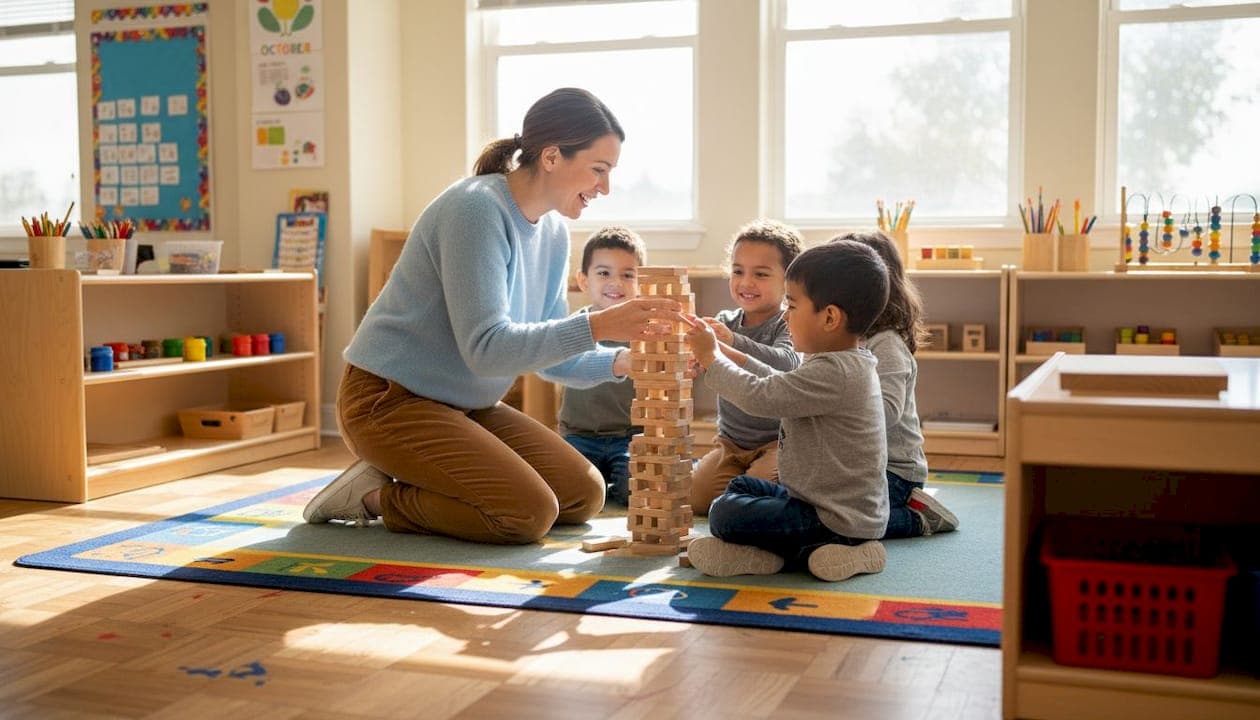
Choosing a preschool curriculum feels overwhelming when every program promises to give your child the best possible start. You want more than flashcards and worksheets. You want a place where your child feels safe, builds friendships, and discovers the joy of learning at their own pace. The good news is that research has caught up with what many parents already sense: child-centered play-based curriculums excel in emotional well-being and social development. This guide walks you through the leading curriculum types, what the evidence actually says, and how to make a confident, informed choice for your family.
Table of Contents
- How to evaluate preschool curriculums
- Montessori, Reggio Emilia, and HighScope: Leading child-centered curriculums
- Academic-focused and domain-specific curriculums: Building Blocks, Creative Curriculum, and others
- Head-to-head comparison of top curriculum types
- How to choose the right preschool curriculum for your child
- Our perspective: Why the best curriculum blends play with purpose
- Discover a nurturing preschool environment at Martlet Academy
- Frequently asked questions
Key Takeaways
| Point | Details |
|---|---|
| Play-based models excel | Montessori, Reggio, and HighScope show proven benefits for emotional well-being and social skills. |
| Blend is best | Purposeful play combined with targeted academics drives long-term development and school readiness. |
| Quality beats labels | The fidelity of curriculum implementation matters more than the name or approach alone. |
| Parent involvement | Observing classrooms and asking questions ensures the best fit for your child. |
How to evaluate preschool curriculums
Before you tour a single classroom, it helps to know what you're actually looking for. A curriculum is more than a lesson plan. It's the philosophy behind how teachers interact with children, how the room is arranged, and what a typical Tuesday morning looks like for your three-year-old.
The most important factor for parents who prioritize emotional health is whether a program takes a whole-child approach. That means nurturing social and emotional learning alongside early literacy and math readiness, rather than treating feelings as a distraction from academics.
Here's what to look for when evaluating any preschool curriculum:
- Teacher role: Are educators facilitating exploration or delivering direct instruction most of the time?
- Child choice: Do children have meaningful input in activities and materials throughout the day?
- Purposeful play: Does purposeful play research inform how free and structured time is balanced?
- Routines: Are transitions predictable and calming, giving children a sense of security?
- Assessment: Does the program track social and emotional milestones, not just academic ones?
These quality preschool program features are consistent across the most respected curriculum models. When a classroom feels calm, children are engaged, and teachers are kneeling down to listen rather than standing at a board, that's a strong signal you're in the right place.
Pro Tip: Ask preschools directly how they blend play and structured activities throughout the day. A thoughtful, specific answer tells you far more than a glossy brochure.
Montessori, Reggio Emilia, and HighScope: Leading child-centered curriculums
Three curriculum models consistently rise to the top when researchers and educators discuss child-centered, play-based learning. Each takes a distinct approach, but all three share a commitment to the child as an active, capable learner.
Montessori classrooms mix age groups (typically 3 to 6 year olds together) and fill the room with hands-on materials children choose independently. The focus is on concentration, self-correction, and building genuine independence. Teachers observe more than they instruct.
Reggio Emilia treats learning as a collaborative project. Children pursue topics that genuinely interest them, often over weeks or months, using art, storytelling, and construction to express their thinking. Family involvement is woven into the daily fabric of the program, not treated as an add-on.
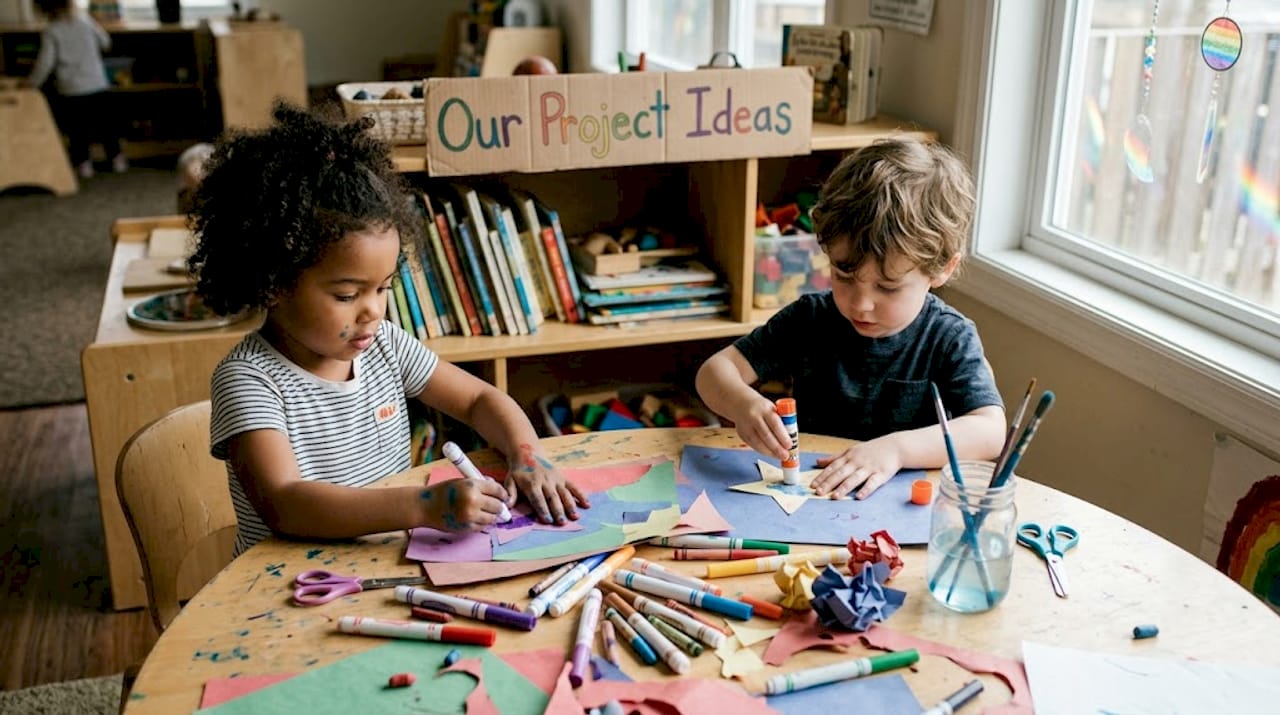
HighScope uses a structured "plan-do-review" cycle where children decide what they'll work on, carry out their plan, and then reflect on what happened. This approach builds executive function and self-regulation in a way that feels natural rather than forced. Small class sizes amplify the benefits of all three models.
A meta-analysis of 32+ Montessori studies found these approaches outperform traditional models for social skills, executive function, and emotional regulation. And Perry Preschool participants in HighScope-style programs showed meaningful long-term social benefits well into adulthood.
A word of caution: "High fidelity" implementation is everything. A school calling itself "Montessori-inspired" without certified teachers or authentic materials often delivers very different results than a fully accredited program. Always ask about staff credentials and routine and structure within the daily schedule.
Pro Tip: Visit classrooms during a regular morning. Watch whether children are choosing their own activities and whether teachers are guiding rather than directing. That dynamic tells you more than any curriculum label.
Academic-focused and domain-specific curriculums: Building Blocks, Creative Curriculum, and others
Not every family is looking for a purely child-led experience. Some parents want a program with clear academic benchmarks and measurable skill-building in early literacy or math. That's where structured and domain-specific curriculums come in.
Creative Curriculum is one of the most widely used structured frameworks in American preschools. It organizes learning into defined interest areas and gives teachers detailed guidance on supporting development across all domains. It's thorough, well-researched, and easier for programs to implement consistently.
Building Blocks and similar math-focused programs target early numeracy with precision. Children who go through these programs often show stronger math skills at kindergarten entry compared to peers in general programs.
Here's how domain-specific curriculums compare to broader approaches:
- Strengths: Targeted skill gains, clear teacher guidance, easily measured outcomes
- Limitations: May underemphasize social-emotional growth unless deliberately blended with play
- Best fit: Families who want academic readiness alongside, not instead of, emotional development
| Curriculum | Reading gains | Math gains | Social-emotional focus |
|---|---|---|---|
| Montessori | Strong | Moderate | Very strong |
| Reggio Emilia | Moderate | Moderate | Very strong |
| HighScope | Moderate | Moderate | Strong |
| Building Blocks | Moderate | Very strong | Limited |
| Creative Curriculum | Strong | Strong | Moderate |
The key insight for parents is that play-based vs academic framing is often a false choice. The strongest programs blend both. Understanding the difference between a preschool vs daycare setting also matters here, since curriculum quality varies significantly between the two.
Head-to-head comparison of top curriculum types
Seeing the differences side by side makes the decision much clearer. Here's how the five most common curriculum models compare across the factors that matter most to families.
| Factor | Montessori | Reggio Emilia | HighScope | Building Blocks | Creative Curriculum |
|---|---|---|---|---|---|
| Social-emotional outcomes | Excellent | Excellent | Excellent | Limited | Good |
| Academic readiness | Good | Good | Good | Strong (math) | Strong |
| Child-led learning | Very high | Very high | High | Low | Moderate |
| Family involvement | Moderate | Very high | Moderate | Low | Moderate |
| Certification available | Yes | No formal cert | Yes | No | Yes |
| Implementation complexity | High | Very high | Moderate | Low | Moderate |
A few patterns stand out. Child-centered models consistently lead on lasting social-emotional skills. Domain-specific models lead on narrow skill gains but often fall short on whole-child outcomes.
The most important takeaway from this comparison is something purposeful play research makes clear: play versus academics is a false dichotomy. The best programs integrate both, and the quality of implementation matters far more than the curriculum label on the door.
What to look for regardless of model:
- Trained, credentialed teachers who understand the philosophy deeply
- Consistent daily routines that give children emotional predictability
- A physical environment designed for child-led exploration
- Regular communication with families about individual progress
How to choose the right preschool curriculum for your child
Knowing the options is only half the work. The other half is matching those options to your specific child and family. Here's a practical framework to guide your decision.
- Assess your child's temperament. A highly independent child may thrive in a Montessori setting. A child who loves storytelling and art may flourish in a Reggio-inspired program. A child who needs clear structure might do best with HighScope's predictable daily cycle.
- Clarify your family's values. Do you prioritize academic readiness, emotional resilience, creativity, or independence? Most families want all of these, but knowing your top priority helps narrow the field.
- Research programs in your area. Look for schools that are certified or accredited in their chosen model, not just "inspired by" it. Teacher training and program fidelity drive outcomes more than any other single factor.
- Schedule tours and observe. Watch how teachers respond when a child is frustrated or upset. That moment reveals more about a program's emotional philosophy than any written policy.
- Ask the right questions. How do you handle conflict between children? How do you communicate with families? What does a typical morning look like? How do you support children who need extra time?
- Trust what you observe. A nurturing environment has a distinct feeling. Children look engaged, calm, and genuinely happy. That matters enormously for lifelong learning outcomes.
No single curriculum is perfect for every child. The right choice is the one where your child feels seen, challenged, and safe every single day.
Our perspective: Why the best curriculum blends play with purpose
After working closely with young children and their families, we've come to believe that the "play vs academics" debate misses the point entirely. Parents are sometimes made to feel that choosing a play-based program means sacrificing academic preparation. That's simply not true.
Purposeful play integrates academic learning and social-emotional growth for better long-term outcomes than direct instruction alone. A child who learns to negotiate with a peer over building blocks is practicing math, language, and emotional regulation simultaneously. That's not a distraction from learning. That is learning.
What we've seen firsthand is that "preschool pressure," pushing children toward worksheets and rote memorization too early, often backfires. Children who feel rushed or stressed in early childhood can develop anxiety around learning that follows them for years. Joy is not a nice-to-have in early education. It's the foundation.
The most effective programs we've observed don't choose between rigor and warmth. They hold both. When you're touring schools, look for that combination. You can find more of our thinking on this in our preschool insights collection.
Discover a nurturing preschool environment at Martlet Academy
At Martlet Academy, we've built our programs around exactly the principles this article describes: child-centered learning, purposeful play, strong family partnerships, and a deep commitment to emotional well-being. Every classroom is designed to feel calm, safe, and full of possibility.
Our preschool program reflects the best evidence on what young children need to thrive, and our kinder prep program bridges play-based learning with the academic readiness skills your child will need in kindergarten. We'd love to show you what that looks like in person. Reach out today to schedule a tour and meet the educators who will become your partners in your child's growth.
Frequently asked questions
What's the main difference between play-based and academic preschool curriculums?
Play-based curriculums focus on social, emotional, and cognitive skills through guided play, while academic curriculums prioritize structured learning in subjects like reading or math. Research shows that purposeful play integrates academics for stronger whole-child development than either approach alone.
Are Montessori and Reggio Emilia proven to help with social and emotional skills?
Yes, multiple studies show these programs provide lasting gains in social understanding, self-regulation, and empathy compared to traditional models. A public Montessori RCT with 588 children found significant improvements in social skills and emotional well-being.
Can a curriculum be both academic and play-based?
Absolutely. The strongest early childhood programs blend child-led play with targeted skill-building, and blending academics with play is what experts now recommend for balanced, lasting development.
How do I know if a preschool is following its chosen curriculum closely?
Look for teacher credentials, classroom materials, and daily routines that align with the curriculum's core philosophy. Fidelity to curriculum is crucial because "inspired" versions without proper training often fail to deliver the same results.