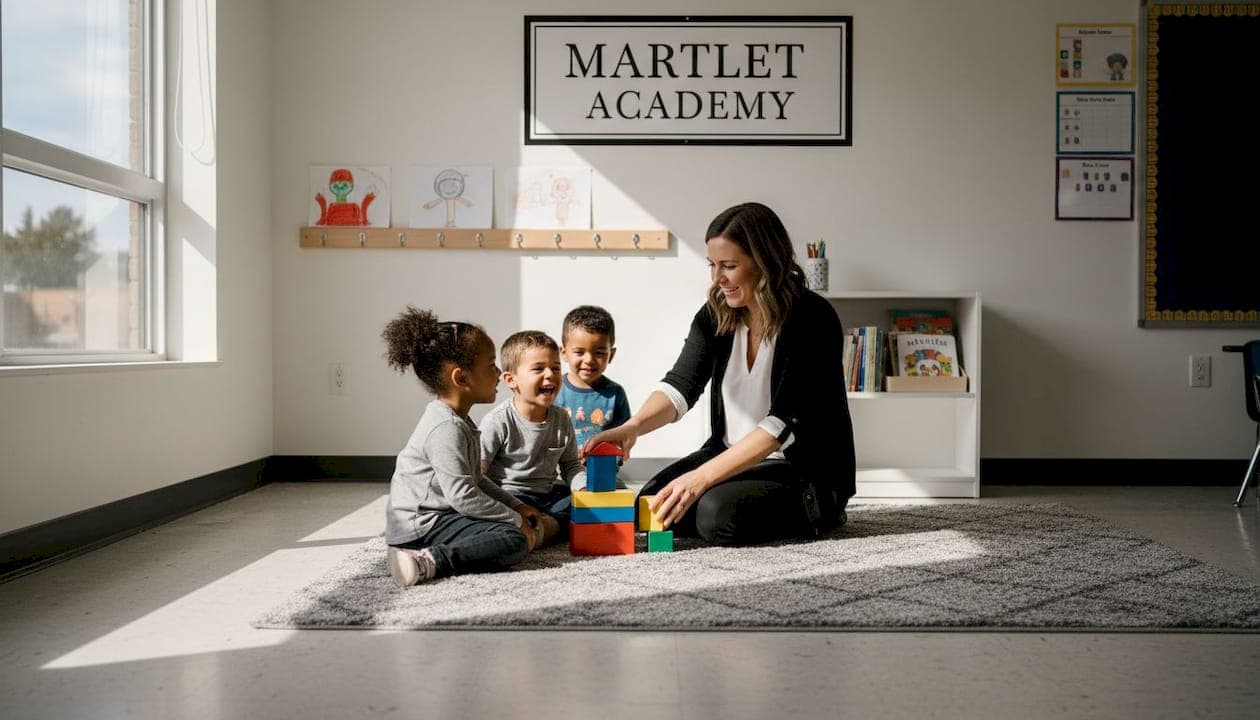
Many parents assume early childhood education is about sitting small children down to memorize letters and numbers before kindergarten. That assumption misses the mark by a wide margin. Play-based learning is actually a core methodology in quality early childhood education, fostering cognitive, social, and emotional development in ways that rote drills simply cannot replicate. What your child experiences in those first five years shapes the architecture of their brain, their emotional resilience, and their lifelong relationship with learning. This article breaks down what quality early education really looks like, why it matters so much, and how you can make a confident, informed choice for your family.
Table of Contents
- What defines quality early childhood education?
- The impact of early childhood education on cognitive and social growth
- Choosing between home-based and center-based care
- How emotional safety shapes early learning and behavior
- The uncomfortable truth most parents miss about early education quality
- Ready to nurture your child's growth?
- Frequently asked questions
Key Takeaways
| Point | Details |
|---|---|
| Intentional play drives growth | Teacher-supported play is crucial for cognitive, social, and emotional development. |
| Quality interactions boost outcomes | High-quality teacher-student engagement and academic content exposure lead to lasting skill gains. |
| Care setting impacts development | Center-based care enhances cognition, while home-based care supports socio-emotional wellbeing. |
| Emotional safety transforms learning | Safe, responsive environments foster self-regulation and positive behavior in children. |
| Process quality matters most | Choosing based on care quality and responsiveness is more important than picking home or center settings. |
What defines quality early childhood education?
Not all preschool programs are created equal, and the difference goes far beyond fancy classrooms or a long waitlist. Quality early childhood education is defined by intentional design, responsive teaching, and environments built around how young children actually learn.
Standards that set the bar
Accreditation through organizations like NAEYC (National Association for the Education of Young Children) and state-level Quality Rating and Improvement Systems (QRIS) give parents a reliable way to evaluate programs. These frameworks assess teacher qualifications, adult-to-child ratios, curriculum quality, and family engagement. They are not just checklists. They reflect decades of research on what helps children thrive.
Play is not the opposite of learning
One of the biggest misconceptions in early education is that structured academic time is more valuable than play. Research categorizes play-based learning into three types: free play, guided play, and playful instruction. Each serves a distinct purpose.
- Free play gives children agency to explore materials, roles, and ideas on their own terms
- Guided play involves a teacher setting up an environment with a learning goal in mind, then following the child's lead
- Playful instruction blends teacher-directed content with engaging, game-like delivery
All three belong in a quality program. Removing any one of them creates an imbalance that shortchanges children cognitively or emotionally.
Teacher interactions are the real engine
Research confirms that teacher-student interaction quality combined with appropriate academic content dosage predicts better academic outcomes in young children. This means the warm, responsive conversation a teacher has while building blocks with a toddler is doing serious developmental work. It is not babysitting. It is intentional scaffolding.
Here is a quick comparison to help you evaluate programs:
| Feature | Lower-quality program | Higher-quality program |
|---|---|---|
| Teacher interactions | Task-focused, minimal dialogue | Warm, responsive, conversation-rich |
| Play structure | Mostly unsupervised free time | Mix of free, guided, and playful instruction |
| Environment design | Generic, adult-arranged | Child-accessible, interest-based areas |
| Academic approach | Rote drills, worksheets | Embedded learning through exploration |
| Family partnership | Occasional updates | Regular, two-way communication |
Learning more about play-based learning benefits can help you ask better questions when touring programs. Understanding child-centered curriculums also gives you a sharper lens for evaluating what a program actually does each day.
The impact of early childhood education on cognitive and social growth
Now that we know what quality education consists of, let's see how it powers your child's growth in measurable, lasting ways.
Cognitive gains that compound over time
Early attendance matters more than most parents realize. Starting quality childcare at age one or two increases grade 9 math scores by 9.7% of a standard deviation, a statistically meaningful gain that shows up nearly a decade later. Those early years are not a warm-up. They are the foundation.
Language and literacy outcomes
Children in high-quality early learning settings hear significantly more varied vocabulary, experience more back-and-forth conversational exchanges with caring adults, and are exposed to print in purposeful contexts. These experiences build the phonological awareness and comprehension skills that predict reading success. The gap between children who received quality early education and those who did not often shows up clearly by second grade, and it widens if not addressed.
Closing the achievement gap
For families navigating financial stress, limited English, or other systemic challenges, quality early education is one of the most powerful equalizers available. Programs that combine responsive caregiving with intentional learning opportunities help reduce gaps in school readiness before they become entrenched. The lifelong learning impact of those early investments is well documented and extends far beyond academics.
Social and emotional development from toddlerhood to adulthood
This is where the data gets truly striking. Process quality in early childhood education and care predicts socio-emotional development from toddlerhood all the way to age 18. That means how a caregiver responds to your two-year-old's frustration today has measurable echoes in their teenage years. Developing social-emotional skills early gives children tools for navigating friendships, managing conflict, and regulating their emotions across every stage of life.
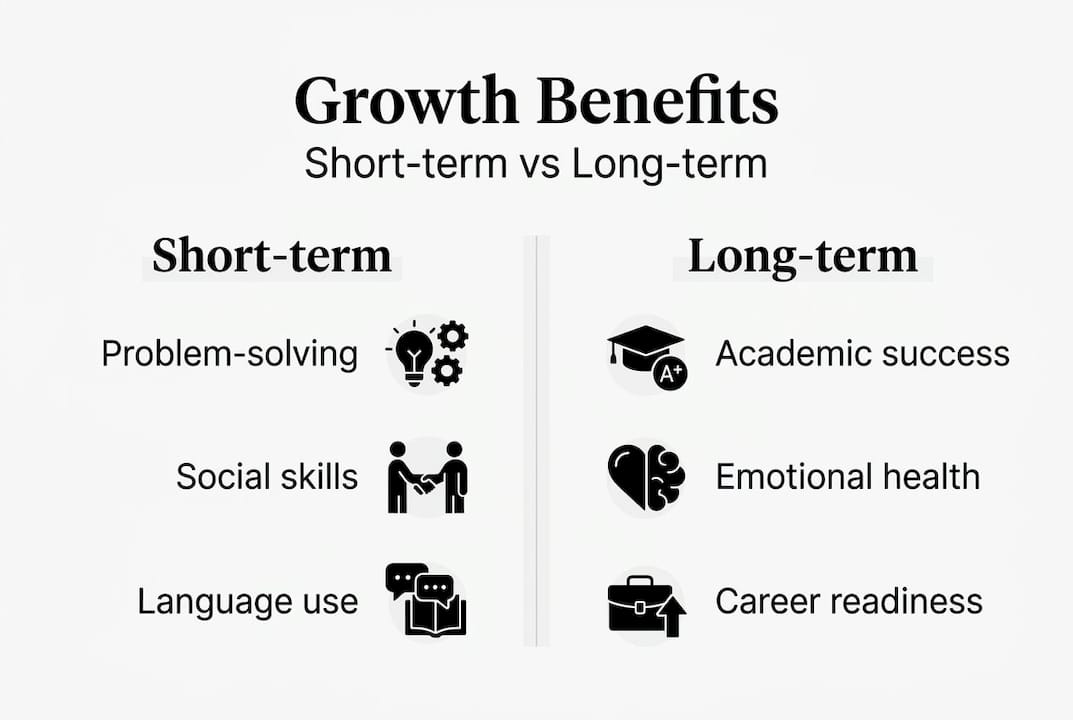
Here is a summary of key developmental benefits by domain:
| Developmental domain | Short-term benefit | Long-term benefit |
|---|---|---|
| Cognitive | Improved problem-solving and attention | Higher academic achievement |
| Language | Larger vocabulary, stronger comprehension | Better reading and communication skills |
| Social | Cooperative play, turn-taking | Stronger peer relationships |
| Emotional | Self-regulation, emotional literacy | Resilience, reduced anxiety |
| Motor | Fine and gross motor coordination | Physical confidence and health habits |
What parents of infants and toddlers should know
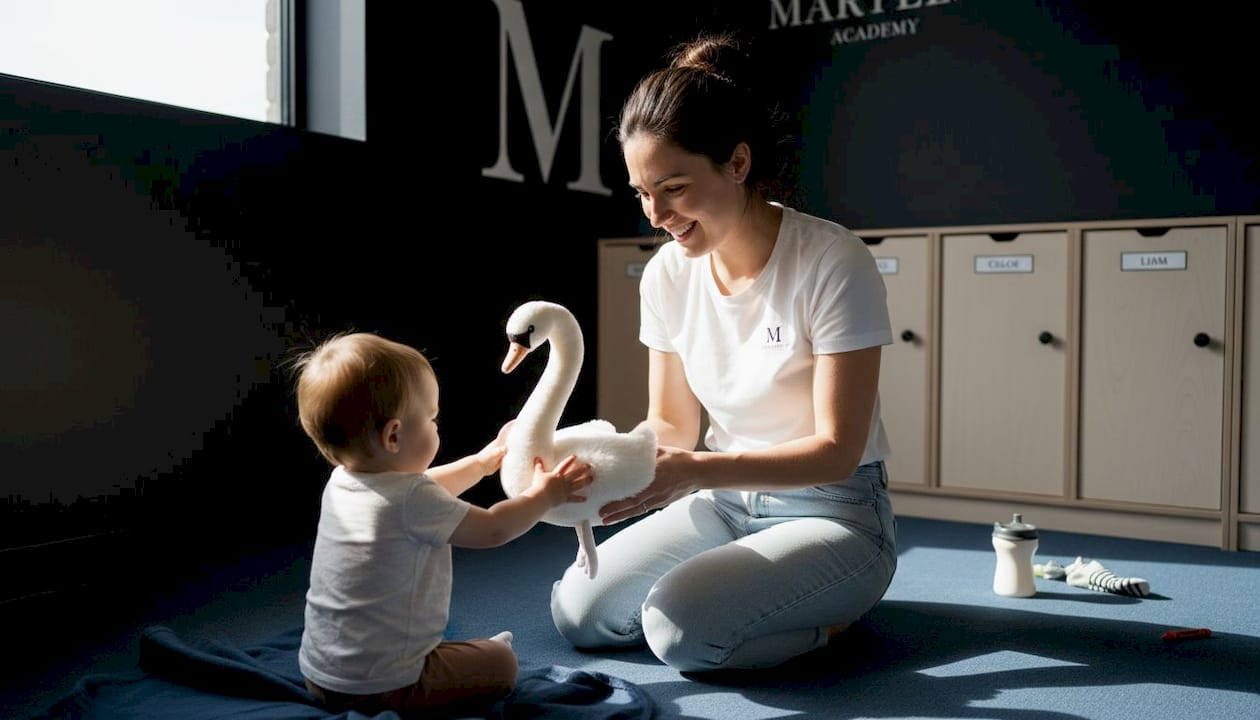
The infant and toddler years are not too early for quality education. In fact, they may be the most sensitive window. Secure attachment to a consistent, responsive caregiver in an early learning setting builds the trust that makes all future learning possible. When your child feels safe with their teacher, they are free to explore, take risks, and grow.
Choosing between home-based and center-based care
Understanding the development outcomes, let's explore how care settings influence those benefits and what really drives the difference.
What research actually says about setting
The honest answer is nuanced. Center-based care generally provides stronger cognitive and language gains than home-based care, but home-based settings often support socio-emotional wellbeing more effectively. Crucially, low-quality center-based care can actually be detrimental, producing worse outcomes than either a warm home setting or a high-quality center.
This is why quality matters far more than setting type.
Process quality in home-based care
Even in family day care or a nanny arrangement, process quality is a stronger predictor of socio-emotional development than the physical setting itself. Process quality refers to the texture of daily interactions: how caregivers respond to distress, how they talk during meals and play, and how much they follow the child's lead. A loving, attentive home caregiver who engages intentionally can produce excellent outcomes.
Comparing the two settings honestly
| Factor | Home-based care | Center-based care |
|---|---|---|
| Cognitive/language gains | Moderate | Stronger, if high-quality |
| Socio-emotional support | Often stronger | Depends heavily on quality |
| Peer interaction | Limited | Regular and structured |
| Regulatory oversight | Variable | More standardized |
| Flexibility and familiarity | Higher | Lower |
| Risk of poor quality | Present | Higher stakes if poor |
How to use this information as a parent
- Ask about caregiver qualifications and turnover rates regardless of setting
- Observe how caregivers respond when children are upset or frustrated
- Look for environments where children's interests drive the day's activities
- Request to see a daily schedule that balances activity types
- Trust your instincts about warmth, even before you can articulate why
Pro Tip: When visiting any care setting, watch how staff respond during transitions like pickup, mealtime, or nap time. Those moments reveal the real relational climate of a program, not just the curated tour.
Checking what to look for in quality preschool characteristics before you visit gives you a structured way to compare options objectively.
How emotional safety shapes early learning and behavior
As care setting quality matters, let's zoom in on the role of emotional safety in your child's daily experience, because this is where development either flourishes or stalls.
Why safety has to come first
A child who does not feel safe cannot learn. This is not a soft, philosophical claim. It is grounded in neuroscience. When a young child feels threatened, uncertain, or emotionally overwhelmed, their brain prioritizes protection over exploration. Curiosity shuts down. Risk-taking disappears. This is why the emotional climate of a classroom is not a nice-to-have extra. It is the foundation of everything else.
What emotional safety looks like in practice
Emotional safety in preschool classrooms is fostered through teacher calm modeling, responsive interactions, and child-led spaces like Peace Tables, which leads to better self-regulation and conflict resolution in young children.
Teachers who practice calm, regulated responses when children act out demonstrate what emotional control looks like. Children absorb and mirror those patterns. Peace Tables and similar child-led conflict resolution spaces give children ownership over their emotional lives rather than just compliance with adult rules.
"When children feel emotionally safe, they take more risks in learning, form stronger peer connections, and transition between activities with far less distress." — Educator observation, Edutopia
Practical strategies you can support at home
- Name emotions consistently so children build an emotional vocabulary early
- Respond to distress with curiosity rather than correction
- Maintain predictable routines that reduce uncertainty
- Use calm, low voices during tense moments to model regulation
- Follow your child's pace during transitions rather than rushing
Pro Tip: When you pick up your child, resist the urge to ask "What did you learn today?" Instead, try "What made you laugh today?" or "Was there a hard moment?" These questions open emotional doors and reinforce that feelings matter as much as facts.
What families notice when emotional safety is prioritized
Children who feel emotionally safe in their care setting typically have smoother drop-offs, more cooperative behavior at home during evenings, and greater flexibility when routines change. They develop self-regulation skills that show up not just in school, but in sibling relationships, public outings, and their capacity to handle disappointment. Building a safe learning environment is not a single strategy. It is a daily, intentional practice.
The uncomfortable truth most parents miss about early education quality
Here is something that experienced educators and researchers want every parent to hear clearly: the debate between play and academics is a false choice, and it is costing children.
Many parents feel pressure to choose programs that look rigorous, where children sit at tables completing worksheets and practicing letter writing from age two. Other parents swing the opposite direction and choose programs where children roam freely with minimal adult guidance. Both extremes miss what the research consistently shows.
Play-based learning must be intentional, not just free time. Age-appropriate design and alignment with each child's developmental needs are critical to outcomes. A classroom full of children playing with no purposeful scaffolding is not a quality program simply because it lacks worksheets.
At the same time, experts firmly reject the push toward early academic drilling. The play vs. academics dichotomy is a false choice. Guided play is actually superior for math learning compared to direct instruction alone. The most effective early programs blend child-initiated exploration with teacher-directed moments, each used at the right time for the right purpose.
What this means for you as a parent is this: stop looking for the program that seems most like school, and stop assuming that more freedom automatically means better outcomes. Start asking how teachers engage with children during play. Ask how they handle conflict. Ask what they do when a child is struggling emotionally. The answers to those questions will tell you more about program quality than any facility tour or brochure.
The role of the teacher is irreplaceable. Understanding the teacher impact on early development helps parents move past surface-level evaluations and ask the questions that actually predict outcomes. A warm, knowledgeable, intentional teacher in a modest facility will consistently outperform a cold, worksheet-driven program in a beautiful building.
Process quality is the thing most parents cannot see during a tour, but it is the thing that matters most.
Ready to nurture your child's growth?
Choosing the right early childhood education program is one of the most meaningful decisions you will make for your child, and you do not have to navigate it alone.
At Martlet Academy, we have built every program around the principles this article describes: intentional play-based learning, emotionally safe environments, responsive caregiving, and genuine partnership with families. Whether your child is just beginning their journey or preparing for kindergarten, our preschool program and kinder prep program are designed to meet them exactly where they are. We would love to show you what a child-centered, emotionally grounded early education looks like in practice.
Frequently asked questions
How does play-based learning support early development?
Play-based learning fosters cognitive, social, and emotional growth by giving children the freedom to explore with purpose while teachers provide intentional support and scaffolding that deepens learning.
Which is better for infants: home-based or center-based care?
Home-based care can be especially strong for socio-emotional wellbeing, while high-quality center-based care typically delivers stronger cognitive and language development outcomes. Quality always matters more than setting type.
What qualities should I look for in a preschool?
Prioritize warm teacher-child interactions and responsive caregiving alongside a balance of free play, guided play, and intentional learning rather than relying on how a program looks on the surface.
How early should my child start formal education?
Research shows that starting quality care at age 1-2 produces meaningful long-term cognitive gains, including higher math scores in grade 9, making the infant and toddler years a valuable window for quality early learning.
How does emotional safety influence behavior?
Emotional safety strategies like calm teacher modeling and child-led conflict resolution spaces help young children build self-regulation skills that reduce behavioral challenges and support healthier peer relationships over time.