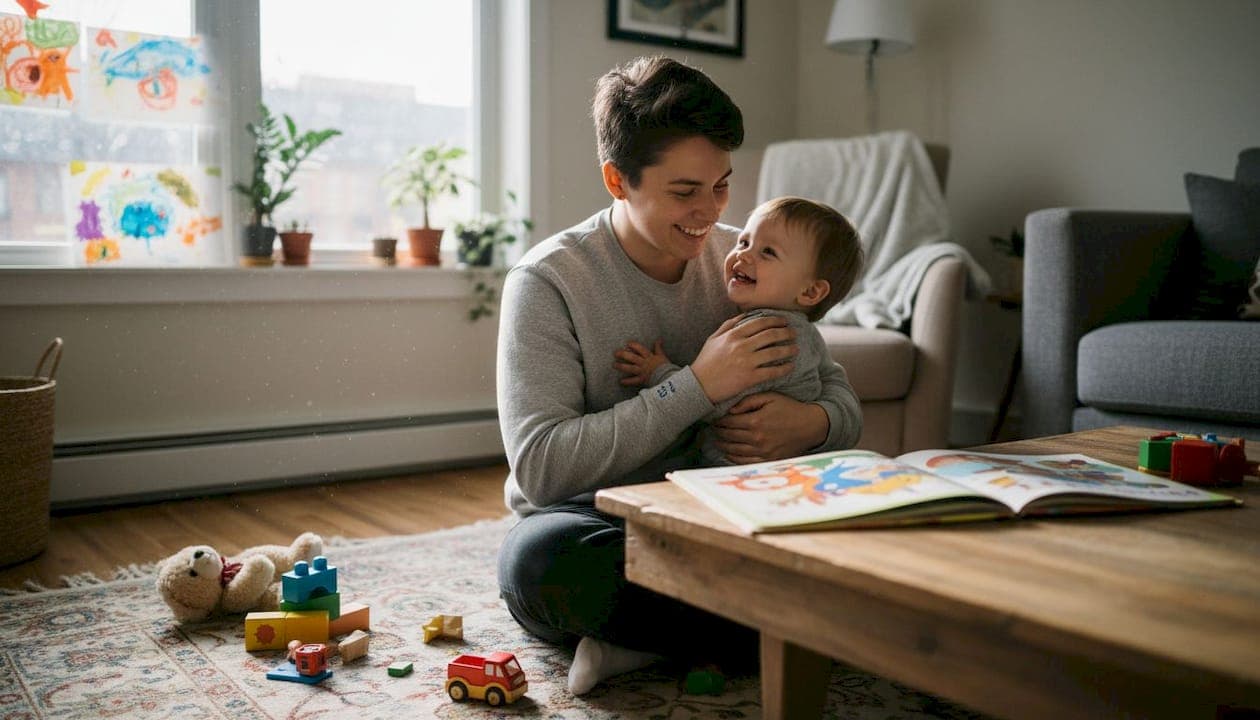
Supporting your child's emotional growth can feel like navigating without a map. You see the big feelings, the tears, the tantrums, and the sudden bursts of joy, but knowing exactly how to respond in the moment is harder than it looks. The good news is that research gives us a clear picture of what works. Emotional milestones from birth through age three set the stage for self-regulation, empathy, and resilience that children carry for life. This article walks you through what to expect at each stage and gives you practical, evidence-based strategies to use starting today.
Table of Contents
- Understanding emotional milestones in early childhood
- Co-regulation: The foundation for healthy emotional growth
- Practical tips for everyday emotional support
- Parenting styles and their impact on emotional development
- A realistic take: Emotions are messy, so is progress
- Support beyond the home: Early learning programs designed for emotional growth
- Frequently asked questions
Key Takeaways
| Point | Details |
|---|---|
| Know milestones | Understanding age-based emotional milestones lets you support your child where they are. |
| Practice co-regulation | Your calm presence teaches children how to manage big feelings and boosts resilience. |
| Use daily strategies | Simple routines—like naming feelings or hugging—can nurture emotional intelligence every day. |
| Choose warmth | Warm, responsive parenting creates the best environment for healthy emotional growth. |
Understanding emotional milestones in early childhood
Once parents understand why emotional development matters, the next step is learning how these skills actually unfold. Emotional milestones are not just checkboxes. They are windows into your child's growing capacity to connect, cope, and communicate. Knowing what is typical at each age helps you respond in ways that genuinely match where your child is, rather than expecting too much or too little.
Here is a quick overview of what to expect from birth through age three:
| Age range | Key emotional milestones |
|---|---|
| Birth to 3 months | Smiles responsively, calms to a familiar voice |
| 6 to 12 months | Stranger anxiety, seeks comfort from caregivers |
| 1 to 2 years | Pushes for independence, begins experiencing tantrums |
| 2 to 3 years | Shows early empathy, manages more complex emotions |
These emotional milestones are a guide, not a strict timeline. Every child moves at their own pace, and small variations are completely normal. What matters most is the general direction of growth.
Why do milestones matter so much for how you respond? Because a strategy that works beautifully for a 10-month-old may fall flat for a 2-year-old. A baby who is startled by a new face needs physical closeness and a calm voice. A toddler in the middle of a meltdown needs you to name the feeling out loud before offering a solution. Matching your approach to your child's stage is not just good parenting. It is the foundation of social and emotional skill-building that lasts well beyond the toddler years.
Here are a few things to keep in mind as you track your child's emotional growth:
- Regression is normal. A child who was sleeping and self-soothing well may fall apart during a big transition like a new sibling or a move.
- Temperament shapes the timeline. Sensitive children may hit certain emotional milestones earlier but struggle longer with regulation.
- Your response matters more than the milestone itself. How you show up in those early moments shapes the neural pathways your child builds for handling stress.
Understanding the map makes the journey far less overwhelming.
Co-regulation: The foundation for healthy emotional growth
With a clear picture of developmental milestones, parents can now focus on building the most important foundation of all: co-regulation. This is the process by which a calm, present caregiver helps a child manage emotions they cannot yet handle alone. Think of it as lending your nervous system to your child until theirs is strong enough to do the job.
"Co-regulation by caregivers is essential for infants' emotional regulation, transitioning to self-regulation as children age."
This is not a passive process. It requires you to be intentional, especially in high-stress moments when your own nervous system is fired up too. The good news is that small, consistent actions add up fast.
Practical co-regulation strategies that work:
- Stay physically close. Holding, rocking, or simply sitting beside your child signals safety to their developing brain.
- Use a calm, slow voice. Your tone does more work than your words. A lower, steadier voice helps regulate your child's heart rate.
- Label the emotion out loud. Say "You feel really frustrated right now" before trying to fix anything. This teaches children that feelings have names and are not dangerous.
- Match and then lead. Briefly acknowledge the intensity of the feeling, then gradually bring your own energy down. Children follow your lead naturally.
- Create predictable routines. Knowing what comes next reduces anxiety and helps children feel safe enough to explore big feelings.
The outcomes of consistent co-regulation are significant. Strong co-regulation links to better coping, resilience, and emotional self-regulation, which in turn correlates with academic success. This is not just about managing tantrums today. It is about building the internal tools your child will rely on for decades.
Creating a nurturing environment at home reinforces everything you do in these co-regulation moments.
Pro Tip: When you feel yourself getting activated during a meltdown, take one slow breath before responding. Your child's brain is scanning your face and body for cues about whether this situation is safe. Your breath is the fastest reset you have.
Practical tips for everyday emotional support
Beyond co-regulation, parents need a toolkit of strategies for daily support. The goal is not to eliminate difficult emotions but to give your child repeated, positive experiences of moving through them with your help.
Here are age-specific actions you can start using right away:
- Newborns and young infants: Skin-to-skin contact regulates body temperature, heart rate, and cortisol levels. Hold your baby close during feeding, after waking, and during fussy periods. Staying physically close and using a calm tone are among the most effective early strategies.
- 6 to 12 months: Narrate your actions and your baby's feelings. "You're looking at that new toy. It seems a little scary. I'm right here." This builds the emotional vocabulary your child will use later.
- 1 to 2 years: Name emotions as they happen. When your toddler throws a toy in frustration, say "You're angry. That's okay. Let's find another way." Blowing bubbles together is a surprisingly effective calming tool because it naturally slows breathing.
- 2 to 3 years: Start simple problem-solving conversations after the storm passes. "What could we do next time when you feel that way?" Even young toddlers can begin to generate ideas with your guidance.
- All ages: Use play-based learning as a vehicle for emotional exploration. Puppets, role play, and storytelling let children practice feelings in a low-stakes environment.
Pro Tip: Build a "calm-down corner" at home with soft items, a few sensory toys, and picture books about feelings. Introduce it during a calm moment, not a meltdown. Over time, children learn to seek it out on their own, which is an early form of self-regulation.
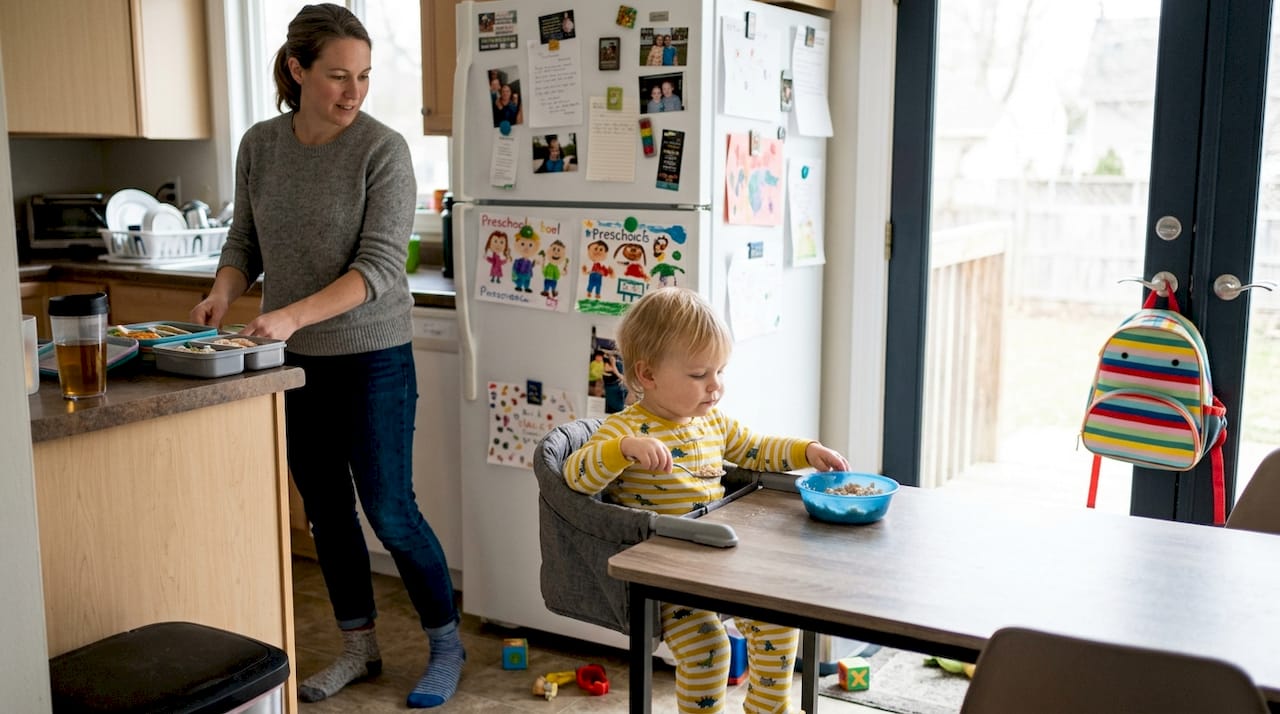
Consistent routine and structure also plays a powerful role here. Predictability reduces the emotional load on young children, leaving more room for learning and connection.
Parenting styles and their impact on emotional development
With hands-on strategies in place, it is worth stepping back to look at the bigger picture: your overall parenting approach. Research consistently shows that the emotional climate you create day to day shapes how your child learns to handle stress, relationships, and challenges.
| Parenting style | Key characteristics | Emotional outcomes |
|---|---|---|
| Authoritative | Warm, responsive, clear boundaries | Best emotional regulation, resilience |
| Authoritarian | High control, low warmth | Higher anxiety, lower self-esteem |
| Permissive | High warmth, few boundaries | Difficulty with self-regulation |
Authoritative parenting with high warmth and responsiveness best supports development compared to authoritarian approaches. This does not mean being a pushover. It means holding boundaries with empathy rather than fear.
Temperament adds another layer. Maternal sensitivity is especially influential in frustration contexts and shapes a child's ability to self-soothe, moderated by the child's own temperament. A highly sensitive child may need more verbal reassurance. A more easy-going child may bounce back quickly with minimal intervention. Neither is better. They just need different things.
Here are a few principles that hold across all temperaments:
- Warmth is non-negotiable. Children need to feel loved even when they are at their most difficult.
- Consistency builds trust. When your responses are predictable, children feel safe enough to take emotional risks.
- Repair matters more than perfection. Coming back after a hard moment and reconnecting teaches children that relationships are resilient.
The role of adults in childhood development extends beyond parents too. Educators, caregivers, and family members all contribute to the emotional environment a child experiences.
A realistic take: Emotions are messy, so is progress
After reviewing how different approaches shape outcomes, it is important to acknowledge what the research does not always say out loud: parenting is hard, and you will get it wrong sometimes. That is not a flaw in the plan. It is part of it.
We see parents put enormous pressure on themselves to respond perfectly in every charged moment. But the children who develop the strongest emotional foundations are not the ones with perfect parents. They are the ones with present parents who repair when things go sideways. A moment of disconnection followed by a genuine reconnection actually teaches children something powerful: relationships can survive conflict.
Progress in emotional development is not linear. Your child may seem to master a skill and then regress completely under stress. That is normal. What matters is the overall pattern over weeks and months, not the performance on any given Tuesday.
Avoid comparing your child's emotional timeline to other children. Temperament, environment, and individual biology all play a role. The goal is not to produce a child who never cries. The goal is a child who knows they are not alone when they do. That understanding, built in the earliest years, shapes lifelong learning and resilience in ways that outlast any single strategy.
Give yourself the same grace you give your child.
Support beyond the home: Early learning programs designed for emotional growth
If you're looking for even more support, consider how structured early learning programs can reinforce your child's emotional growth.
At Martlet Academy, emotional and social development is woven into every part of the day, not treated as a separate lesson. Our infant program creates a calm, responsive environment where the youngest learners build trust and security through consistent, nurturing relationships. Our toddler program supports big feelings with age-appropriate tools and language-rich routines. And our preschool program builds on those foundations with structured social learning and guided play. When home and school work together, children feel the consistency they need to thrive emotionally. We would love to be part of your child's journey.
Frequently asked questions
What are some warning signs of delayed emotional development?
Signs include lack of smiling by 3 months, no response to familiar faces, or persistent trouble calming after age one. Always consult your pediatrician if you have concerns.
How does temperament affect emotional development?
Children with different temperaments need unique support, and sensitive parenting helps all children learn self-soothing and emotional regulation regardless of their natural wiring.
Does preschool help with emotional development?
Yes. High-quality preschool programs actively build emotional and social skills, and emotional self-regulation developed in these settings correlates with stronger academic outcomes later.
What age can children start learning to self-regulate emotions?
Self-regulation skills emerge gradually from toddlerhood, but co-regulation by caregivers remains essential for infants and young children as the bridge to independent emotional management.