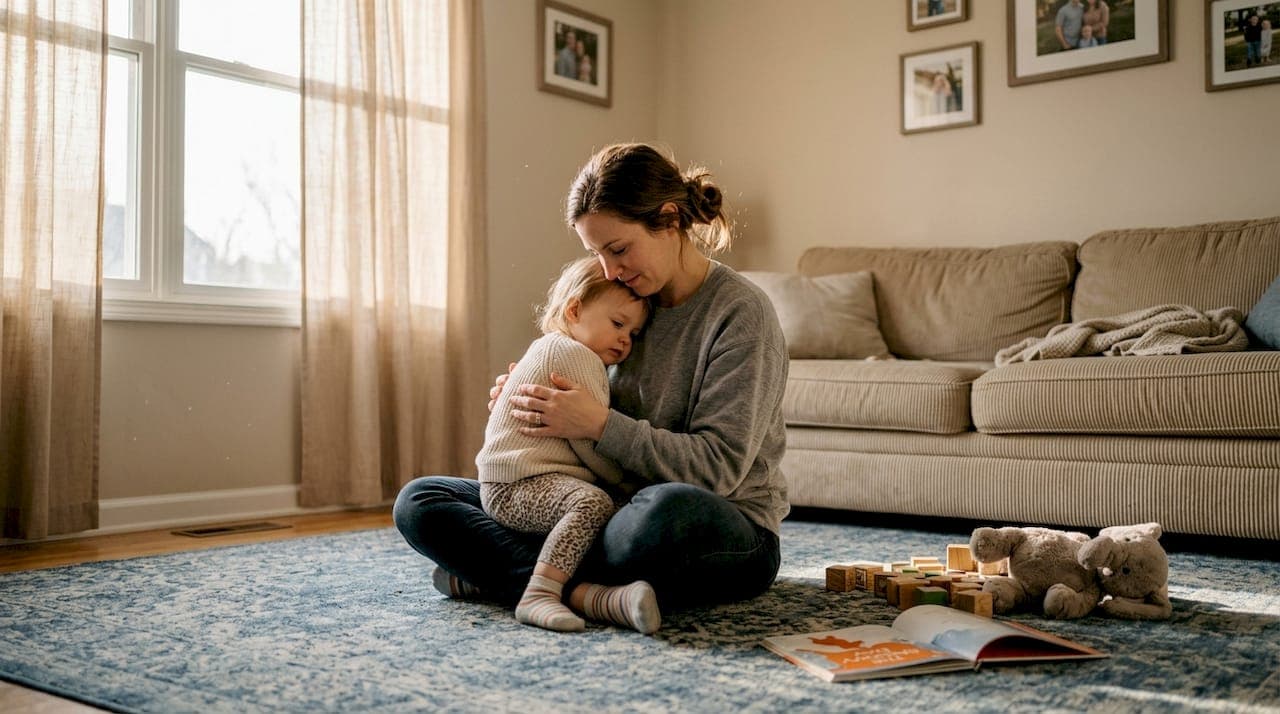
Most parents assume social-emotional learning begins when children start school. In reality, social-emotional development is critical from the very first weeks of life, shaped by every smile, soothing voice, and moment of responsive care. These early experiences wire the brain for empathy, self-control, and connection in ways that follow children for decades. This guide breaks down what social-emotional development actually means, how it unfolds from birth through the preschool years, what milestones to watch for, and how you can actively support your child's emotional growth at home and through quality early programs.
Table of Contents
- What is social-emotional development?
- How social-emotional development unfolds in early childhood
- Key milestones and when to seek support
- How early learning programs foster social-emotional growth
- Edge cases and nuances in social-emotional development
- A fresh perspective on nurturing young children's social-emotional growth
- Find the right early childhood program with Martlet Academy
- Frequently asked questions
Key Takeaways
| Point | Details |
|---|---|
| Starts in infancy | Social-emotional development begins in the earliest months and shapes lifelong wellbeing. |
| Core skills matter | Building self-awareness, empathy, and regulation is essential, not optional, for young children. |
| Milestones guide action | Knowing key milestones helps parents support growth and recognize when extra help is needed. |
| Quality programs help | High-quality early education can boost emotional, social, and academic outcomes. |
| Every child’s path differs | Children develop at different rates, and extra support or adaptation can make a positive difference. |
What is social-emotional development?
Social-emotional development refers to the growing ability children have to understand their own feelings, manage their behavior, build relationships, and navigate the world around them. It is not just about being friendly or well-behaved. It is a complex set of skills that children build gradually, through experience, relationships, and guidance.
The Collaborative for Academic, Social, and Emotional Learning (CASEL) is widely recognized as the leading framework for understanding these skills. CASEL defines five core social-emotional competencies that children develop over time:
- Self-awareness: Recognizing one's own emotions, strengths, and values
- Self-management: Regulating emotions, setting goals, and managing stress
- Social awareness: Understanding and empathizing with others, including those from different backgrounds
- Relationship skills: Communicating clearly, cooperating, resolving conflict, and building healthy connections
- Responsible decision-making: Making thoughtful choices about behavior and interactions
These competencies do not develop in isolation. They grow through thousands of small interactions: a caregiver responding to a baby's cry, a toddler learning to wait for a turn, a preschooler figuring out how to make a friend after a disagreement.
"Children who develop strong social-emotional skills in their early years are more likely to succeed academically, maintain healthier relationships, and demonstrate greater resilience throughout life."
Early childhood is especially important because the brain is more flexible and receptive during these years than at any other point in life. The lasting emotional skills children build before age five create a foundation that shapes how they handle challenges, connect with others, and learn in school. Quality preschool programs are designed with this window of opportunity in mind, and even small class sizes play a meaningful role by giving educators more time to nurture each child's emotional needs. Understanding milestones for toddlers helps parents see how these competencies show up in real life.
How social-emotional development unfolds in early childhood
Knowing what social-emotional development is matters, but understanding how it actually grows helps parents see their role more clearly. These skills do not appear all at once. They build in a predictable sequence, shaped by brain development and the quality of a child's relationships.
Here is how the progression typically looks from birth through age five:
- Birth to 3 months: Babies respond to faces, voices, and touch. They begin to recognize their primary caregivers and show early signs of trust through calming when held.
- 3 to 12 months: Infants develop attachment bonds. They show joy, fear, and frustration. They look to caregivers for cues about whether situations are safe, a process called social referencing.
- 12 to 24 months: Toddlers begin to show empathy, like patting a crying friend. They also start testing limits, which is actually a sign of growing independence and self-awareness.
- 24 to 36 months: Children begin using words to name feelings. They engage in simple cooperative play and start understanding basic rules and fairness.
- 3 to 5 years: Children develop the ability to manage frustration more effectively, take turns, negotiate, and form genuine friendships.
The brain science behind this progression is fascinating. The prefrontal cortex, which governs impulse control and decision-making, is still developing well into adulthood. The amygdala, which processes emotional reactions, is highly active in young children. This is why toddlers have big meltdowns over small things. Attachment and emotional regulation are directly shaped by caregiver responsiveness and the interplay between these brain regions. When a caregiver consistently responds with warmth, the child's nervous system learns that the world is safe, making it easier to regulate emotions over time.
The mechanisms of attachment are well-documented and underscore how much early relationships matter. The teacher influence in development extends this same principle into the classroom setting.
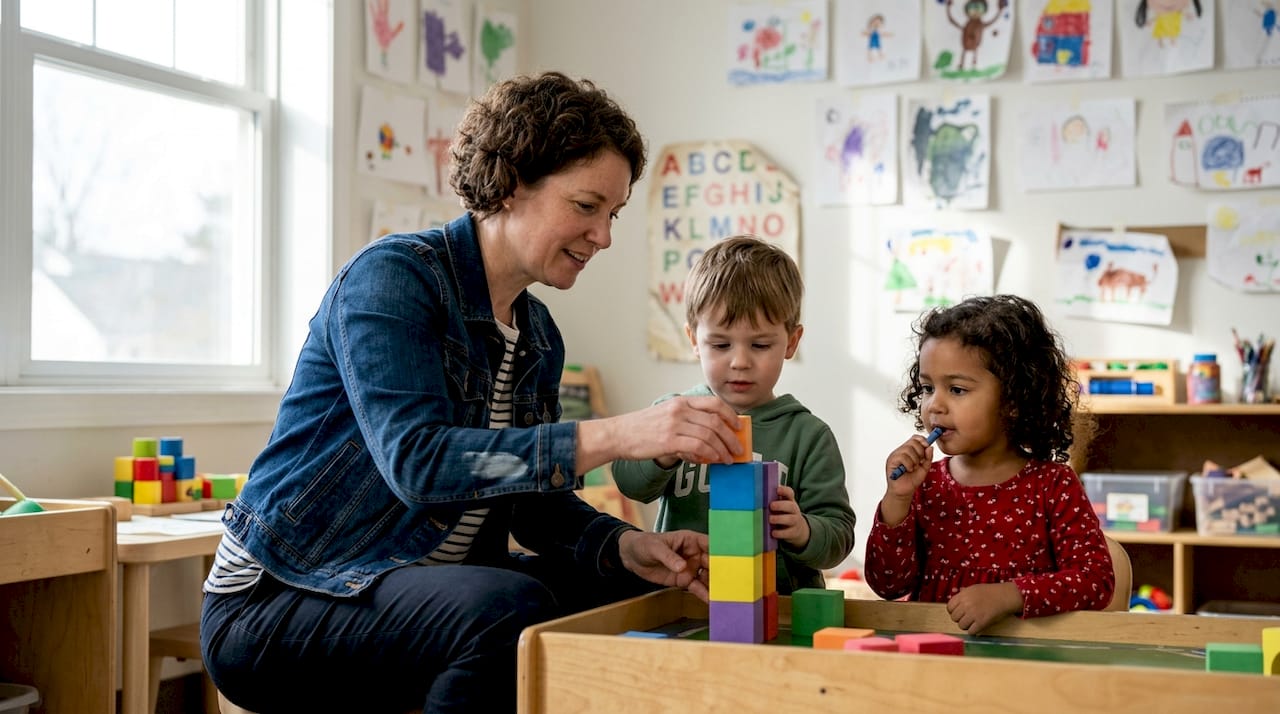
Pro Tip: During infancy, responsiveness matters more than any toy or activity. When you consistently respond to your baby's cries, coos, and gestures, you are literally building the neural pathways for emotional security. You cannot spoil a baby with attention. You are building trust.
Key milestones and when to seek support
Milestones give parents a useful roadmap, but they are best understood as ranges, not rigid deadlines. Children develop at their own pace, and many factors influence timing. What matters is the overall trajectory.
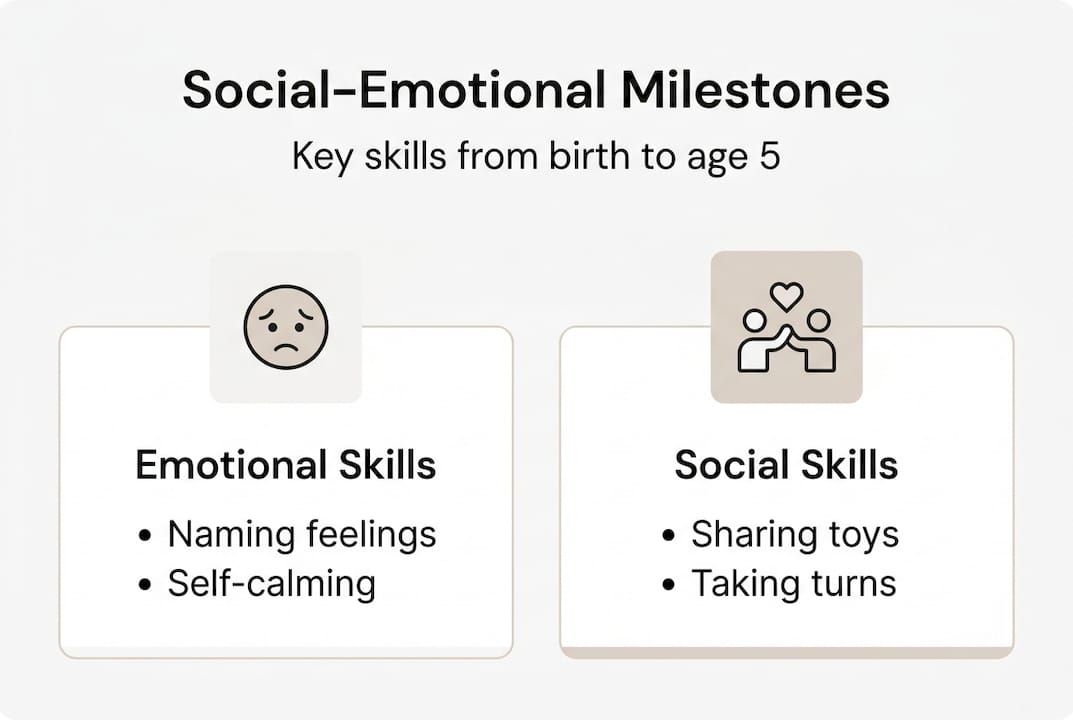
Here are major social-emotional milestones by age, based on CDC and ZERO TO THREE guidelines:
| Age | Key social-emotional milestones |
|---|---|
| 2 months | Smiles at people; calms with familiar caregiver |
| 12 months | Shows affection; cries when caregiver leaves; waves bye-bye |
| 24 months | Plays alongside other children; shows defiant behavior; expresses many emotions |
| 36 months | Shows concern for a crying friend; takes turns in games; separates from caregivers more easily |
Sometimes children miss milestones or show patterns that signal a need for extra support. Watch for these signs:
- Little or no eye contact by 6 months
- No smiling or positive expressions by 6 months
- No back-and-forth sharing of sounds or gestures by 12 months
- Significant difficulty calming after distress, well beyond the toddler years
- Persistent withdrawal from other children or caregivers
- Extreme emotional reactions that seem disproportionate and do not improve with time
If you notice several of these patterns, reaching out to your pediatrician or a developmental specialist is a smart, proactive step. Early support makes a significant difference. "Catch-up" development is absolutely possible, especially when children receive targeted help during the sensitive early years.
Pro Tip: Build milestone tracking into your everyday routines. After playdates or family gatherings, take a quick mental note of how your child interacted. You do not need a formal checklist every week. Just stay curious and observant. Play-based learning naturally surfaces many of these milestones in action, making it easier to spot both strengths and areas for growth. You can also reference social milestones by age for detailed guidance.
How early learning programs foster social-emotional growth
Home is the first classroom, but high-quality early childhood programs provide something families alone often cannot: a structured, peer-rich environment where children practice social-emotional skills every single day.
Not all programs approach this the same way. Here is how common program types compare:
| Program type | Social-emotional approach | Key benefit |
|---|---|---|
| Play-based | Child-led exploration, peer interaction | Builds intrinsic motivation and empathy |
| Structured academic | Teacher-directed, skill-focused | Supports self-regulation through routine |
| Mixed or blended | Combines child-led and guided activities | Balances emotional and academic readiness |
The strongest programs, regardless of type, tend to share specific practices:
- Serve-and-return interactions: Educators respond to children's cues with warmth and attention, mirroring the responsive caregiving that builds secure attachment
- Emotion coaching: Teachers name feelings aloud, helping children build an emotional vocabulary
- Conflict mediation: Rather than simply redirecting, educators guide children through disagreements
- Mindfulness moments: Brief, age-appropriate breathing or calming activities teach self-regulation
- Modeling prosocial behavior: Adults demonstrate kindness, patience, and cooperation in real time
Play-based and responsive caregiving approaches yield measurable gains in both social-emotional and academic outcomes, making the case for programs that prioritize the whole child. A play-based preschool environment naturally weaves these practices into every part of the day, and nurturing environments are designed to make children feel safe enough to take emotional risks. When visiting a program, ask directly: how do teachers handle conflicts between children? What does a typical morning look like? The answers reveal a lot about a program's true priorities. You can also review SEL evidence to understand what research-backed practices look like in action.
Edge cases and nuances in social-emotional development
Most children follow a broadly typical path, but a meaningful number need extra support. Roughly 20% of children struggle with emotional or behavioral difficulties, and specialized approaches can make a real difference for these kids.
Developmental concerns often show up in two broad patterns. Internalizing behaviors include withdrawal, excessive anxiety, and difficulty connecting with others. Externalizing behaviors include frequent aggression, defiance, and emotional outbursts that go well beyond typical developmental stages. Both patterns deserve attention and compassionate support, not labels or punishment.
For children who need more, several evidence-based adaptations exist:
- Trauma-informed care: Recognizes how adverse experiences affect emotional regulation and behavior, and responds with safety and predictability rather than discipline
- Art and play therapy: Uses creative expression to help children process emotions they cannot yet verbalize
- Mindfulness-based approaches: Teach children to notice and manage their internal states through simple, sensory-based practices
- Individualized support plans: Coordinate between families, educators, and specialists to address specific needs consistently
"Early, tailored interventions for children showing signs of social-emotional difficulties are far more effective than waiting. The earlier support begins, the stronger the outcomes."
If you are concerned about your child's development, consulting a pediatric psychologist or developmental pediatrician is a strong first step. Developmental delays and support resources can help you understand what to expect from an evaluation. Programs that use trauma-informed strategies are especially well-equipped to support children navigating difficult circumstances.
A fresh perspective on nurturing young children's social-emotional growth
Here is something worth saying plainly: you do not need a curriculum to raise an emotionally healthy child. The most powerful thing you can do is be present and responsive in the ordinary moments. Dinner conversations. Bedtime routines. The way you handle your own frustration when something goes wrong.
Many parents worry they are not doing enough structured activities for emotional learning. But children learn empathy by watching you show empathy. They learn to regulate emotions by co-regulating with you first. No flashcard or worksheet replaces that.
The lifelong impact of early learning is real, but it is built in the small, consistent moments more than in any single program or activity. A good program amplifies what you are already doing at home. It does not replace it.
Pro Tip: Focus on quality interactions, not perfection. One warm, attentive conversation after a hard day does more for your child's emotional development than a week of well-intentioned but distracted activities.
Find the right early childhood program with Martlet Academy
Social-emotional development shapes how your child learns, connects, and grows for the rest of their life. Choosing an early childhood program that genuinely prioritizes these skills is one of the most meaningful decisions you can make as a parent.
At Martlet Academy, every program is built around the belief that emotionally safe children are ready learners. Whether you are exploring our infant program for your youngest, our toddler program for your growing explorer, or our preschool program for your soon-to-be kindergartner, you will find a team dedicated to nurturing the whole child through responsive, play-based care. We would love to be part of your child's story.
Frequently asked questions
What are examples of social-emotional skills in young children?
Examples include sharing toys, using words to express feelings, playing cooperatively with peers, taking turns, and calming down when upset. These skills build gradually through daily interactions and responsive relationships.
How can parents encourage social-emotional development at home?
Modeling kindness, naming emotions during everyday moments, and using play and routines to practice sharing and empathy are all effective. Responsive caregiving and consistent parent modeling are among the most powerful tools available to families.
When should I be concerned about my child's social-emotional development?
If milestones are missed by several months or your child shows ongoing difficulty with emotional regulation, connection, or communication, consult a specialist. Delays or ongoing difficulties are best addressed early, when intervention is most effective.
Do early childhood programs really impact future emotional health?
Yes. Research consistently shows that quality programs promote secure attachment, stronger self-regulation, and better long-term academic and health outcomes. SEL programs show lasting gains that extend well beyond the early childhood years.
Are there differences between boys and girls in social-emotional development?
Both boys and girls follow similar core developmental trajectories, though the pace or expression of skills may vary. Milestone achievement rates may differ slightly, but focusing on your individual child's progress matters far more than comparing by gender.
Recommended
- How Preschool Builds Social and Emotional Skills — Martlet Academy
- What to Look for in a Quality Preschool Program — Martlet Academy
- Creating a Safe and Nurturing Preschool Learning Environment — Martlet Academy
- Play-Based Learning: How Children Learn Best in Preschool — Martlet Academy
- Pre-schooler parenting tips: practical advice for Ilford families