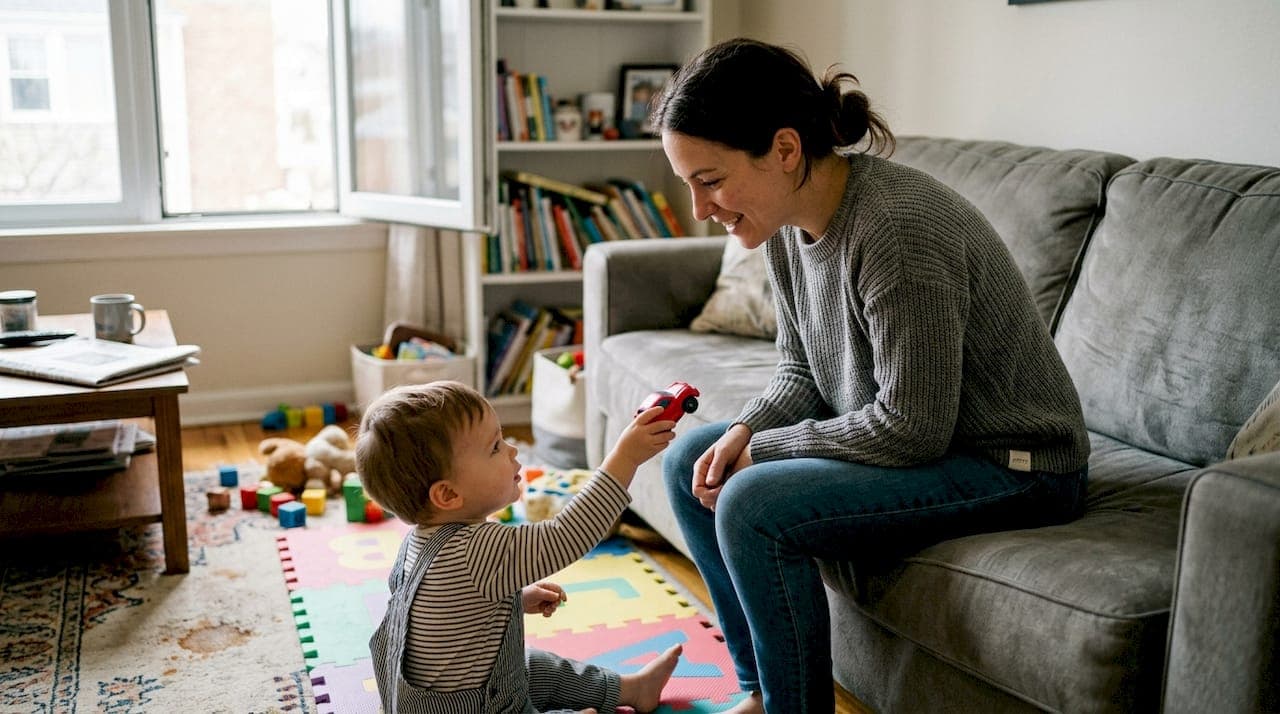
Most parents assume that simply talking around their child is enough to support language growth. It turns out, that assumption leaves a lot on the table. Communication is foundational for language, cognitive, and social-emotional development in infants and toddlers, and the way you communicate matters just as much as how often you do it. This guide walks you through the research, the real-world strategies, and the classroom practices that make the biggest difference, so you can feel confident that every interaction with your child is doing exactly what it should.
Table of Contents
- Why early communication matters for your child's development
- How everyday moments build communication skills
- Classroom and educator roles: Amplifying communication
- Building emotional security through connected communication
- Recognizing delays and embracing individual differences
- Our perspective: The conversation we're not having about communication
- Ready to see responsive communication in action?
- Frequently asked questions
Key Takeaways
| Point | Details |
|---|---|
| Responsive exchanges | Back-and-forth interactions are the true engine of early development, far more than passive listening. |
| Daily routines matter | Even everyday moments like mealtime and play can powerfully advance your child’s communication when you tune in and respond. |
| Educator involvement | Teachers and classroom settings play a key role in modeling quality communication and boosting language skills. |
| Emotional safety | Connected communication is the foundation for your child’s trust, resilience, and eagerness to learn. |
| Act early on concerns | Most delays resolve, but knowing milestones empowers you to get help when needed—without panic. |
Why early communication matters for your child's development
There is a big difference between talking at a child and talking with one. The back-and-forth exchange, where your baby coos and you respond, where your toddler points and you name what they see, is what researchers call serve-and-return interaction. Serve-and-return interactions are key for brain architecture, literally shaping the neural connections that support thinking, learning, and relating to others.
This matters because the brain develops fastest in the first three years of life. Every responsive exchange reinforces pathways for language, attention, and emotional regulation. When those exchanges are missing or inconsistent, development can slow in ways that are hard to reverse later.
Here is a quick look at what CDC milestones tell us about early communication development:
| Age | Typical communication milestones |
|---|---|
| 2 months | Coos, makes sounds, turns toward voices |
| 12 months | Says 1-2 words, waves, points to objects |
| 24 months | Uses 50+ words, begins two-word phrases |
Beyond language, communication builds emotional security. When a caregiver responds consistently to a child's cues, the child learns: I am seen. I am safe. My needs matter. That sense of safety is what allows curiosity to flourish. Children who feel emotionally secure are far more willing to explore, take risks, and try new things, which are the exact conditions that support learning.
Developing social-emotional skills in preschool does not happen in a vacuum. It grows directly from the communication patterns children experience from birth.
What happens when communication is limited? Children may develop smaller vocabularies, struggle with emotional regulation, and find it harder to connect with peers. The good news is that intentional, responsive communication can make a real difference, even when started later.
"The quality of early interactions is not just about language. It shapes who a child becomes, how they handle stress, how they relate to others, and how they approach learning for the rest of their lives."
- Early childhood development research consistently points here: connection first, content second.
Now that you know why communication isn't just background noise, let's uncover the developmental milestones that reflect its impact and why every word, gesture, and response counts.
How everyday moments build communication skills
You do not need special tools or a structured curriculum to build your child's communication skills. The routines you already have are your best resource. Mealtimes, bath time, car rides, grocery runs, and bedtime reading are all rich opportunities for the kind of back-and-forth that drives development.
Here is how to make the most of five key daily moments:
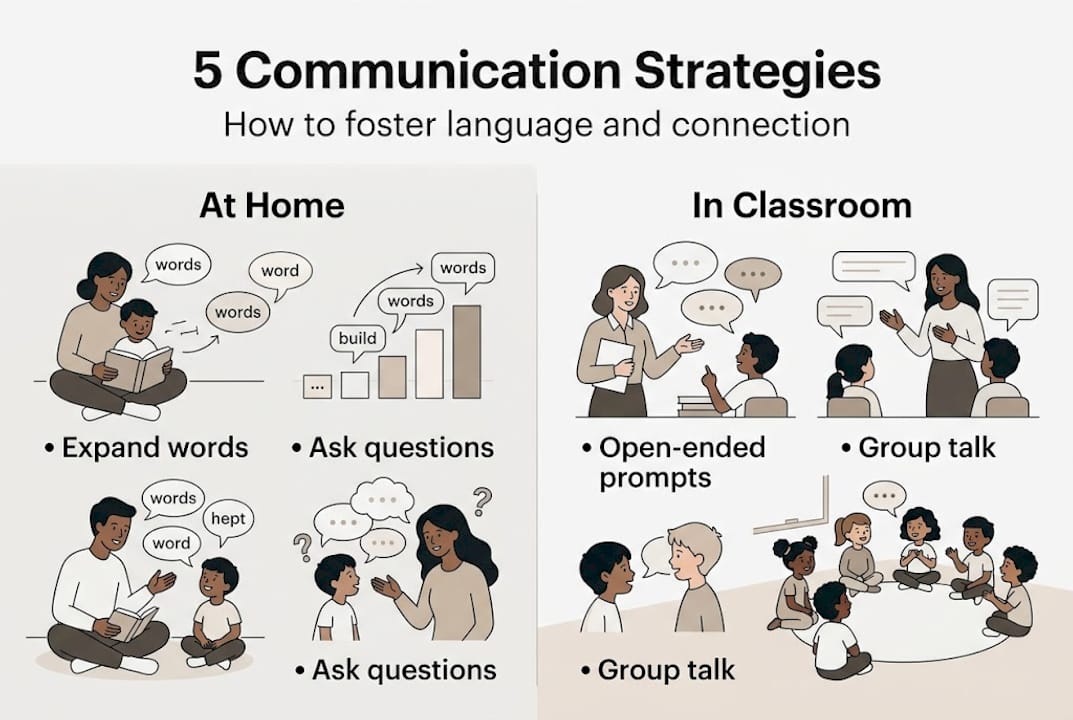
- Mealtimes: Name foods, describe textures, and ask simple questions. "Is the banana soft?" invites more engagement than "Eat your banana."
- Play: Follow your child's lead. If they push a toy car, narrate it. "The car goes fast! Now it stops." This mirrors their interest and expands their vocabulary.
- Reading together: Pause to point at pictures, ask "What's that?" and let your child fill in familiar words. Play-based learning tips often highlight shared reading as one of the highest-value activities for early language.
- Transitions: Warn your child before changes. "In two minutes, we're going to put on shoes." This reduces anxiety and gives them language for time and sequence.
- Outings: Point out signs, animals, and people. Ask open questions like "What do you see?" rather than yes-or-no questions.
Parent interventions boost vocabulary and encourage growth mindsets in children, especially when parents use expansion techniques during everyday talk.
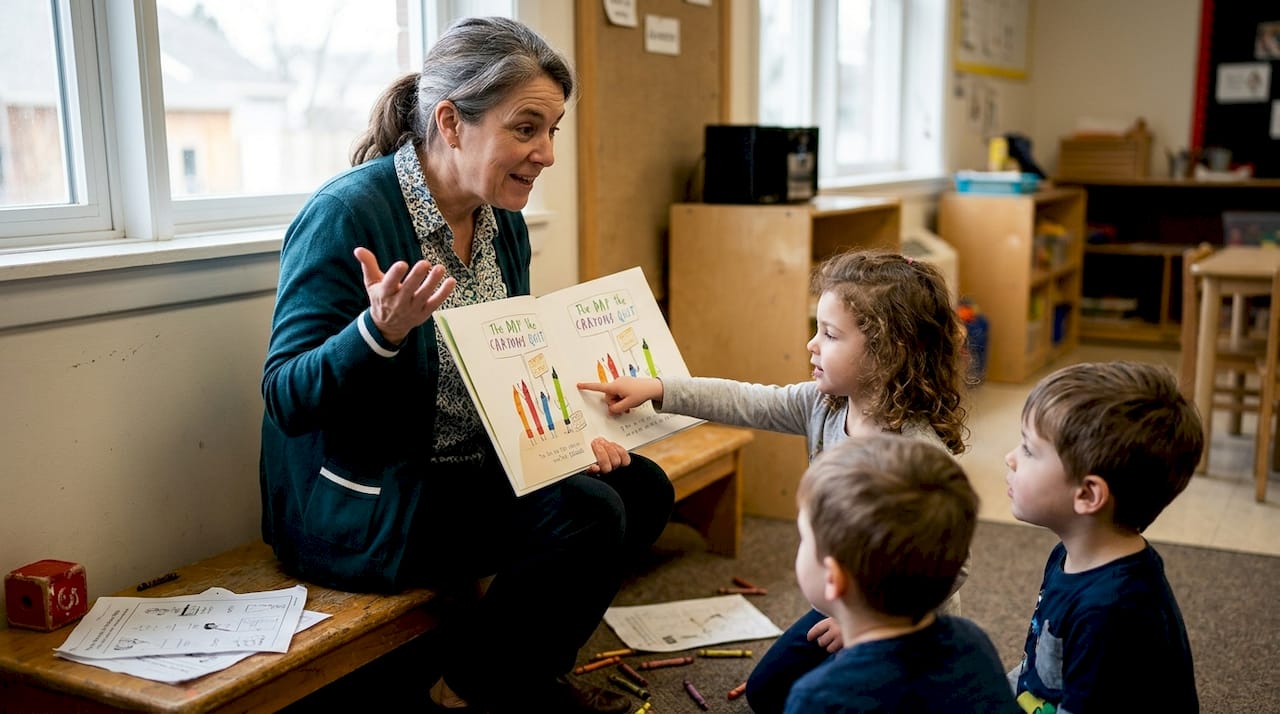
Pro Tip: When your child says a single word, expand it naturally. If they say "ball," you say "Yes, the big red ball rolls fast!" This technique, called expansion, models richer language without correcting or interrupting the child's communication attempt.
The key insight here is that quality beats quantity every time. A five-minute focused conversation where you genuinely respond to your child's cues does more than an hour of background chatter. Children learn language through interaction, not just exposure. Short, engaged exchanges throughout the day add up to something powerful.
We've seen how foundational communication is, so how can you actively support it during the routines you already have, without extra work or stress?
Classroom and educator roles: Amplifying communication
At home, you set the stage, but educators and their environment also play a crucial role in your child's communication journey.
High-quality early childhood classrooms do not just expose children to language. They actively build it through intentional strategies. Open-ended prompts and teacher feedback drive vocabulary gains in young children, especially when educators ask questions that require more than a one-word answer.
Here is how home and classroom communication strategies compare:
| Strategy | At home | In the classroom |
|---|---|---|
| Conversation style | Responsive, child-led | Structured and child-led |
| Vocabulary exposure | Natural, context-based | Intentional, theme-based |
| Feedback | Immediate, personal | Scaffolded, group-aware |
| Reading approach | One-on-one, cozy | Small group, interactive |
The teacher influence on language development is significant, especially in programs with small groups where educators can give each child real attention. Class size benefits are well-documented: fewer children per educator means more back-and-forth exchanges, more personalized feedback, and more chances for each child to be heard.
Signs of strong communication practices in a program include:
- Educators get down to the child's level during conversations
- Children are asked "why" and "how" questions, not just "what"
- Storytime includes pauses for child responses and predictions
- Teachers narrate transitions and daily routines aloud
- Children's words and ideas are visibly valued and built upon
Not all programs are equal in this area. Some rely heavily on passive listening, where children hear language but rarely produce it. That distinction matters enormously for development.
Pro Tip: Ask your child's teacher what open-ended prompts they use during storytime. A good answer might sound like, "We ask the children what they think will happen next, and then we talk about why." That kind of practice signals a program that takes communication seriously.
Building emotional security through connected communication
Communication isn't just about learning words. It's the anchor for emotional stability and confidence, especially when children face new settings or tough moments.
When a child starts a new program, moves to a new room, or navigates conflict with a peer, what helps most is not correction. It is connection. Regular, trusting parent-professional communication supports emotional security in children, reinforcing the message that the adults in their lives are aligned and working together.
Connection-based tools like Staylistening, where a caregiver stays present and calm while a child works through big emotions, are gaining traction in early education. Staylistening and connection-based tools foster stronger educator-child bonds and help children feel safe enough to regulate their emotions over time.
Signs your child feels emotionally secure through communication:
- They tell you about their day without being prompted
- They come to you when upset rather than withdrawing
- They use words to express frustration instead of acting out
- They show comfort with new adults and environments
- They recover from upsets relatively quickly
Research also shows that debriefing after conflicts, rather than just applying consequences, builds emotional vocabulary and problem-solving skills. When you say, "That looked hard. What were you feeling when that happened?" you give your child language for their inner world.
"Connection is the foundation for growth, more than consequence."
Building safe learning environments starts with communication that makes children feel understood, not just managed.
Recognizing delays and embracing individual differences
Even with responsive strategies, every child is unique and develops at their own pace, so how do you spot when your child might need extra support?
Most late talkers catch up if other areas of development are typical, which means there is no need to panic if your child is a little behind on words. That said, some signs are worth taking seriously.
Steps to take if you have concerns:
- Note what your child can do: Are they pointing, gesturing, and making eye contact?
- Track progress over 4-6 weeks using a simple journal.
- Talk to your pediatrician at the next well-child visit.
- Ask for a referral to a speech-language pathologist if concerns persist.
- Continue responsive communication at home regardless of evaluation outcomes.
Some children are simply quieter by temperament. Others process language internally before producing it. Knowing the difference between a style and a delay requires professional input, and getting that input early is always the right call.
Our perspective: The conversation we're not having about communication
Most advice about early communication focuses on what parents should do. Talk more. Read daily. Expand vocabulary. All of that is true and useful. But we think there is a more important conversation happening underneath: whether children feel worth talking to.
When a toddler babbles and a caregiver looks up from their phone and responds with genuine delight, something profound happens. The child learns that their voice matters. That is not a language lesson. It is an identity lesson. And identity, once formed, is remarkably durable.
We have seen children arrive at our programs who are quiet, hesitant, and unsure whether to speak up. Almost always, the issue is not ability. It is confidence. They have not yet learned that what they say will be received with warmth. The fix is not more vocabulary drills. It is more moments of being genuinely heard.
This is why we believe the most powerful communication strategy is also the simplest: put down what you are doing, look your child in the eye, and respond like what they said is the most interesting thing you've heard all day. Because to them, it is.
Ready to see responsive communication in action?
At Martlet Academy, communication is not a subject we teach. It is the environment we build. Every program, from our infant and toddler rooms to our kindergarten prep classes, is designed around the kind of responsive, emotionally attuned interaction that research consistently shows drives development.
Our educators are trained to use open-ended questions, expansion techniques, and connection-based practices every single day. We also prioritize regular, face-to-face communication with families because we know that when parents and educators are aligned, children thrive. If you are looking for a program where your child will be genuinely heard, we would love to show you what that looks like. Explore our programs and see how we put these principles into practice.
Frequently asked questions
What are the most important communication milestones for toddlers?
By 24 months, most toddlers say 50 to 100 words and begin combining two words into simple phrases like "more milk" or "daddy go."
How can I boost my child's language if they aren't talking much yet?
Narrate everyday actions, respond warmly to any communication attempt, read together daily, and model short, clear sentences to give your child language to grow into.
When should I worry about a language delay?
Consider reaching out to your pediatrician if your child isn't babbling by 12 months or has fewer than 50 words by 24 months, especially if they are not pointing or making eye contact.
Does the quality or quantity of parent talk matter more?
Quality of interaction matters more than sheer volume. Responsive, back-and-forth exchanges build language and emotional connection far more effectively than passive exposure to adult speech.
Do digital apps support parent-teacher communication as well as face-to-face?
Face-to-face parent-professional communication leads to greater parental satisfaction and stronger emotional security in children compared to digital-only communication tools.