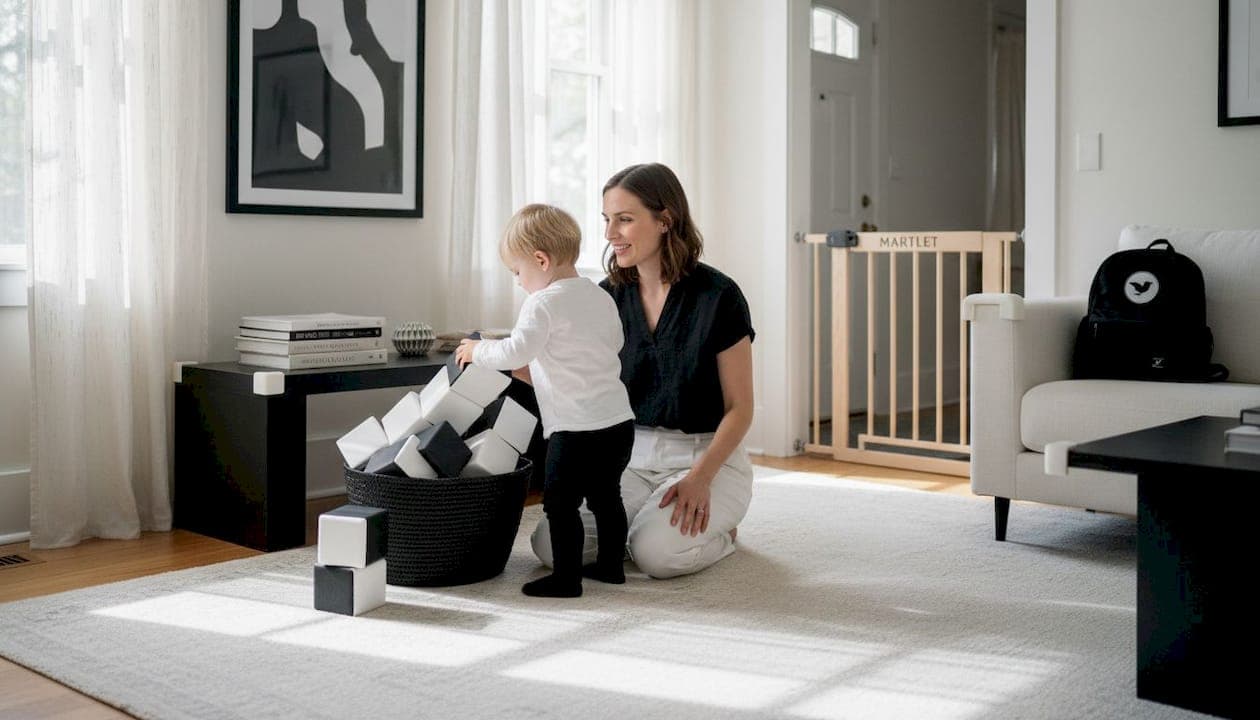
Imagine you step out of the room for sixty seconds and return to find your toddler has pulled a heavy bookshelf halfway off the wall. Your heart stops. It happens fast, and it happens to careful, loving parents every day. Childcare safety is not about being perfect. It is about building environments where the risk is reduced to the lowest possible level, so your child can explore and grow without constant danger. This guide walks you through every major layer of protection, from physical childproofing and infection control to safe sleep routines and the emotional dimensions of safety that most checklists skip entirely.
Table of Contents
- Preparation: Essential standards and tools for safe childcare
- Step-by-step: Childproofing and injury prevention at home and daycare
- Hygiene and infection prevention routines
- Safe infant and toddler sleep: What parents must know
- Beyond checklists: What most parents miss about childcare safety
- How Martlet Academy supports your childcare safety goals
- Frequently asked questions
Key Takeaways
| Point | Details |
|---|---|
| Follow expert standards | CDC, AAP, and CFOC guidelines provide the backbone for creating safe childcare environments. |
| Prioritize childproofing | Secure all potential hazards, especially in high-risk areas like stairs and playrooms, to prevent the most common injuries. |
| Practice strong hygiene | Daily handwashing, surface cleaning, and isolation of illness help stop the spread of infections in childcare settings. |
| Adopt safe sleep routines | Back-sleeping, firm cribs, and room-sharing—not bed-sharing—protect infants from sleep-related risks. |
| Remember emotional safety | A calm, trust-based environment supports both physical safety and healthy long-term development. |
Preparation: Essential standards and tools for safe childcare
Before you move a single piece of furniture or buy an outlet cover, you need a framework. The best frameworks come from organizations that have studied early childhood injuries for decades. Injury prevention and safety in early care and education programs is governed by CDC and AAP (American Academy of Pediatrics) guidelines covering playground safety, water safety, medication storage, and child passenger safety. These are not suggestions. They are evidence-based minimum standards derived from real injury data gathered across thousands of childcare settings nationwide.
The Caring for Our Children (CFOC) Basics is another critical reference point. These minimum health and safety standards for early care and education cover everything from facility inspection and environmental audits to water availability and outdoor safety. Whether you are setting up a home nursery, selecting a daycare, or evaluating a preschool, these standards give you a reliable measuring stick.
Written safety policies matter more than most parents realize. When caregivers know exactly what to do if a child falls, chokes, or has an allergic reaction, response time drops and outcomes improve. Posting these policies visibly and reviewing them regularly keeps everyone accountable.
Core childcare safety requirements at a glance:
| Area | Key requirement |
|---|---|
| Playground safety | Age-appropriate equipment, impact-absorbing surfaces, daily inspections |
| Water safety | Supervision within arm's reach at all times, no standing water left unattended |
| Medication and poison storage | Locked cabinet, out of reach, labeled containers |
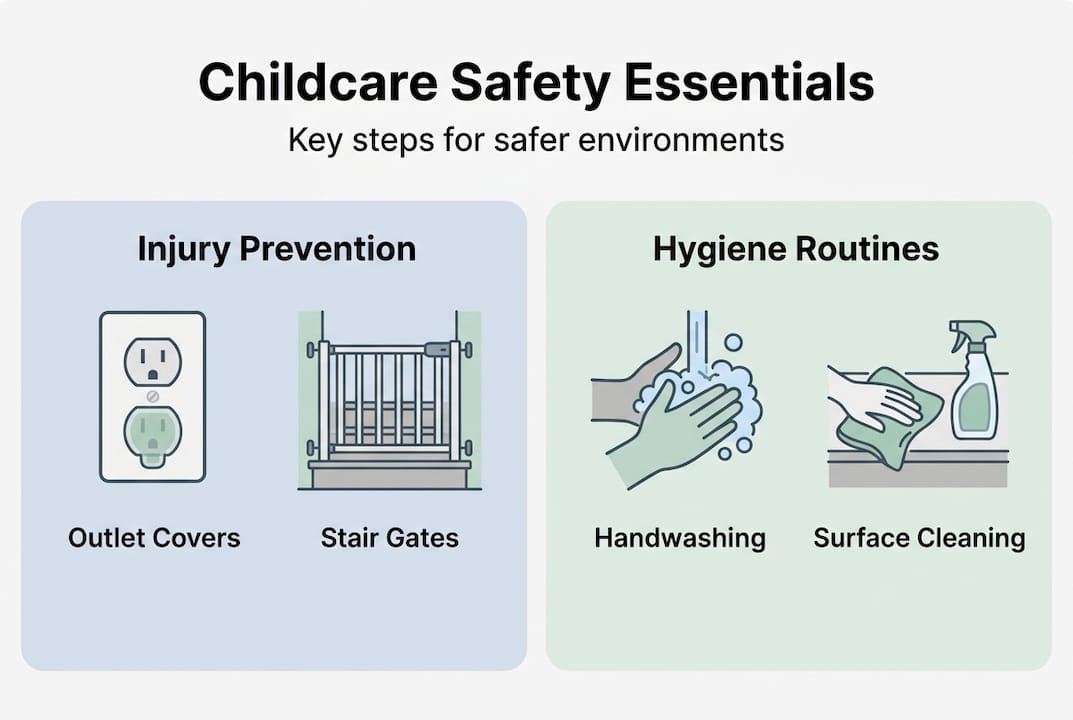
| Childproofing essentials | Outlet covers, cabinet locks, secured furniture, stair gates |
Critical tools and items every childcare space needs:
- Outlet covers or tamper-resistant outlets (see electrical outlet safety for current product standards)
- Cabinet and drawer locks for cleaning products, medications, and knives
- Stair gates at top and bottom of every staircase
- Anti-tip straps for all tall furniture
- A fully stocked and regularly updated first-aid kit
- Safe, firm-sided cribs or bassinets that meet current federal safety standards
- Smoke detectors and carbon monoxide alarms tested monthly
When creating a safe learning environment, the goal is to think like a curious two-year-old and systematically remove every hazard they would naturally investigate.
Pro Tip: Do your first environmental audit on your hands and knees. Literally crawl through the space at a child's eye level. You will immediately see dangers that are invisible from adult height, including dangling cords, unstable table edges, and accessible electrical strips.
Step-by-step: Childproofing and injury prevention at home and daycare
Understanding standards is the first step. Putting them into action is where safety actually happens. Childproofing your home means securing furniture, covering outlets, locking away chemicals, eliminating secondhand smoke completely, and carefully managing pet interactions and visitor access. Research is clear that secondhand smoke is particularly dangerous for infants and young toddlers, whose airways are still developing.
Follow these steps in order, completing each before moving to the next:
- Secure all tall furniture to wall studs using anti-tip straps. This includes dressers, bookshelves, televisions, and filing cabinets.
- Cover all electrical outlets that are not in use. Upgrade to tamper-resistant receptacles where possible.
- Lock away all medications, vitamins, and cleaning products in high, latched cabinets. Never store them under sinks where toddlers can access them.
- Install stair gates at both the top and bottom of every staircase. Top-mounted gates must be hardware mounted, never pressure mounted.
- Replace corded window blinds with cordless window treatments to eliminate strangulation risk. This is one of the most underestimated hazards in family homes.
- Establish a no-smoking rule inside the home and in any vehicle transporting the child.
- Prepare pets through gradual, supervised introductions. Never leave an infant or toddler alone with any pet, regardless of how gentle the animal appears.
- Limit and monitor visitors, particularly during cold and flu season, to protect infants with developing immune systems.
When choosing or evaluating a formal daycare setting, consider installing security cameras in childcare facilities as an added transparency tool. Many quality providers now offer parent-accessible camera systems.
Research on injuries in group care shows that falls are the primary cause of injury in daycare centers, with children aged 3.5 to 4 years at the highest risk. Boys experience injuries at higher rates than girls, and most incidents happen during free play in classrooms. The head is the most commonly injured body part.
| Injury risk | At home | At daycare |
|---|---|---|
| Falls | Stairs, furniture | Play structures, classroom floors |
| Poisoning | Unlocked cabinets | Medication storage areas |
| Choking | Small objects, food | Shared snacks, craft materials |
| Entrapment | Doors, drawers | Playground equipment, gates |
Safety warning: Head injuries from falls can have serious, lasting neurological consequences even when a child appears fine immediately after impact. Any fall that results in loss of consciousness, repeated vomiting, unusual drowsiness, or behavioral changes requires emergency medical evaluation.
You can find additional safety strategies on the Martlet Academy blog, where we regularly update practical guidance for parents navigating these decisions. For classroom-specific modifications, safe classroom modifications offer a useful reference point from an educational lens.
Pro Tip: Focus your childproofing energy where incidents happen most, which is stairs, play structures, and unsecured cabinets. These three areas account for the majority of serious childhood injuries and deserve the most thorough attention.
Hygiene and infection prevention routines
Physical safety is only one side of the equation. Infections spread quickly in childcare settings, and young children's immune systems are still learning how to respond. Building consistent hygiene routines is just as urgent as securing furniture and outlets.
Everyday infection prevention in early care includes handwashing, regular cleaning and sanitizing of surfaces, good ventilation, vaccination promotion, keeping sick children home, and isolating children who become ill during the day. Each of these measures works best when it is practiced consistently, not just when someone remembers or when an illness is already spreading.
Core infection prevention routines every parent and caregiver should maintain:
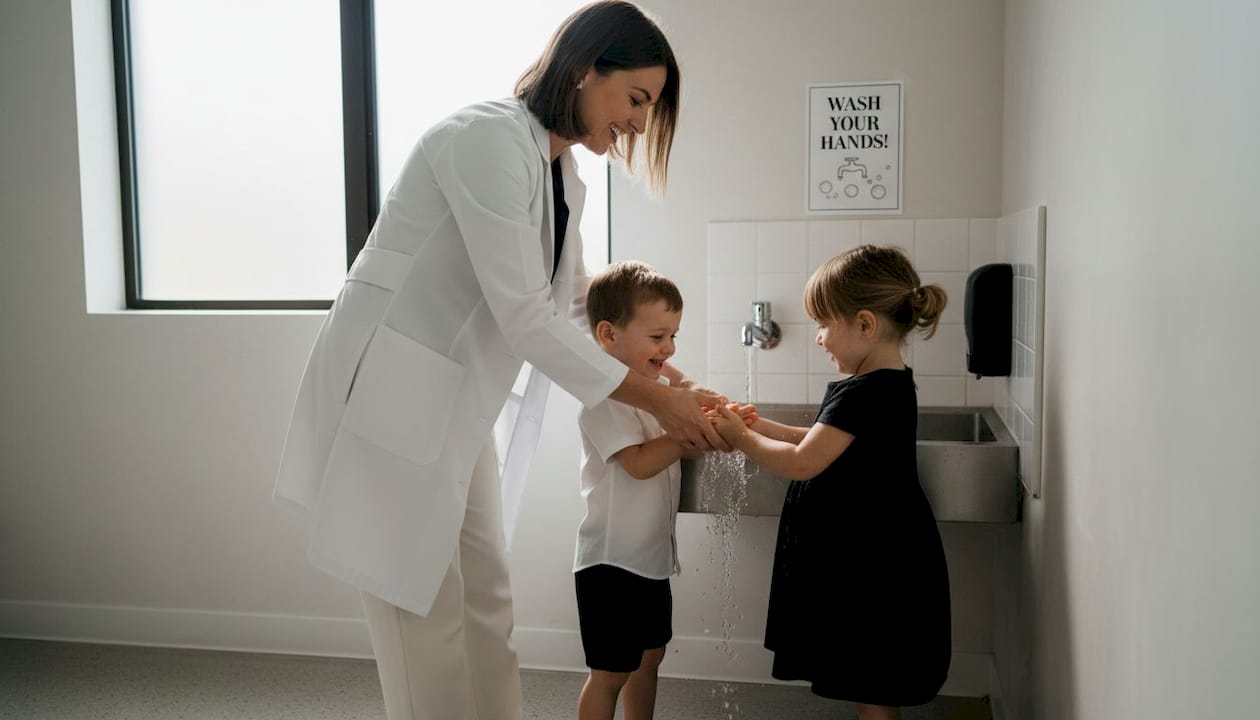
- Wash hands for 20 seconds with soap and water before and after meals, after diaper changes, after bathroom use, after contact with sick children, and after outdoor play
- Clean and disinfect high-touch surfaces such as doorknobs, tables, light switches, and toy bins daily
- Sanitize shared toys after use, especially any that children place in their mouths
- Ensure good ventilation by opening windows when weather allows or using air filtration systems
- Keep vaccination records current for all children in the care setting
- Send sick children home as soon as symptoms appear and follow exclusion guidelines before readmitting them
The CFOC sets specific hygiene protocols that go beyond general cleaning. CFOC handwashing standards require 20 seconds of handwashing at specific trigger moments, a 10-step diapering procedure to prevent fecal contamination, disinfection of any toy a child has mouthed before it enters another child's hands, and keeping each child's belongings separate to avoid cross-contamination.
Ventilation deserves special attention. Spaces with poor airflow allow airborne viruses to linger far longer than spaces with regular fresh air exchange. Even during colder months, cracking windows for brief periods throughout the day meaningfully reduces the concentration of airborne particles.
While general guidance on education cleaning protocols offers a useful overview, the most important thing is consistency. A cleaning schedule that is posted, assigned, and followed is worth far more than an elaborate protocol that no one actually uses.
Following solid sanitation routines in preschool settings involves staff training, posted reminders, and accountability systems that make hygiene automatic rather than optional.
Pro Tip: Post a simple handwashing poster in every bathroom and kitchen at a child's eye level. Children as young as two can begin learning proper handwashing technique, and visual reminders significantly increase compliance for both kids and caregivers.
Safe infant and toddler sleep: What parents must know
Sleep-related deaths are the leading cause of preventable infant mortality in the United States. The statistics are heartbreaking, and the good news is that most of these tragedies are preventable with consistent application of evidence-based routines.
The American Academy of Pediatrics has established clear safe sleep guidelines that every parent and caregiver must know and follow without exception.
Follow these steps every single time an infant is placed to sleep:
- Always place the baby on their back. This applies to every sleep, every nap, and every caregiver.
- Use a firm, flat sleep surface. A crib, bassinet, or play yard with a tight-fitting mattress and no incline is the only appropriate option.
- Keep the sleep space bare. No pillows, blankets, bumper pads, soft toys, or positioners belong in a baby's sleep space.
- Room-share, but do not bed-share. Place the baby's crib or bassinet in your bedroom, within arm's reach, but never in your bed.
- Avoid overheating. Dress babies in a single layer more than you would wear yourself, and keep the room at a comfortable temperature, typically between 68 and 72 degrees Fahrenheit.
- Offer a pacifier at naptime and bedtime after breastfeeding is established. Research links pacifier use to a reduced risk of SIDS.
The evidence on room-sharing is compelling. Keeping a baby in the parents' room in a separate sleep surface for at least the first six months reduces the risk of SIDS by up to 50 percent. Bed-sharing, by contrast, significantly increases the risk and is not recommended regardless of parental sobriety or mattress firmness.
Red-flag sleep environment dangers to address immediately:
- Soft couches, armchairs, or adult beds used as sleep surfaces
- Loose blankets, pillows, or stuffed animals inside the crib
- Sleep positioners or wedges of any kind
- Inclined sleep surfaces, including certain bouncers and car seats used outside of vehicles
- Overdressed or overwrapped infants showing signs of sweating
Parents often ask about rolling infants. Once a baby can roll independently from back to front and back again, you can leave them in the position they roll to on their own. However, always place them on their back to start.
Cultural practices around sleep vary widely, and the conversations around these differences deserve sensitivity. Whatever the tradition, the priority is always keeping the infant physically safe during sleep. Reviewing safe sleep policies when evaluating any childcare program helps you confirm that providers follow the same standards you do at home.
Beyond checklists: What most parents miss about childcare safety
Here is something worth saying directly: a perfectly childproofed room can still be an unsafe environment. Physical barriers matter enormously, but they are not the whole picture.
The emotional tone of the adults in a child's space shapes how safe that child actually feels and behaves. When caregivers are stressed, inconsistent, or reactive, children pick up on that energy and become less able to regulate their own behavior, which ironically puts them at greater physical risk. A calm, attuned adult is one of the most powerful safety tools available.
There is also a common misconception that more rules equal more safety. In reality, children who understand why certain things are dangerous and who are invited to be part of keeping their space safe develop a lasting awareness that rules alone cannot build. Asking a three-year-old to help spot "things that could hurt us" turns safety into a shared, empowering project rather than a top-down restriction.
The role of adults in child development extends far beyond supervision. It includes modeling calm responses to risk, naming hazards without panic, and building a child's own sense of agency and awareness over time.
Pro Tip: When you notice a potential hazard, narrate it out loud in a calm, matter-of-fact tone. Saying "That shelf is wobbly. Let's stay away from it until we fix it" teaches far more than silently moving a child away.
How Martlet Academy supports your childcare safety goals
At Martlet Academy, everything in this guide reflects what we practice every day in our programs.

Our staff are trained in CDC and AAP safety standards, including safe sleep protocols, hygiene routines, and injury prevention procedures. Every space, from our infant program to our preschool program, is designed to meet and exceed CFOC Basics requirements. We partner with families directly, keeping communication open and transparent so you always know what is happening in your child's day. If you are looking for a childcare environment where physical safety, emotional security, and developmental care come together under one roof, we invite you to visit Martlet Academy and learn more about enrollment.
Frequently asked questions
What is the most important safety standard for childcare centers?
The CDC and the CFOC Basics minimum standards set the floor for injury prevention, facility inspection, and environmental safety, making them the essential starting point for any childcare setting.
How can I tell if a daycare is truly safe for my child?
Look for visible safety equipment, posted hygiene routines, current inspection certificates, staff certified in CPR, and locked storage for medications and chemicals, all aligned with CDC and AAP injury prevention guidelines.
Which steps prevent infant sleep deaths?
Always place babies on their backs on a firm, flat crib surface, never bed-share, keep all soft objects out of the sleep space, and avoid overheating, as recommended by the AAP safe sleep guidelines.
How often should toys and surfaces be cleaned in childcare settings?
Toys that children mouth should be disinfected after each use, and all high-touch surfaces should be cleaned and sanitized daily, with more frequent cleaning during illness outbreaks.
Does room-sharing help prevent SIDS?
Yes. Room-sharing with a baby in a separate sleep surface for at least six months can reduce SIDS risk by up to 50 percent, making it one of the single most effective protective steps parents can take.