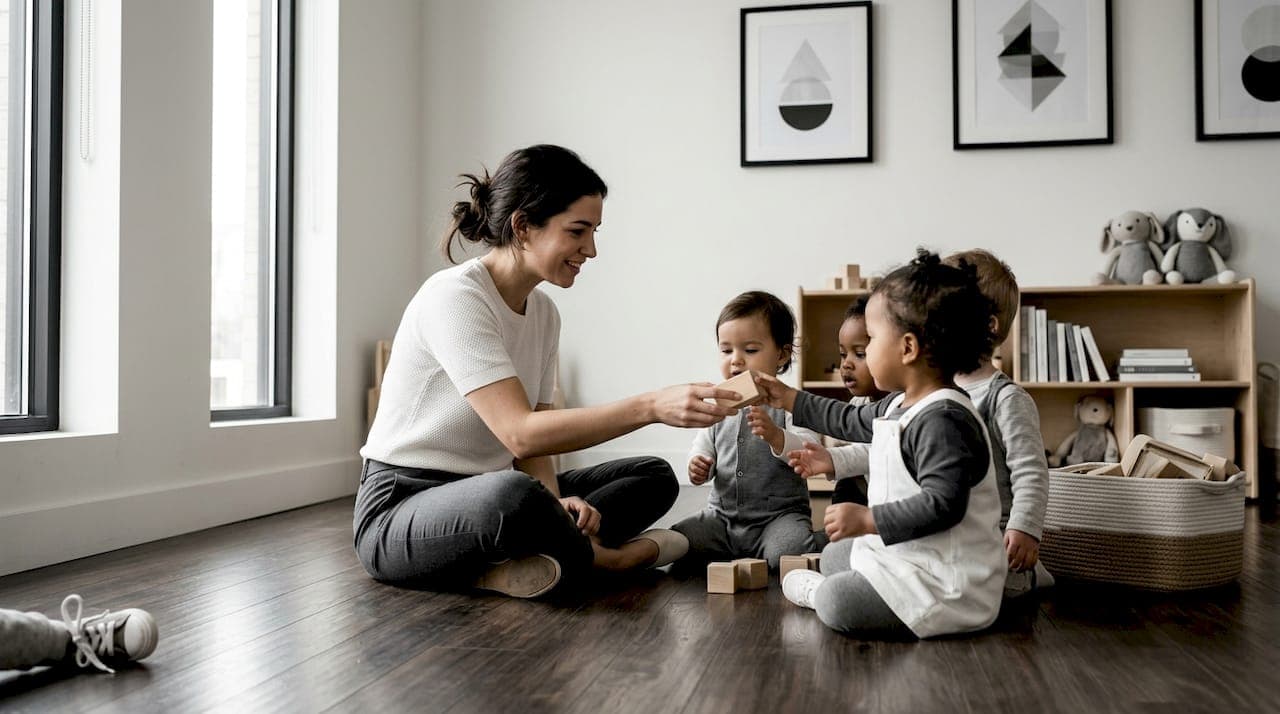
When most parents think about safety in early childhood programs, their minds go straight to locked doors, security cameras, and fenced playgrounds. Those things matter, but they only tell part of the story. A safe learning environment for infants and young children must protect both the body and the heart, because children cannot absorb new ideas, build friendships, or develop confidence when they feel anxious, unseen, or emotionally unsteady. This guide breaks down exactly what holistic safety looks like in early childhood education and gives you practical tools to find it.
Table of Contents
- Defining a safe learning environment: More than walls and rules
- Key elements of safety: What every high-quality program should have
- The lifelong benefits of emotionally secure environments
- Beyond the basics: Equity, special cases, and modern safety misconceptions
- Rethinking safety: Why relationships matter more than surveillance
- Find a safe start for your child
- Frequently asked questions
Key Takeaways
| Point | Details |
|---|---|
| Safety is holistic | True safety combines physical security with emotional and relational support for every child. |
| Look for low ratios | Smaller group sizes with primary caregivers create trust and attentive supervision. |
| Routines promote growth | Predictable routines and calming spaces help children thrive emotionally and academically. |
| Relationships trump surveillance | Meaningful teacher-child connections matter more than security devices for fostering well-being. |
Defining a safe learning environment: More than walls and rules
Now that you're thinking beyond just locked doors, let's clarify exactly what makes a learning environment safe on every level.
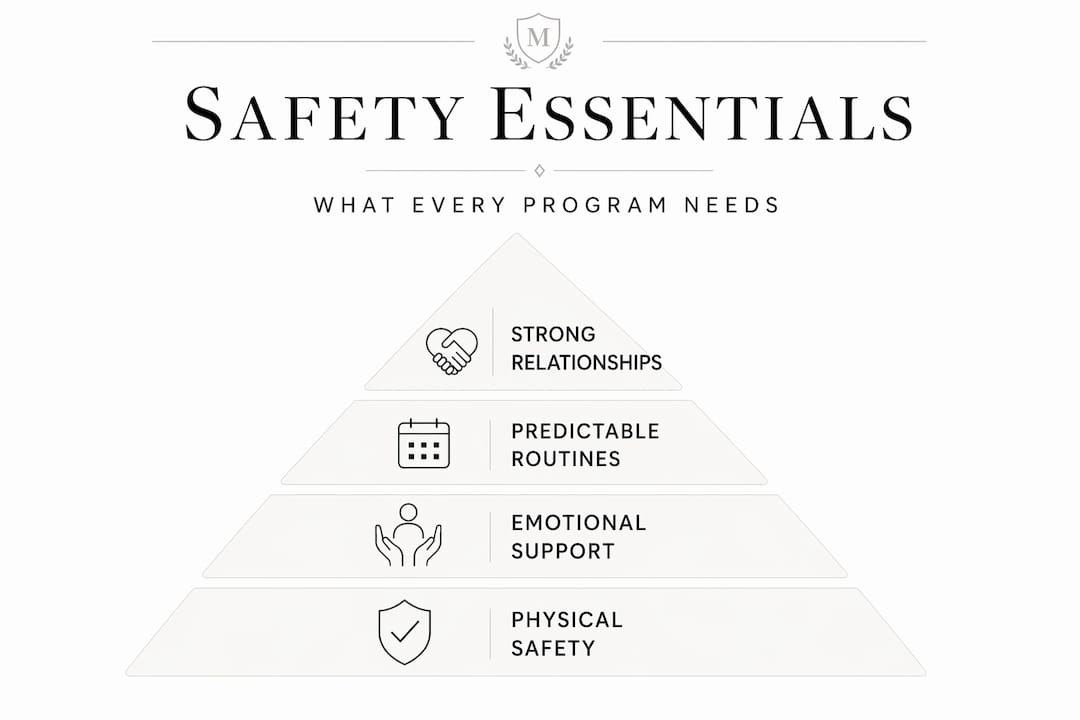
Safety in early childhood education means far more than hazard-free furniture and secure entry systems. Research confirms that a safe learning environment encompasses both physical safety and emotional safety, and that both must be present for children to thrive. Physical safety covers the obvious: non-toxic materials, secure outdoor spaces, safe sleep setups for infants, and age-appropriate equipment. Emotional safety is subtler, but its effects are just as powerful. It includes whether a child feels recognized, whether their feelings are welcomed, and whether they can predict what comes next in their day.
"True safety is not just about preventing falls or keeping strangers out. It is about building an environment where every child feels secure enough to take risks, try new things, and be fully themselves."
Accredited programs follow NAEYC standards that go well beyond basic compliance. These benchmarks call for nurturing environments that address children's emotional and social needs, avoid expulsion without first providing meaningful supports, and include natural elements in outdoor spaces. They also require that programs respond to behavioral challenges with care rather than punishment. A truly safe space doesn't just protect children from physical harm. It also protects their sense of worth, their curiosity, and their willingness to try and fail and try again.
What a safe environment covers:
- Hazard-free, age-appropriate materials and furnishings
- Secure entry and exit protocols
- Consistent, caring relationships with familiar caregivers
- Predictable daily routines that reduce anxiety
- Natural outdoor areas that invite sensory exploration
- Clear behavior support plans that avoid punitive responses
- Regular communication with families
Families looking for a nurturing preschool environment should start by assessing how both the physical and emotional dimensions are addressed, and how they work together. Our blog on safe childcare environments goes even deeper on what to ask during a program visit.
Key elements of safety: What every high-quality program should have
So what should you actually look for when choosing a program? Here's a clear outline of essential safety elements.
Not every program that claims to be safe actually delivers on that promise. High-quality programs put specific, research-backed strategies in place every single day. Zero to Three, a leading organization in infant and early childhood mental health, documents that effective early education programs use primary caregiving assignments, low child-to-teacher ratios, responsive interactions, consistent routines, sensory-rich safe exploration zones, and designated calm spaces often called a "Safe Place."
Here's how each element looks in practice:
-
Low child-to-teacher ratios. For infants, a ratio of 1:3 is the gold standard. This allows a teacher to read every cue, respond to distress promptly, and build the kind of consistent relationship that creates security. Higher ratios mean less individual attention and, often, more stress for both children and teachers.
-
Primary caregiving assignments. Each child is paired with a specific educator who tracks their development, learns their preferences, and communicates directly with their family. This consistency is emotionally grounding, especially for very young children who are still forming their sense of trust.
-
Predictable daily routines. Children as young as six months begin to anticipate what comes next in their day. When those patterns are reliable, their nervous systems can relax. When routines are unpredictable, children spend emotional energy managing anxiety instead of learning.
-
Sensory-rich exploration areas. Safe programs create inviting zones where children can touch, smell, listen, and experiment without constant redirection. These areas are designed to be physically safe while remaining genuinely stimulating.
-
A designated calm-down space. Sometimes called a cozy corner or Safe Place, this is a low-stimulation area with soft textures, familiar objects, and a calm atmosphere. It is not a punishment corner. It is a tool for self-regulation, offered with warmth.
Pro Tip: During a program tour, ask your guide to show you the calm-down space and explain how teachers use it. A program that does this thoughtfully and without hesitation is signaling a genuine culture of emotional safety.
| Safety feature | What it looks like in practice | Why it matters |
|---|---|---|
| Low ratios | 1 teacher per 3 infants; 1:4 for toddlers | Allows close supervision and responsive care |
| Primary caregiver | One teacher "owns" relationship with each child | Builds trust and attachment security |
| Predictable routine | Same sequence for arrival, meals, naps | Reduces anxiety, supports transitions |
| Calm-down space | Soft corner with comfort items | Teaches self-regulation without shame |
| Natural outdoor space | Grass, plants, loose parts, shade | Promotes sensory learning and risk-taking |
| Trauma-informed practices | Individual behavior plans, gentle redirection | Supports children with complex histories |
Learning more about quality preschool features before you tour can help you ask smarter questions and recognize excellence when you see it. Understanding the importance of emotional safety in preschool will help you evaluate whether a program's culture matches its marketing.
The lifelong benefits of emotionally secure environments
But why does all this matter? Here's what the research reveals about the far-reaching impact of safe, caring environments.
When children feel emotionally safe at school, the benefits extend far beyond a pleasant morning drop-off. Data consistently shows that children in safe environments demonstrate better cognitive development, stronger social skills, and more advanced emotional regulation than peers in less supportive settings. These are not minor differences. They show up as better school readiness, stronger reading and math foundations, healthier peer relationships, and measurably lower rates of behavioral challenges.
Benefits of emotionally safe early learning environments:
- Stronger cognitive development. When children are not managing fear or unpredictability, their brains are free to learn. Working memory, attention, and problem-solving all perform better in low-stress environments.
- Improved social skills. Children who feel secure are more willing to initiate play, resolve conflicts, and cooperate with peers. These are skills they carry into elementary school and beyond.
- Better emotional regulation. Consistent, responsive care teaches children how to name their feelings, manage frustration, and recover from upsets. This self-regulation skill is one of the strongest predictors of school success.
- Lower absenteeism. Children who feel safe actually want to come to school. Parents report fewer morning struggles and less separation anxiety when a program's emotional climate is strong.
- Reduced behavioral issues. Programs that address stress and dysregulation proactively see fewer meltdowns, fewer conflicts, and less need for reactive discipline.
Routines also play a measurable role. Research shows that structured, predictable daily schedules significantly improve children's ability to navigate transitions and maintain attentiveness throughout the day. Think about it this way: when you know what to expect, you can focus your energy on being present. The same is true for a two-year-old moving from play time to lunch.
The foundation built in these early years does not disappear when children move on to kindergarten. It deepens. Children who experience safety and growth in their earliest years are better equipped to manage the social and academic demands of formal school. This is why investing in a truly safe early childhood program is one of the most powerful choices a family can make. Exploring how social and emotional skills are built in preschool can also help you appreciate exactly what your child is gaining every single day.
Beyond the basics: Equity, special cases, and modern safety misconceptions
Even the best standards have exceptions. Here's what parents should know about special situations and avoiding common misconceptions.
Standard safety protocols provide a solid baseline, but they don't cover every situation. Some children enter early childhood programs carrying experiences of trauma, instability, or significant stress. For these children, standard routines and physical safety measures are simply not enough. Mixed-age group settings require infant-specific zones with age-appropriate supervision, trauma-affected children need additional layered supports, and when families are going through difficult periods, the relationship between caregivers and parents becomes even more critical to outcomes.
Trauma-informed care is a specific approach that trains educators to recognize the signs of stress in young children, respond without escalation, and build trust patiently over time. It is not a buzzword. It is a meaningful difference in how a teacher responds when a child bites, hides, or shuts down. Ask programs directly whether their staff receive training in trauma-informed practices and how often that training is updated.
Important questions to ask any program:
- What is your expulsion rate, and what supports do you provide before considering removal?
- How do you involve families when a child is struggling?
- Do teachers receive reflective supervision? (This means regular opportunities to process their work with a trained professional.)
- How do you support children from different cultural backgrounds and family structures?
- What is your approach when a child's needs exceed typical program supports?
One of the most common misconceptions is that security cameras and buzzed entry systems make a program truly safe. Climate investments boost safety far more effectively than physical measures alone. Surveillance can provide a record after the fact, but it cannot respond to a crying infant, read a toddler's nonverbal cues, or repair a moment of misattunement between a child and their caregiver. Emotional climate is where real safety lives.
Holistic safety also means cultural responsiveness. Children need to see their families, languages, and traditions reflected in their classroom environment. When they do, they feel belonging, and belonging is itself a safety signal. This is especially significant for immigrant families, multilingual households, and any family whose culture is underrepresented in mainstream early childhood settings. Understanding the role of teachers in all of these areas helps parents ask the right questions and recognize authentic, culturally responsive care when they encounter it.
Rethinking safety: Why relationships matter more than surveillance
With all of these factors in mind, let's step back and consider what true safety in early learning actually means from an experienced, research-driven perspective.
We believe the early childhood field has a clarity problem. When parents ask whether a school is "safe," they usually mean physically protected. When researchers ask the same question, they mean something far richer: Is this a place where a child's nervous system can settle? Can this child explore freely, fail safely, and feel genuinely seen?
The NAEYC accreditation standards reflect this broader understanding directly. They benchmark the emotional environment of a classroom, not just its exits and equipment. Emotional safety, in their framework, is what precedes learning. Without it, a classroom can have every gadget and locked door in the world and still fail children in the ways that matter most. Overemphasizing physical security without investing in relationships can actually limit exploration, because children who don't feel emotionally secure become more cautious and withdrawn, not less.
We've seen this play out repeatedly in our experience: the programs where children flourish are almost never the ones with the newest surveillance systems. They're the ones where teachers know each child's story, where families feel genuinely welcomed, and where educators are supported, respected, and given space to reflect on their practice. Empowered, emotionally healthy teachers create emotionally healthy classrooms. It flows downward.
Our honest recommendation to any parent reading this: set aside the checklist of physical features, at least temporarily. Walk into a classroom and watch how a teacher greets a child who is having a hard morning. Watch how staff speak to each other. Ask how the program supports teachers when they are struggling. The answers to those questions will tell you more about true safety than any security camera ever could. And that's the foundation for lifelong learning that actually takes root.
Find a safe start for your child
Ready to take action on what you've learned? Here's where to find programs that prioritize holistic safety from day one.
At Martlet Academy, every program we offer is built around the principles you've read about here: low ratios, primary caregiving, predictable routines, emotional attunement, and strong family partnerships. We believe your child deserves a start that is safe in every sense of the word.
Whether you're exploring our Infant Program, considering our Toddler Program, or looking ahead to our Preschool Program, we invite you to come see our environment for yourself. Schedule a tour, bring your questions about ratios, routines, and emotional climate, and let us show you what holistic safety looks like in action. Your family deserves a program that earns your trust every single day, not just at enrollment.
Frequently asked questions
What should parents look for when evaluating a safe learning environment?
Look for low teacher-child ratios, responsive relationships, clear routines, safe exploration spaces, and policies supporting emotional safety as recommended by national standards.
Why is emotional safety emphasized in early childhood education?
Emotional safety precedes learning, helping children explore freely, self-regulate, and build healthy relationships with peers and caregivers.
How do safe learning environments impact long-term development?
Children in safe environments show stronger cognitive development, better social skills, and more advanced emotional regulation compared to children in less supportive settings throughout childhood.
Are surveillance cameras enough to keep my child safe in school?
Surveillance can complement but not replace strong climate investments, responsive relationships, and emotional support, which research shows are more effective for true child safety.