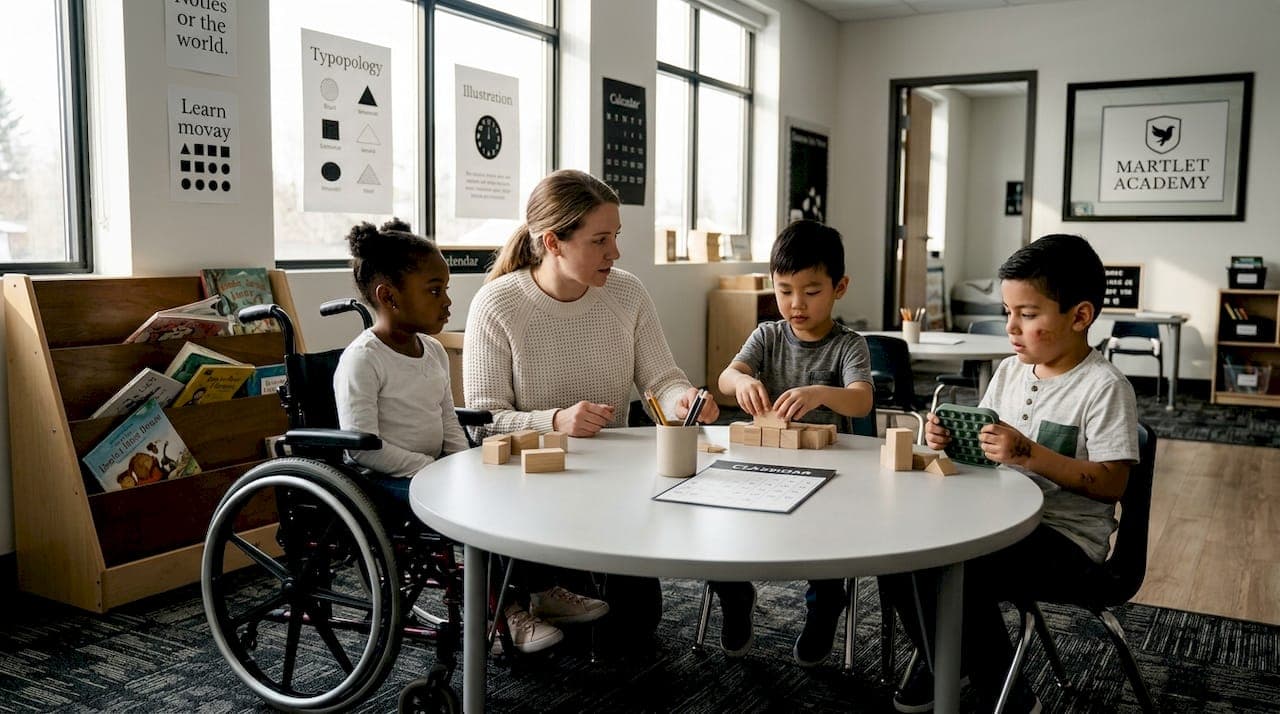
Most parents assume inclusive early education is a specialized program designed only for children with disabilities. That assumption is one of the most common and costly misconceptions in early childhood education today. Inclusive early education is actually a research-backed approach that benefits every child in the classroom, building stronger social skills, deeper emotional resilience, and better academic foundations across the board. If you are searching for a program that prioritizes emotional safety, genuine belonging, and real developmental growth, understanding what inclusion actually means will help you make a far more informed choice for your child.
Table of Contents
- What defines inclusive early education?
- Core practices and teaching methods in inclusive settings
- Access, participation, and supports for all children
- How inclusive early education impacts developmental outcomes
- How to identify high-quality inclusive early education programs
- Why inclusion isn't just a buzzword: The real challenges and opportunities for parents
- Explore inclusive early education programs at Martlet Academy
- Frequently asked questions
Key Takeaways
| Point | Details |
|---|---|
| Inclusive education benefits all | Children with and without disabilities experience increased belonging, social skills, and long-term academic gains. |
| Core features: access, participation, supports | High-quality inclusive programs remove barriers, promote engagement, and use professional development to empower staff. |
| Look for key practices | Programs should use UDL, sensory-friendly environments, trained staff, and strong family partnerships. |
| Evidence-based impact | Research shows inclusive classrooms boost developmental growth, but quality and resources matter for lasting results. |
| Parents are powerful advocates | Trust your instincts, ask about benchmarks, and seek substance over surface-level inclusion when choosing programs. |
What defines inclusive early education?
Inclusive early education is not a single program type or a checklist item. It is a philosophy built on values, policies, and practices that bring all children together in high-quality learning environments, regardless of ability, background, or developmental pace.
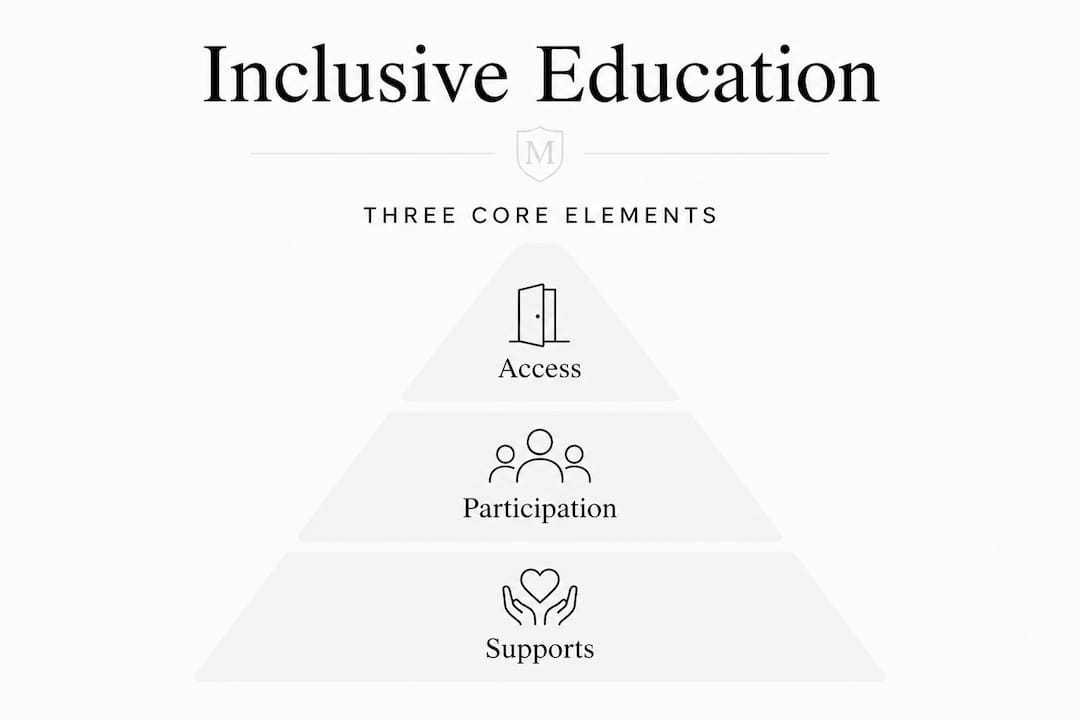
According to foundational definitions, inclusive early education ensures that all young children, with and without disabilities, learn and participate together in natural, high-quality early learning environments. Three core features define it clearly.
Access means removing physical, communication, and social barriers so every child can enter and engage with the learning environment. This could mean ramps and sensory-friendly spaces, but it also means flexible seating, picture-based communication tools, and materials available in multiple languages.
Participation goes deeper than just being present. It means every child is actively learning, building relationships, and experiencing a genuine sense of belonging. A child who sits in the corner during group time is present but not participating. True participation requires intentional design.
Supports are the system-level enablers that make access and participation sustainable. These include professional development for educators, collaborative planning between specialists and classroom teachers, and strong family partnerships.
Here is how inclusive early education compares to more traditional approaches:
| Feature | Traditional early education | Inclusive early education |
|---|---|---|
| Child grouping | Often separated by ability | Mixed abilities, all children together |
| Curriculum flexibility | Standardized for the group | Adapted for individual learning styles |
| Family involvement | Informational updates | Active partnership in planning |
| Teacher training | General early childhood | Specialized inclusive practices |
| Environment design | Standard classroom setup | Sensory-friendly, barrier-free design |
The role of teachers in inclusive settings is fundamentally different from traditional models. Educators in inclusive programs are trained to observe, adapt, and collaborate, not just instruct. They work alongside families to understand each child's strengths, and they design learning experiences that meet children where they are rather than where a curriculum expects them to be. This shift in teacher role is one of the most powerful drivers of lifelong learning in early education, because children who feel seen and understood develop the confidence to keep exploring.
Core practices and teaching methods in inclusive settings
Understanding the definition sets the stage. Now let's see how inclusive early education is actually practiced in real classrooms.
The most widely used framework in inclusive early education is Universal Design for Learning, commonly called UDL. UDL is a curriculum design approach that builds flexibility into lessons from the start, rather than retrofitting accommodations after the fact. Instead of designing one lesson and then modifying it for some children, teachers using UDL create multiple ways for children to engage, express themselves, and absorb new information from the beginning.
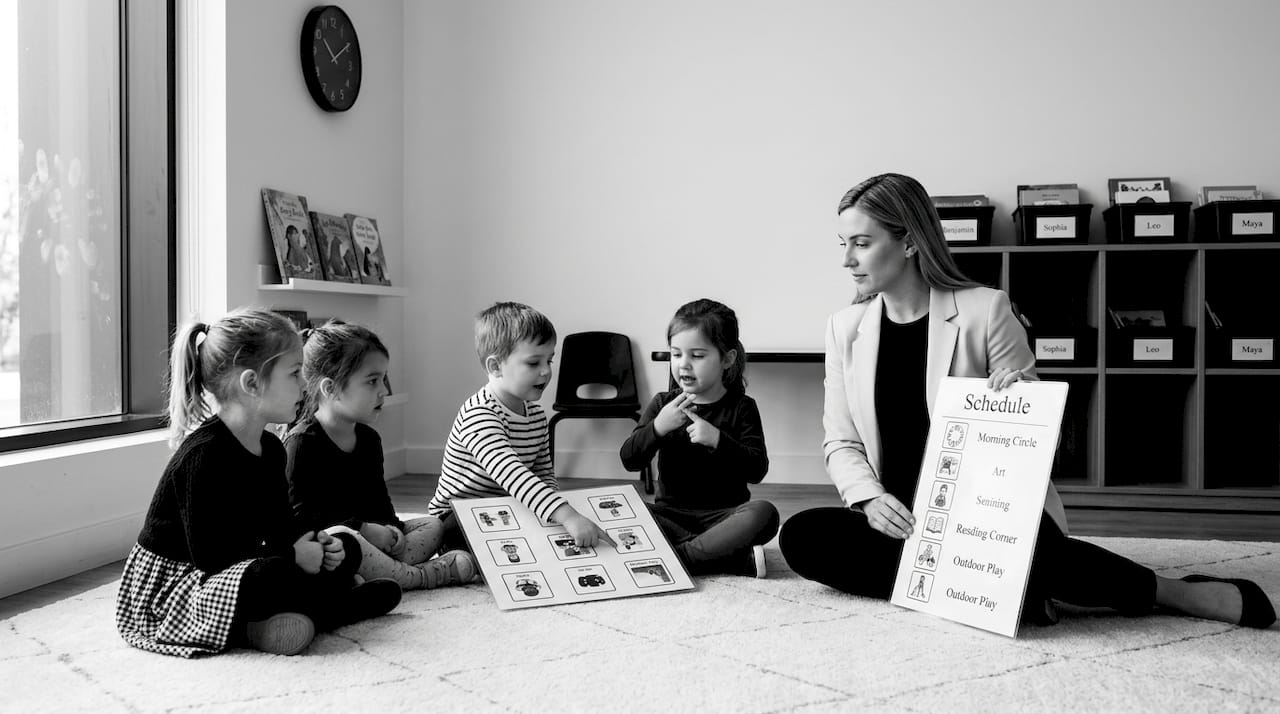
Inclusive methodologies in real classrooms include visual schedules, sensory-friendly spaces, predictable routines, multi-modal teaching, peer support, adult guidance during play, tiered supports, and individualized adaptations. Each of these tools serves a specific purpose.
Here is a practical breakdown of how these methods work together:
- Visual schedules reduce anxiety by helping children anticipate what comes next. A child who struggles with transitions is far more likely to engage successfully when the day's flow is visible and predictable.
- Sensory-friendly environments minimize overstimulation by managing lighting, sound, and tactile materials. This benefits children with sensory sensitivities but also helps all children focus more effectively.
- Predictable routines create a foundation of emotional safety. When children know what to expect, they spend less mental energy on worry and more on learning.
- Multi-modal teaching means presenting concepts through movement, song, visuals, and hands-on materials, not just verbal instruction. This reaches children who learn in different ways.
- Peer modeling allows children to learn from each other naturally during play-based learning, which is one of the most powerful learning mechanisms in early childhood.
- Tiered supports mean that children who need more help receive it without being removed from the group. A teacher's aide might work with a small cluster of children while the main lesson continues.
Pro Tip: When visiting a potential program, ask specifically how teachers use visual schedules and what their process is for adapting lessons. A program that can answer this clearly and confidently is practicing inclusion with intention, not just labeling itself inclusive.
A safe and nurturing preschool environment is not just a nice feature. It is a prerequisite for any of these methods to work. Children cannot engage in peer modeling or flexible learning if they feel emotionally unsafe or overwhelmed by their surroundings.
Access, participation, and supports for all children
After exploring core practices, let's examine how these principles are applied to ensure access, participation, and supports for all children, especially those who need individualized help.
Access in practice looks like more than a ramp at the front door. It means that a child who communicates through pictures has those tools available in every activity. It means that a child who needs movement breaks can take them without shame. It means that enrollment materials are available in a family's home language.
Participation in practice means that no child is a passive observer. Teachers use communication strategies that invite every child into conversations, group activities, and collaborative play. They watch for signs of withdrawal or disengagement and respond with curiosity rather than correction.
System-level supports are where many programs fall short. These include hiring diverse staff who reflect the communities they serve, investing in ongoing professional development, and building collaborative relationships between general educators and specialists.
Here is a snapshot of how quality indicators align with real program features:
| Quality indicator | What it looks like in practice |
|---|---|
| Professional development | Teachers trained in UDL and inclusive practices quarterly |
| Diverse staffing | Staff who reflect children's cultural and linguistic backgrounds |
| Family partnership | Regular meetings, home language communication, shared goal-setting |
| Strength-based approach | Focus on what children can do, not what they cannot |
| Individualized planning | Written plans for children who need additional support |
Routine and structure in preschool play a critical role in making participation possible for every child. When a classroom runs on a reliable, predictable schedule, children with anxiety, sensory differences, or developmental delays are far better positioned to join in rather than shut down.
Pro Tip: Ask programs how they handle moments when a child is struggling to participate. A high-quality inclusive program will describe specific, strength-based strategies rather than defaulting to removal or redirection. If the answer is vague, keep looking.
Inclusive programs face real challenges, including limited resources, training gaps, staffing constraints, and teacher attitudes that sometimes frame disability as a deficit rather than a difference. Cultural and linguistic responsiveness is another area where many programs still have significant room to grow. Knowing these challenges exist helps you ask better questions when evaluating a program.
How inclusive early education impacts developmental outcomes
With an understanding of how inclusive education is delivered and supported, let's explore the actual impact these environments have on children's development, learning, and relationships.
The research is genuinely encouraging, and the benefits extend well beyond children with disabilities.
"High-quality inclusion benefits both children with and without disabilities in development, peer relations, and belonging. SPP Plus inclusive classrooms showed higher CLASS scores and more children meeting growth targets. Boston Pre-K reduced suspensions and improved math outcomes by 0.24 standard deviations in 7th grade, with higher Algebra passage rates." California Department of Education
That math finding is worth pausing on. A 0.24 standard deviation improvement in 7th grade math, traced back to inclusive Pre-K, is a meaningful long-term effect. It suggests that the social and emotional foundations built in inclusive early education translate into measurable academic gains years later.
Key developmental benefits seen across the research include:
- Stronger social skills and empathy, because children practice perspective-taking daily
- Greater emotional regulation, because inclusive environments teach children to recognize and respond to different needs
- Improved language development, because children are exposed to diverse communication styles
- Higher engagement and motivation, linked to small class sizes and individualized attention
- Reduced behavioral incidents, as seen in the Boston Pre-K data showing lower suspension rates
It is also important to be honest about the nuances. Some research shows that not all inclusion programs produce uniform gains. When inclusion is implemented without adequate resources, trained staff, or genuine commitment, the benefits shrink considerably. Some studies show no clear poverty gap closure in certain program expansions, and teacher mindsets that mix deficit thinking with social models can undermine even well-resourced programs.
The takeaway is not that inclusion does not work. It is that quality matters enormously. A program that calls itself inclusive but lacks the staffing, training, and intentional design to back it up will not deliver the outcomes the research describes.
How to identify high-quality inclusive early education programs
Now, let's equip you with the tools and questions needed to confidently select an inclusive program that supports your child's emotional and developmental growth.
Quality inclusive programs align with standards set by the National Association for the Education of Young Children (NAEYC) and the Division for Early Childhood (DEC). These organizations provide detailed frameworks for what access, participation, and supports should look like in practice.
Here is a numbered checklist to use when evaluating any program:
- Ask about UDL implementation. Can teachers describe specific examples of how they adapt lessons for different learners? Look for concrete answers, not general statements about caring for all children.
- Observe the physical environment. Is the space sensory-friendly? Are materials accessible at child height? Is there a calm-down corner or quiet space available?
- Ask about professional development. How often do teachers receive training in inclusive practices? Is it ongoing or a one-time orientation?
- Look at family partnership structures. Are families involved in goal-setting? Is communication available in your home language? Are meetings scheduled regularly, not just when problems arise?
- Ask how neurodiversity is supported. A safe and nurturing preschool will have individualized, strength-based plans for children who need them, not a one-size-fits-all approach.
- Inquire about CLASS scores or quality benchmarks. The Classroom Assessment Scoring System (CLASS) measures the quality of teacher-child interactions. Programs that track and improve these scores take quality seriously.
Long-term outcomes research confirms that success in inclusive early education depends heavily on the quality of professional development, the availability of resources, and the program's genuine commitment to individualized, strength-based planning.
Pro Tip: Trust what you observe during a visit as much as what you are told. Watch how teachers respond when a child is frustrated or struggling. That moment reveals more about a program's inclusive values than any brochure or mission statement.
Why inclusion isn't just a buzzword: The real challenges and opportunities for parents
Here is something most articles on inclusive early education will not tell you plainly: the word "inclusive" has become so popular that it is now used by programs that do not actually practice it. Slapping a label on a classroom does not make it inclusive. Real inclusion is demanding, resource-intensive, and requires ongoing commitment from every adult in the building.
We have seen what genuine inclusion looks like, and we have seen what it looks like when it is performed rather than practiced. The difference is not subtle. In a genuinely inclusive classroom, you will see teachers getting down to a child's level, adapting on the fly, and treating every child's struggle as information rather than inconvenience. In a performatively inclusive classroom, you will see a laminated "all are welcome" sign and a one-size-fits-all lesson plan.
The uncomfortable truth is that many programs lack the resources, staffing ratios, or teacher training to deliver real inclusion. That is not always their fault. Systemic underfunding of early childhood education is a real barrier. But it does mean that parents need to look beyond marketing language and ask hard, specific questions.
What gives us confidence in genuine inclusion is the evidence behind it. When programs invest in the safe and nurturing environments that inclusion requires, children thrive in measurable, lasting ways. The Boston Pre-K results are not a fluke. They reflect what happens when emotional safety, belonging, and individualized support are treated as non-negotiable rather than optional extras.
Trust your instincts. If a program cannot explain its practices clearly, if the environment feels chaotic or dismissive, or if family partnership feels like a formality rather than a genuine relationship, those are signals worth taking seriously. Your child deserves substance, not slogans.
Explore inclusive early education programs at Martlet Academy
After learning what makes inclusive early education effective, find out how Martlet Academy's programs put these principles into practice.
At Martlet Academy, our philosophy is built on the same foundations the research supports: emotional safety, genuine belonging, individualized care, and strong family partnerships. Every program we offer, from our infant program to our kinder prep program, is designed to meet children where they are and support their growth at their own pace.
Our preschool program incorporates play-based, child-centered learning with intentional structure, sensory-friendly spaces, and ongoing family communication. We believe that every child, regardless of ability or background, deserves an environment where curiosity is celebrated and confidence is built daily. If you are ready to explore what high-quality, inclusive early education looks like in practice, we would love to connect with your family.
Frequently asked questions
What are the main benefits of inclusive early education for children without disabilities?
Inclusive education improves social skills, emotional well-being, and academic growth for all children, building empathy and communication skills through daily interaction with peers of varying abilities and backgrounds.
How can parents identify inclusive early education programs?
Look for programs with NAEYC/DEC-aligned features including staff trained in inclusive practices, use of UDL, active family partnerships, and environments designed for emotional safety and sensory comfort.
What challenges do inclusive early education programs face?
Common challenges include resource constraints and training gaps, staffing shortages, and the ongoing work of ensuring cultural and linguistic responsiveness across diverse families and communities.
Is inclusive early education equally effective for every child?
Most children benefit significantly, but effectiveness varies depending on program quality, and neurodiverse learners in particular may need individualized, strength-based plans to fully access the benefits of inclusive settings.
What role does emotional safety play in inclusive early education?
Emotional safety is the foundation that allows children to engage, take risks, and build relationships. Programs that prioritize predictable environments and sensory-friendly spaces make full participation possible for every child.