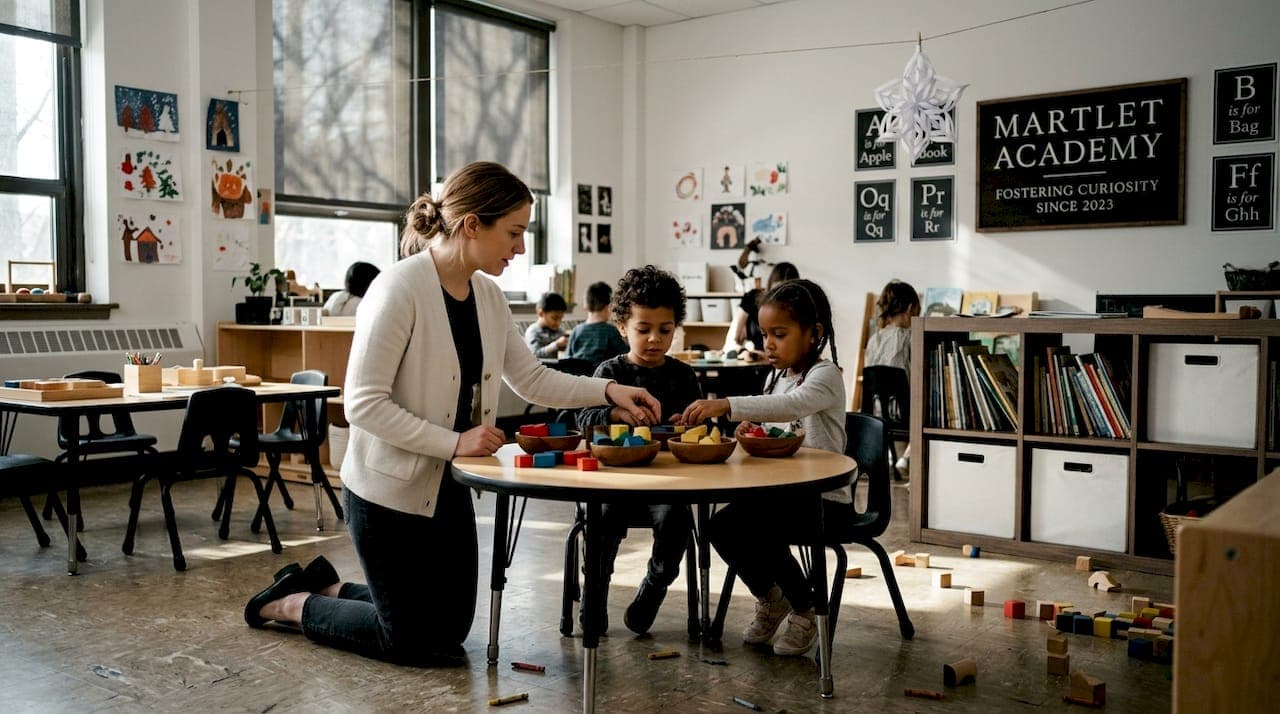
Choosing a preschool for your child means looking beyond bright walls and cheerful teachers. The real question is whether the classroom is structured to nurture your child's whole self, not just their ability to recite letters and numbers. Learning centers sit at the heart of this question. When a classroom is thoughtfully divided into purposeful activity zones, children gain the freedom to explore, create, problem-solve, and regulate their emotions in ways that teacher-directed lessons simply cannot replicate. This guide breaks down the most recommended center types, what each one actually develops, and how to evaluate them when touring a school or enriching your home setup.
Table of Contents
- What are learning centers and why do they matter?
- The 10 essential types of preschool learning centers
- How learning centers support balanced development
- Tips for choosing and enriching learning centers
- What most guides miss about learning centers
- Explore Martlet Academy's early learning programs
- Frequently asked questions
Key Takeaways
| Point | Details |
|---|---|
| Balanced center mix | The best preschools feature a blend of academic, creative, and emotional-support centers. |
| Play-based and choice-driven | Centers should encourage self-directed play and give children real options for exploration. |
| Regular refresh for engagement | Updating materials and themes keeps each center exciting and relevant to students. |
| Emotional growth matters | Centers like dramatic play and cozy corners are essential for fostering regulation and social skills. |
| Practical for home learning | Learning centers aren’t just for school—they can inspire purposeful, fun home activities too. |
What are learning centers and why do they matter?
A learning center is a designated area in the classroom devoted to a specific skill set, theme, or type of play. Think of the classroom as a small neighborhood. Each center is its own little shop where children can "visit," experiment, and learn on their own terms.
"In preschool classrooms, learning centers are designated areas where children engage with materials for play-based practice and self-directed learning."
That self-direction is what makes centers so powerful. When your child chooses where to go and what to do there, they are building decision-making skills and confidence at the same time as they are absorbing academic content. Centers are not free-for-all chaos. They are carefully curated spaces with specific materials and implicit learning goals baked right in.
Here is why centers matter so much for preschool-age children:
- They allow children to move at their own pace without the pressure of group instruction.
- They support multiple developmental domains at once, including language, motor skills, social skills, and emotional growth.
- They give educators a chance to observe individual children, check in, and offer targeted support.
- They reduce behavioral challenges by giving children meaningful choices throughout the day.
Child-centered preschool curriculums are built around exactly this kind of structure. When centers are well-designed, play-based learning becomes the primary vehicle for growth, and children do not even realize they are "doing school." That is the goal.
The 10 essential types of preschool learning centers
A widely used preschool-center model identifies approximately ten center types that together address every major developmental domain. Here is what each one looks like in practice and why it belongs in a quality classroom.
-
Blocks and building center. Children stack, sort, balance, and knock things down. This sounds simple, but it builds spatial reasoning, early math concepts like measurement and symmetry, and gross motor skills activities through hands-on manipulation. When two children negotiate who gets the long block, social skills enter the picture too.
-
Dramatic play center. This is the kitchen, the doctor's office, the grocery store. Dramatic play is where children rehearse real life in a safe setting. They practice language, empathy, and role-taking, all foundational social and emotional skills in preschool. Research consistently supports its role in developing self-regulation and cooperative play.
-
Literacy and library center. A cozy reading nook stocked with age-appropriate books, felt boards, and alphabet manipulatives. Children explore print at their own pace, develop a love of stories, and build the phonological awareness that early reading depends on.
-
Creative arts center. Paint, clay, collage materials, and open-ended craft supplies. This center builds fine motor skills, encourages self-expression, and nurtures creative thinking. Crucially, there is no "right" answer here, which helps children feel safe taking risks.
-
Math and manipulatives center. Counting bears, pattern blocks, number puzzles, and sorting trays. Children develop one-to-one correspondence, basic number sense, and logical thinking through tactile, hands-on activity. Early math exposure at this level predicts later academic success more strongly than many parents realize.
-
Sensory center. Sand tables, water play, playdough, and textured materials. Sensory exploration builds neural connections that support focus, language development, and emotional regulation. For children who struggle with sensory sensitivities, this space also serves as gradual, supportive exposure therapy.
-
Science and discovery center. Magnifying glasses, simple experiments, nature collections, and observation journals. This center fosters curiosity, hypothesis-building, and careful observation. Even a simple "what happens when we mix these two colors?" moment teaches children the scientific process in an age-appropriate way.
-
Writing center. Paper, pencils, stamps, and name cards. Children practice letter formation, write their names, and experiment with marks that carry meaning. This center bridges fine motor development with emerging literacy and gives children ownership over communication.
-
Music center. Instruments, rhythm sticks, recorded music, and song charts. Music builds phonological awareness, pattern recognition, and emotional expression. It is also one of the most natural and joyful group activities in early childhood, supporting a sense of community.
-
Cozy corner. Often called a calm-down corner or regulation station. Center choices can include a cozy corner as a regulation-support space. Soft seating, breathing visuals, and calming tools help children recognize and manage big emotions before they escalate into meltdowns.
Pro Tip: When visiting a preschool, count the centers. If you see fewer than eight, ask how multiple developmental domains are addressed within each space. Quality matters more than quantity, but variety is a strong signal of intentional curriculum design.
How learning centers support balanced development
Centers are most valuable when they work together as a system rather than as isolated activities. Centers should cover multiple domains including literacy, math, science, and arts, while also incorporating socio-emotional supports like dramatic play and a cozy corner, along with hands-on sensory experiences.
Here is a quick comparison of what each category of center primarily supports:
| Center type | Primary developmental domains | Emotional benefits |
|---|---|---|
| Blocks and building | Math, spatial reasoning, motor skills | Frustration tolerance, persistence |
| Dramatic play | Language, social skills, creativity | Empathy, role-taking, self-regulation |
| Literacy and library | Pre-reading, vocabulary | Calm focus, love of stories |
| Creative arts | Fine motor, self-expression | Confidence, risk-taking |
| Math and manipulatives | Numeracy, logic, problem-solving | Patience, attention to detail |
| Sensory | Sensory integration, language | Calming, grounding, focus |
| Science and discovery | Inquiry, critical thinking | Wonder, curiosity |
| Writing | Fine motor, literacy | Autonomy, self-expression |
| Music | Phonological awareness, rhythm | Joy, community, emotional release |
| Cozy corner | Self-regulation | Calm, safety, emotional literacy |
One thing that separates a truly excellent classroom from an average one is how often the materials inside each center change. Centers are most effective as theme-based, student-choice integrated learning spaces, with materials and activities regularly updated to stay aligned with current goals and children's interests. A science center that looks the same in October as it did in September is a missed opportunity.
Safe preschool environments go hand in hand with rich learning centers. When children feel physically and emotionally secure in their surroundings, they engage more deeply and take more productive risks. The cozy corner is a perfect example. Far from being a "timeout" space, it is a proactive tool that teaches children to recognize when their body needs a reset, a skill that pays dividends well beyond preschool.
Pro Tip: Ask your child's teacher which centers have been updated recently and what prompted the change. A teacher who answers with specific examples of student interest shows you that the classroom is genuinely responsive to the children in it.
Tips for choosing and enriching learning centers
Whether you are evaluating preschools or building out a learning corner at home, a few practical principles will help you make better choices. Centers work best when they are theme-based and integrated spaces where children drive their own activity choices and materials stay current.
Here is what to look for and ask about:
- Variety across domains. A quality program covers academic skills and emotional development together. If you see only academic centers, ask about the social-emotional supports built into the day.
- Open-ended materials. Blocks, loose parts, art supplies without templates. Open-ended tools allow more creative thinking than worksheets or one-answer puzzles.
- Clear organization. Children should be able to find and return materials independently. Labeled bins, picture guides, and tidy shelves signal that independence is a priority.
- Rotation schedules. Ask how long children can stay at a center and how they transition. Smooth transitions reduce anxiety and keep the energy positive.
- Teacher involvement style. Are teachers facilitating and observing, or directing every activity? In a strong center-based program, educators follow the child's lead rather than dictating outcomes.
Quality preschool programs build the structure of their day around center time, not as a break from learning but as the core of it. The importance of routine in preschool extends into the center model too. Children who know the daily center routine show less anxiety and more focused engagement than children in unpredictable settings.
For home enrichment, you do not need to replicate a full classroom. Pick two or three centers based on your child's current interests. A sensory bin, a small writing station, and a shelf of books with a soft pillow can create powerful learning opportunities on a weekday afternoon. Rotate the materials every two to three weeks to keep things feeling fresh without overwhelming your child with constant change. More ideas are available through preschool learning center tips that connect center design to everyday family life.
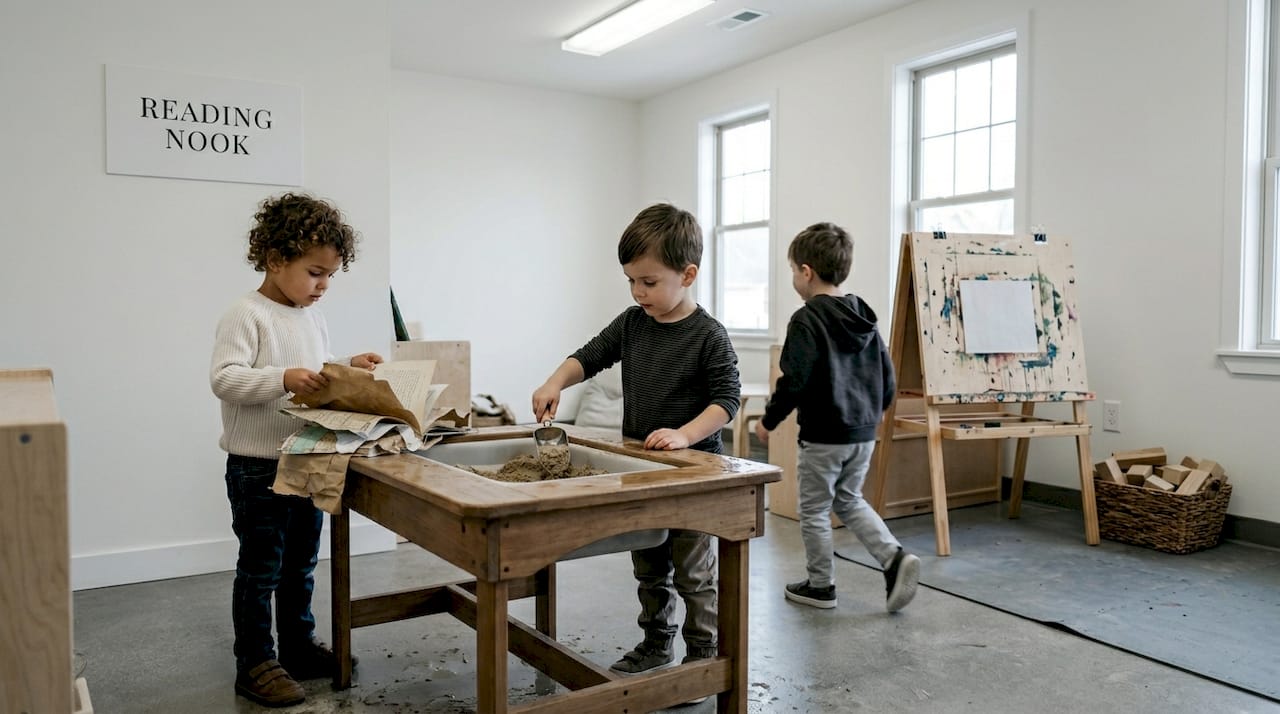
Pro Tip: Let your child help "set up" a home center. Choosing what goes in the bin or picking which books to display gives them ownership and dramatically increases how long they engage with the space.
What most guides miss about learning centers
Most articles about preschool learning centers stop at the list. Here are the ten types; now you know everything. But the list is actually the easiest part. The harder and far more interesting question is: what happens when a center stops working?
In our experience at Martlet Academy, the most telling sign of a strong early childhood program is not how many centers exist on day one of the school year. It is how quickly educators respond when children start drifting away from a center or using it in unexpected ways. A dramatic play corner that is ignored for two weeks is not a failure. It is data. It tells a skilled teacher that the materials no longer reflect the children's world and that something new, a prop from a recent field trip, a theme tied to a story the class loves, needs to be introduced.
The other thing most guides skip is the relationship between class size and center quality. Small class sizes are what allow teachers to actually observe children at centers, notice when a child is struggling with frustration at the blocks, or when a quiet child has started leading stories in the library corner. In a large group, these moments get lost. In a small, attentive classroom, they become the foundation of individualized support.
Centers also need to reflect the cultural community of the children using them. Dramatic play props, book selections, and art materials that mirror a child's home life send a powerful message: you belong here. That sense of belonging is not separate from learning. It is the precondition for it. A child who feels seen in the classroom is a child who is ready to take risks, explore, and grow.
Explore Martlet Academy's early learning programs
Choosing a preschool means choosing the environment where your child will spend some of their most formative learning hours. At Martlet Academy, every classroom is built around the same center-based philosophy this article describes, including all ten recommended learning center types, regular material updates, and a cozy corner designed to support emotional regulation every single day.
Our educators thoughtfully adapt each center to reflect what children are currently curious about, ensuring that every space stays meaningful and engaging. If you are ready to see these principles in action, explore our Martlet Academy preschool program or learn about our kinder prep program for children transitioning to kindergarten. Families with younger children can also discover our infant program, where the same nurturing, play-centered philosophy begins from day one.
Frequently asked questions
How many learning centers should a preschool classroom have?
Most experts recommend around ten varied learning centers to address all developmental domains and provide both academic and emotional support throughout the day.
What is the purpose of a cozy corner in preschool?
A cozy corner gives children a quiet, safe space to regulate their emotions and regain calm. Center choices can include a cozy corner as a dedicated regulation-support space, making it an essential part of a socio-emotionally responsive classroom.
How often should learning centers be updated?
Materials and activities should be regularly updated to stay aligned with children's evolving interests, current classroom themes, and developmental goals, typically every few weeks.
Which learning centers provide social-emotional support?
Dramatic play and cozy corners are the strongest contributors to social-emotional learning. Centers should include socio-emotional supports like dramatic play and a calm-down space alongside academic-focused areas for truly balanced development.
Can learning centers be adapted for home use?
Yes. You can create a meaningful home learning space with just two or three centers using themed materials, open-ended activities, and simple organizational tools tailored to your child's current interests and developmental stage.