Every parent has watched their toddler struggle to share a favorite toy or melt down when saying goodbye at drop-off. These moments feel frustrating, but they are actually normal parts of development. What many parents don't realize is that key social-emotional milestones like noticing others' emotions, imitating actions, and beginning turn-taking all emerge between 18 and 36 months. With the right strategies, you can turn these everyday struggles into genuine growth. This guide walks you through what to expect, how to set up your child's world for success, and which hands-on techniques actually work.
Table of Contents
- Understanding toddler social skills milestones
- Setting the stage: Creating a supportive social environment
- Step-by-step strategies for building toddler social skills
- Common stumbling blocks and how to troubleshoot them
- Measuring progress and next steps
- Our take: What actually works (and what doesn't) in toddler social skill development
- Find nurturing support for your toddler's social journey
- Frequently asked questions
Key Takeaways
| Point | Details |
|---|---|
| Track key milestones | Understand what healthy social and emotional growth looks like at each toddler age so you can notice progress and spot concerns early. |
| Build the right environment | Consistent routines, limited screen time, and emotionally responsive adults help toddlers develop vital social skills. |
| Use step-by-step strategies | Label emotions, encourage play, and gently coach sharing and turn-taking through daily experiences and play. |
| Troubleshoot challenges | Expect setbacks like reluctance to share or separation tears—handle them with patience and evidence-based responses. |
| Monitor and celebrate growth | Track skills, seek help for red flags, and build on your child’s progress with quality group learning when they are ready. |
Understanding toddler social skills milestones
To lay the groundwork, let's clarify what healthy social development looks like and when certain skills typically emerge. Knowing the milestones helps you celebrate real wins and spot any gaps worth watching.
Toddlers grow fast, and their social abilities shift noticeably every few months. Here's a quick snapshot of what most children show at each stage:
| Age | Typical social behaviors |
|---|---|
| 18 months | Moves away but checks back with parent, points to share interest, helps with dressing |
| 24 months | Notices when others are hurt or upset, looks to parent for cues in new situations |
| 36 months | Calms after drop-off, joins other children in play, shows simple empathy |
These milestones are averages, not deadlines. Each child has a unique pace, and a few weeks' variation in either direction is completely normal. What matters most is a general forward trend over time.
Some signs worth watching more closely include:
- Little to no interest in other people by 18 months
- Consistent avoidance of eye contact past age 2
- No attempts at imitation or pretend play by 24 months
- Extreme difficulty calming after separation well past age 3
If you notice several of these at once, it's worth checking in with your pediatrician and using a milestone tracker to document what you're seeing. Early screening is a gift, not a judgment.
Building lasting social and emotional skills starts in these early years, which is why understanding the timeline matters so much. When you know what's developmentally appropriate, you stop expecting too much too soon and start meeting your child exactly where they are.
One more thing worth noting: social development doesn't happen in isolation. It's deeply tied to language, motor skills, and emotional regulation. A toddler who is working hard on talking may seem less social for a stretch, then suddenly blossom once words come easier. Keep the full picture in mind.
Setting the stage: Creating a supportive social environment
Once you know what to expect, the next step is shaping your child's world to help those skills flourish. The environment your toddler spends time in, both at home and in early learning settings, plays a bigger role than most parents realize.
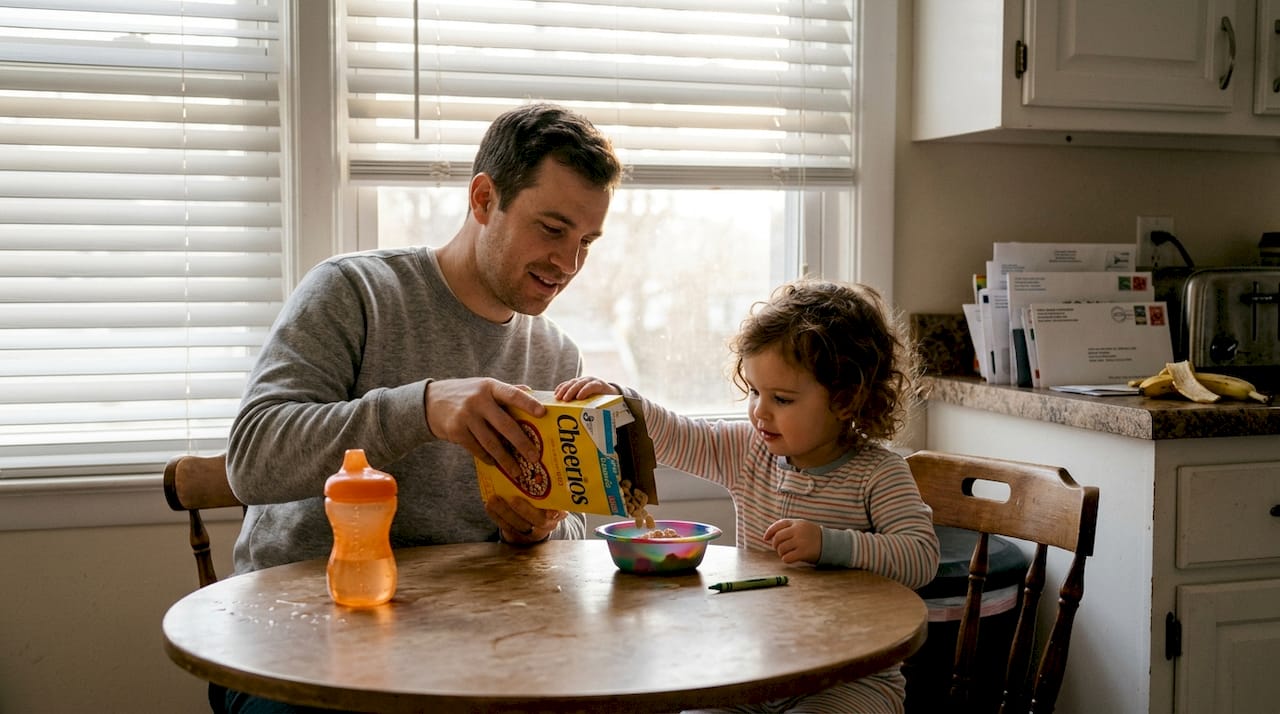
Responsive relationships are the single most important ingredient. When a caregiver consistently notices and responds to a toddler's cues, the child builds a secure base from which to explore the social world. Think of it like a charging station. A toddler who feels safe and seen is far more willing to try new social situations.
Supportive environments that include predictable routines, positive reinforcement, and limited screen time consistently produce better social-emotional outcomes. Routines in particular help toddlers feel in control, which reduces anxiety and frees up energy for connecting with others.
Here's a quick comparison of two common approaches:
| Approach | Key features | Social-emotional impact |
|---|---|---|
| Traditional structured play | Adult-directed, scheduled activities | Builds following directions, group norms |
| Play-based/child-centered | Child-led exploration, open-ended materials | Builds negotiation, creativity, peer connection |
Neither approach is wrong. The most effective environments blend both, offering structure alongside freedom. A nurturing learning environment balances these elements intentionally.
At home, a few practical moves make a real difference:
- Keep daily routines consistent (meals, nap, play, goodbye rituals)
- Use positive language when redirecting behavior
- Limit screens to under one hour per day for children 2 to 5
- Offer small social opportunities like neighbor visits or library storytime
The Zero to Three parent tips on social-emotional development also emphasize the value of naming your own emotions out loud. When you say "I feel frustrated because I spilled my coffee," your toddler learns that emotions are normal and speakable.
Pro Tip: Give your toddler a small comfort object, like a stuffed animal or a photo of you, to carry during transitions. A consistent goodbye ritual, such as three hugs and a wave, also helps them predict what comes next and reduces separation distress.
The role of routine and structure cannot be overstated here. Predictability is not boring for toddlers. It is the scaffolding that makes brave social exploration possible.
Step-by-step strategies for building toddler social skills
With the right foundation in place, you're ready to help your toddler develop essential social skills through everyday activities. These strategies are practical, low-cost, and backed by research.
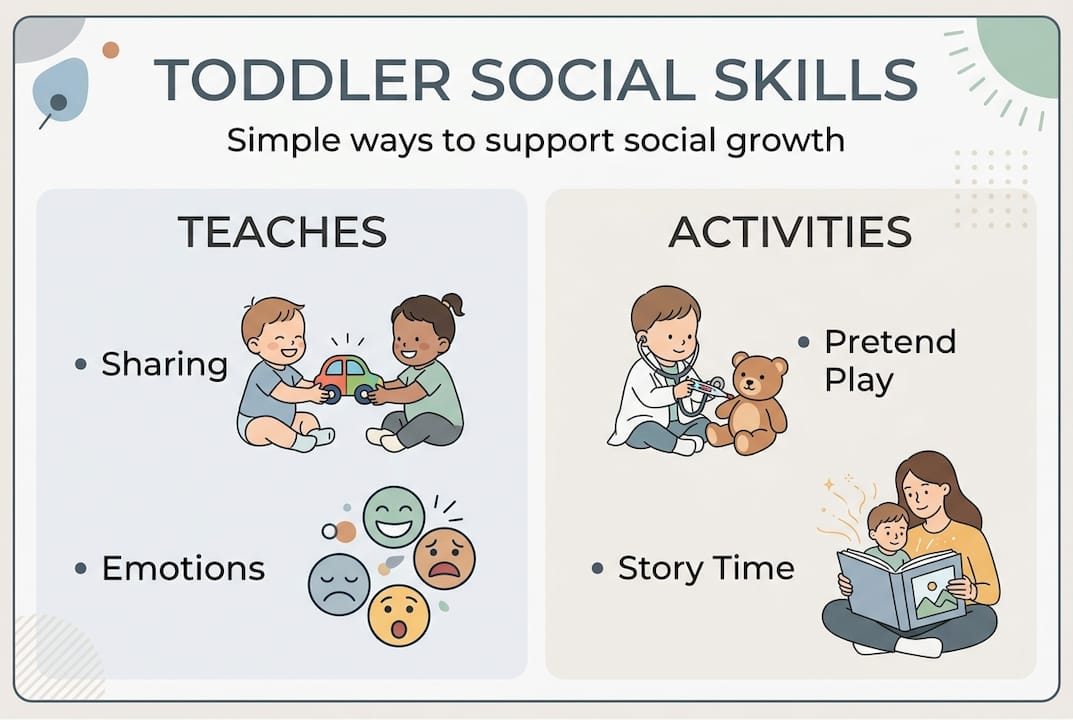
- Name emotions out loud. When your child looks upset, say "You seem frustrated that the blocks fell." This builds emotional vocabulary, which is the first step toward self-regulation and empathy.
- Practice turn-taking in play. Roll a ball back and forth. Take turns stacking blocks. These simple games teach the rhythm of give-and-take that underlies all social interaction.
- Encourage pretend play. Set up a simple kitchen or doctor kit. Play-based learning is where toddlers rehearse real social scripts in a safe, low-stakes setting.
- Guide conflict resolution without taking over. When two toddlers want the same toy, narrate what you see: "You both want the truck. What could we do?" Then wait. Give them a beat to problem-solve before stepping in.
- Read books about feelings. Stories give children a shared language for emotions and model how characters navigate social challenges.
Labeling emotions, encouraging pretend play, and modeling sharing are all proven strategies for supporting social growth. The key is consistency, not perfection.
Knowing when NOT to intervene is just as important. If two toddlers are negotiating a toy with mild frustration but no tears, let it play out. The role of teachers in early childhood settings is often to observe and support from a distance, stepping in only when children are stuck or distressed. You can do the same at home.
Some additional quick wins:
- Praise the attempt, not just the outcome: "I love how you waited for your turn!"
- Model sharing openly: "I'm going to share my crackers with you."
- Use positive parenting tips to reinforce what's working
Pro Tip: Offer choices during play to build negotiation skills. Ask, "Do you want to be the chef or the customer?" This tiny move hands your toddler real decision-making power and teaches flexibility.
Common stumbling blocks and how to troubleshoot them
Even with best practices, real-world parenting brings tough moments. Here's how to handle them constructively.
Sharing is probably the most common flashpoint. Toddlers are developmentally wired to think in terms of "mine," and that's not selfishness. It's normal cognitive development. Forcing a child to hand over a toy before they're ready often backfires, creating more resistance, not less.
"Rushing skill development before a child is ready can create power struggles and undermine the trust that makes real social learning possible." Based on guidance from Zero to Three and CDC developmental resources.
Instead of forcing sharing, try parallel play setups where each child has their own version of a toy. Gradually introduce turn-taking with a visual timer so the wait feels concrete and fair.
Separation anxiety peaks around 18 months and again around age 3. It is a sign of healthy attachment, not a problem to eliminate. What helps:
- Keep goodbyes short and consistent
- Avoid sneaking away, which erodes trust
- Acknowledge the feeling: "I know you miss me. I'll be back after snack."
For peer conflict, small class sizes in early learning settings make a measurable difference because children get more adult support per interaction.
When should you be more concerned? The 3-year-old milestones checklist is a helpful reference. If your child misses major milestones consistently, such as showing no interest in peers, avoiding eye contact, or not imitating others by age 2, early screening is the right move. Acting early is always better than waiting.
You'll find more guidance across more parenting resources on navigating these challenges with confidence.
Measuring progress and next steps
With strategies in place, it's essential to keep an eye on your child's growth and know how to build on it. Progress in social skills can be subtle, so knowing what to look for helps you stay encouraged.
Here's a simple table to guide your observations:
| Signs of progress | Signs to monitor |
|---|---|
| Initiates play with peers | Consistently avoids other children |
| Uses words to express feelings | Frequent unexplained tantrums past age 3 |
| Recovers from upsets more quickly | Cannot calm after separation by age 3 |
| Shows empathy (hugs a crying friend) | No pretend play by 24 months |
Tracking these patterns doesn't require a formal system. A simple notes app on your phone works well. Jot down a quick observation a few times a week, and review it monthly. Patterns become visible quickly.
Here's how to decide on next steps:
- If progress is steady: Continue current strategies and consider introducing more structured peer play through a toddler program or playgroup.
- If progress feels stalled: Consult your pediatrician and request a developmental screening. Early intervention is highly effective.
- If your child is thriving: Start exploring finding a quality preschool program to build on existing strengths.
Social skill gains in early childhood predict reduced behavior problems and greater peer acceptance long-term. That's a powerful reason to invest in this work now, not later.
Research on playfulness and social maturity also shows that children who engage in more imaginative, flexible play develop stronger social competence over time. Encouraging open-ended play at home directly supports preschool and kindergarten readiness down the road.
Our take: What actually works (and what doesn't) in toddler social skill development
Beyond the research, real-world results sometimes surprise even experienced educators. At Martlet Academy, we've worked with hundreds of toddlers and their families, and a few things stand out clearly.
The biggest myth we see? That structured group activities are the fastest path to social growth. In reality, a warm, responsive relationship with even one trusted adult does more for a toddler's social confidence than any organized circle time. Children learn social skills through secure attachment, not around it.
We also see parents understandably frustrated when progress feels invisible day to day. But social development often works like that. A child who seemed stuck for weeks suddenly starts sharing spontaneously or comforting a friend. Consistency matters far more than intensity.
Another thing we've learned: matching strategies to temperament is everything. A bold, outgoing toddler needs different support than a slow-to-warm child. Pushing a cautious child into group play before they're ready can set them back. The lasting impact of preschool socialization comes from feeling safe, not from being pushed.
Trust the process. Small, consistent moments of connection and coaching add up to something remarkable.
Find nurturing support for your toddler's social journey
If you're ready to build on your momentum with expert support, here are ways to continue your toddler's social growth journey. At Martlet Academy, we center social-emotional development in every program we offer, from small group interactions to daily emotional coaching woven into play.
Our Toddler Program is designed specifically for children aged 18 to 36 months, with low ratios, responsive caregivers, and a curriculum built around the milestones covered in this guide. Families who want to continue that growth into the preschool years will find the same philosophy in our Preschool Program. We partner closely with families, keeping communication open and consistent. Schedule a tour today and see the difference a truly nurturing environment makes.
Frequently asked questions
What are the most important social skills for toddlers to learn?
The core skills are recognizing and naming emotions, imitating others, sharing, turn-taking, showing empathy, and calming after separations. By 18 to 36 months, toddlers begin turn-taking and manage separations more effectively as their confidence grows.
How can I help my toddler make friends if they're shy?
Start with parallel play where children play near each other without direct interaction, model friendly behavior yourself, and praise every small social step your child takes. Avoid forcing premature socialization and respect your child's individual readiness timeline.
When should I be concerned about my toddler's social development?
If your child shows no interest in others, avoids eye contact consistently, isn't imitating by age 2, or can't calm after separation by age 3, talk to your pediatrician. Act early with screening if multiple milestones are missed, since early support makes a significant difference.
Does screen time affect my child's social skills?
Yes, and the effect is meaningful. Experts recommend keeping screen time under one hour per day for toddlers because limited screen time promotes stronger social-emotional outcomes compared to higher exposure.
What activities build social skills at home?
Pretend play, reading books about feelings, and supported playdates are among the most effective options. Pretend play and shared reading give toddlers a safe space to practice emotional vocabulary and social problem-solving in everyday moments.
Recommended
- How Preschool Builds Social and Emotional Skills — Martlet Academy
- The Role of Teachers in Early Childhood Development — Martlet Academy
- What to Look for in a Quality Preschool Program — Martlet Academy
- Toddler Program | Encourage Discovery Today — Martlet Academy
- Pre-schooler parenting tips: practical advice for Ilford families