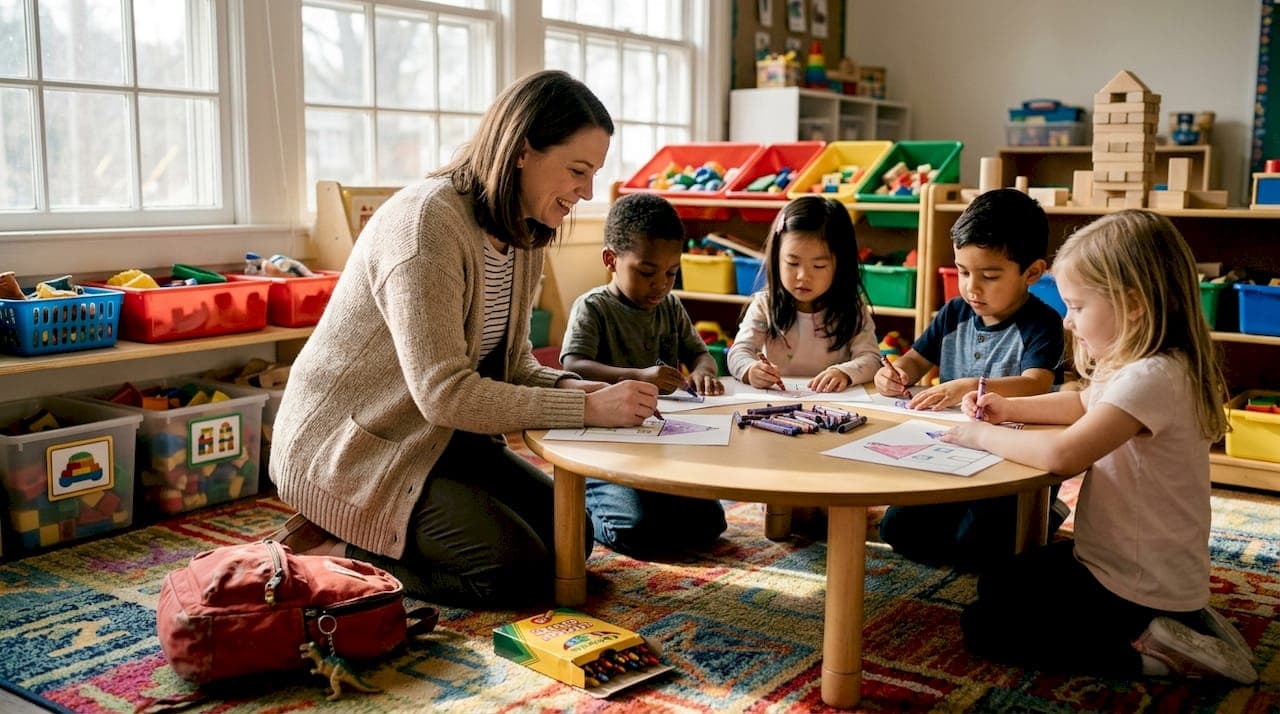
Most parents pour energy into finding the right curriculum or the most qualified teacher for their young child. Those things matter, but they are only part of the picture. Research consistently shows that community involvement, including families, neighbors, health workers, and local organizations, plays an equally powerful role in shaping your child's emotional well-being, social confidence, and school readiness. This guide breaks down exactly how community works inside early education settings, how different approaches compare, and what to look for when choosing a program that genuinely supports your whole family.
Table of Contents
- Why community matters in early education
- How community partnerships support your child's growth
- Child-centered learning vs. community-driven approaches
- Tailoring community involvement: Considerations for your family
- A balanced path: Why the best early education blends community and child-led learning
- Want an early education community that puts your child first?
- Frequently asked questions
Key Takeaways
| Point | Details |
|---|---|
| Community shapes development | A strong community network boosts your child's social, emotional, and academic growth. |
| Multiple support methods | Volunteers, home visits, and partnerships expand learning beyond the classroom. |
| Balanced approaches work best | Blending child agency with structured community support maximizes emotional and learning benefits. |
| Choose programs intentionally | Look for early education options with active family partnerships and community integration. |
Why community matters in early education
When most people hear "community" in the context of early education, they picture a bake sale or a parent-teacher night. But the real definition goes much deeper. Community partnerships in early childhood education involve forging connections with local families, volunteers, health workers, and organizations to support child development. That network becomes a living safety net around your child, one that catches them when they stumble and lifts them when they are ready to grow.
For infants and toddlers especially, this network shapes how they experience safety and trust. A child who sees familiar faces across different settings, at the library story time, at the pediatrician's office, and in the classroom, builds what researchers call a "secure base." That sense of security is the foundation of emotional regulation, which is the ability to manage feelings without becoming overwhelmed.
High social capital communities provide structural and social support that extends well beyond what any single teacher or parent can offer alone. Think of it as a web: the more connection points in that web, the stronger it becomes for your child.
"Children thrive not because of one great teacher or one perfect home, but because of the richness of connections surrounding them."
Here is what strong community involvement actually delivers for young children:
- Emotional security: Consistent contact with caring adults across settings builds trust faster.
- Social competence: Children who interact with diverse community members develop better communication skills early.
- Academic readiness: Understanding of why early education matters grows when school and home reinforce the same messages.
- Resilience: Kids embedded in supportive communities recover from setbacks more quickly.
- Family confidence: Parents who feel connected to a school's community are better equipped to extend learning at home.
The teacher roles in development do not diminish in this model. Instead, educators become connectors, linking your child to a broader world of caring adults who all share the same goal.
How community partnerships support your child's growth
Knowing why community matters is one thing. Seeing exactly how it shows up in daily practice is another. Community-based volunteers deliver playful parenting interventions via home visits, role plays, and group sessions that extend learning well beyond the classroom walls. These are not just feel-good gestures. They are structured strategies that have measurable effects on children's development.
Consider the table below, which maps common methods of community support to the specific outcomes they drive:
| Method | Who is involved | Key outcome |
|---|---|---|
| Home visits | Educators, health workers | Early identification of developmental needs |
| Volunteer-led play sessions | Community volunteers | Social skill development and peer bonding |
| Family group activities | Families, teachers | Strengthened family-school communication |
| Resource referrals | Social workers, coordinators | Access to speech, nutrition, and mental health support |
| Joint community events | Families, local organizations | Belonging, cultural connection, community identity |
Family involvement across home, school, and community settings is closely linked to academic performance, social-emotional competence, and school readiness. This is not a soft benefit. It is a concrete, measurable difference in how prepared your child will be when they enter kindergarten.
Here is how these partnerships typically work in practice:
- Initial intake conversations give educators a clear picture of each family's strengths, cultural background, and support needs.
- Regular check-ins keep parents informed and involved, so learning at home reinforces what happens in the classroom.
- Volunteer coordination brings in local mentors, storytellers, and health professionals to enrich the child's world.
- Referral systems connect families quickly to outside services when a child needs additional support.
- Joint celebrations create shared memories that bind children, families, and educators together as a true community.
Pro Tip: During any school tour, ask specifically whether the program has a formal referral system for outside support services. A school that can connect you to a speech therapist or family counselor quickly is investing in your child's whole development, not just their time in the classroom. Also look at qualities of quality preschool programs to know what questions to bring.
Schools that build safe and nurturing environments do not leave community involvement to chance. They design it intentionally into their daily routines.
Child-centered learning vs. community-driven approaches
Parents researching early education often encounter two seemingly opposite philosophies: child-centered learning and community-driven or content-directed learning. Understanding both helps you find the right fit for your family.
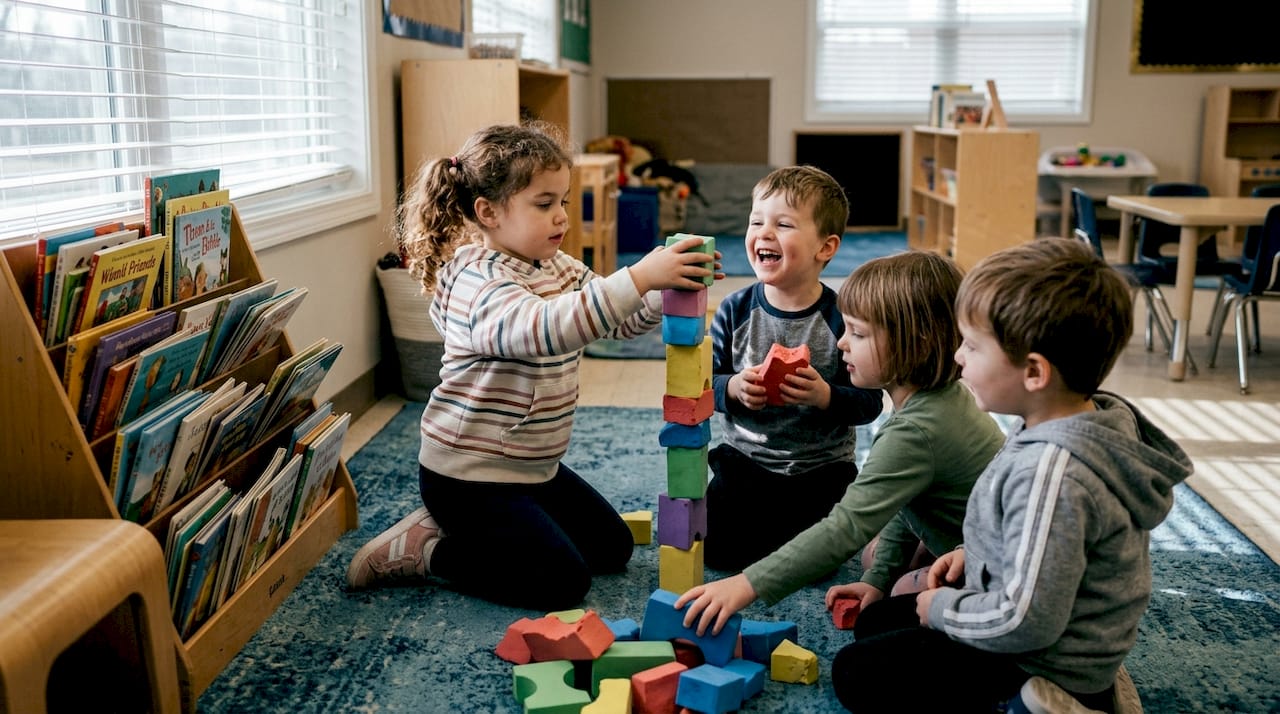
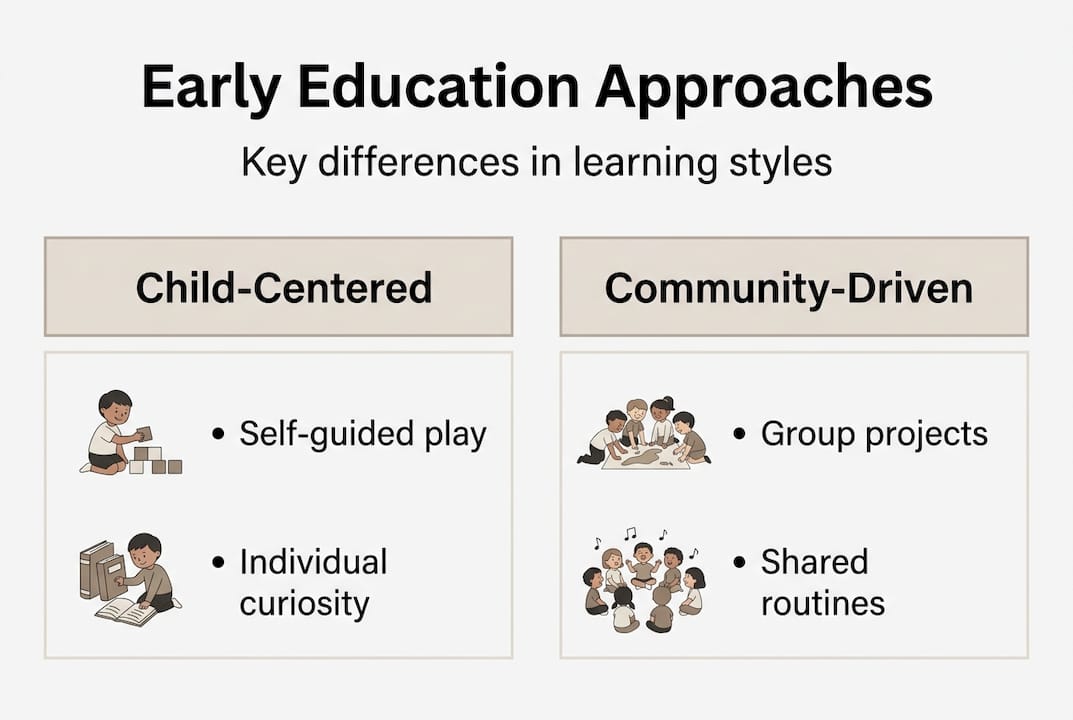
Child-centered learning puts your child's curiosity and natural motivation at the heart of the day. Play is the primary vehicle. Children choose their activities, set their own pace, and follow their interests. Child-centered learning, including free play and intrinsic motivation, tends to reduce anxiety and build a healthy relationship with learning itself.
Community-driven approaches organize learning around group activities, structured skill-building, and peer collaboration. The emphasis is on shared experiences, role learning, and cultural transmission.
Here is a side-by-side comparison:
| Feature | Child-centered | Community-driven |
|---|---|---|
| Primary driver | Child's curiosity | Group goals and social norms |
| Typical activities | Open-ended play, exploration | Structured group projects, role play |
| Emotional impact | Lower anxiety, higher self-confidence | Stronger peer bonds, cultural belonging |
| Academic impact | Deep engagement, intrinsic motivation | Broader skill exposure, academic readiness |
| Risk | Reduced peer collaboration | Higher stress if balance is poor |
Neither approach is perfect on its own. Here is what the research actually says about the trade-offs:
- Child-centered models sometimes lack the relational depth that comes from peer and community interaction.
- Community-driven models can increase stress if structure outweighs a child's need for autonomy.
- The most effective programs, as seen in play-based learning benefits, blend both by letting children lead within a richly connected community context.
- Small class sizes in early education amplify the benefits of both models by giving educators the space to observe and respond to each child individually.
For most families, the sweet spot is a program that values your child's voice while also embedding them in a warm, active community.
Tailoring community involvement: Considerations for your family
Choosing the right early education program means matching your family's values and your child's temperament to a school's actual practices, not just its marketing language. Parents seeking emotionally supportive, community-involved options should prioritize programs with strong family partnerships, volunteer integration, and child-centered play balanced with community activities.
Here is a practical step-by-step approach for evaluating any program:
- Visit in person. Watch how staff interact with children and with families dropping off. Warmth should be visible, not performed.
- Ask about family engagement. Find out how the school keeps you informed and how often you are genuinely invited to participate.
- Look for volunteer presence. A school that integrates community volunteers signals investment in your child's broader development.
- Check for referral infrastructure. Ask whether the school has relationships with local health, nutrition, or mental health services.
- Assess communication channels. Daily notes, apps, and open-door policies all signal that this school sees you as a partner.
Red flags to watch for include limited parent communication, no clear volunteer or partnership program, and educators who seem unfamiliar with the families they serve. Isolation from the surrounding community is a warning sign, not a sign of exclusivity.
Pro Tip: Ask the director one specific question: "Can you describe a time when the school connected a family to an outside resource?" A confident, detailed answer tells you the referral system is real, not theoretical. For additional guidance on family engagement, explore our blog and review kindergarten readiness tips to understand how community investment pays off long-term.
A balanced path: Why the best early education blends community and child-led learning
Here is a perspective that often gets lost in the debate between child-centered and community-driven models: the framing itself is a false choice. We have seen, across diverse settings from busy urban centers to small rural towns, that the children who flourish most are not those placed in a "pure" philosophy. They are the ones embedded in programs where adults have made a conscious decision to honor both the child's agency and the community's role in holding them.
Balancing individual child agency with collective community support means avoiding the trap of pure child-centered isolation by embedding children in relational networks that guide without controlling. The key word is reciprocal. The school gives to the community, and the community gives back to the school and, most importantly, to your child.
When you are evaluating a program, do not just ask what philosophy they follow. Ask how they create relationships that flow in both directions between teachers, families, and the broader neighborhood. A school that truly integrates benefits of play-based learning within a community context produces children who are not just academically prepared but emotionally anchored. That is the foundation confident, curious kids are built on.
Want an early education community that puts your child first?
If what you have read here resonates, you are already thinking about early education the right way. Finding a program that balances your child's freedom to explore with the warmth of a connected community is not just possible. It is exactly what the best programs are designed to do.
At Martlet Academy, our Infant Program and Preschool Program are built on the belief that children grow best when families, educators, and the broader community work as genuine partners. We integrate family engagement, volunteer participation, and local resource connections into the everyday rhythm of our classrooms. We would love to show you what that looks like in person. Visit Martlet Academy to learn more or to schedule a tour today.
Frequently asked questions
How does community involvement impact my child's emotional growth?
Community support networks foster readiness, resilience, and social competence by surrounding children with consistent, caring relationships that build trust and emotional stability from a very early age.
What are examples of community-based activities in early education?
Community partnerships range from shared resources to home visits and joint activities, including family-school events, volunteer-led play sessions, and visits from local health professionals.
How is community involvement different from just having a good teacher?
Community partnerships involve multiple agents, extending support beyond teachers by weaving together families, volunteers, health workers, and local organizations into a coordinated network around your child.
Is community involvement still valuable in small or rural settings?
Absolutely. In rural areas, community-based volunteers fill gaps in service delivery, though these efforts work best when paired with strong cross-sector collaboration and consistent communication between families and educators.