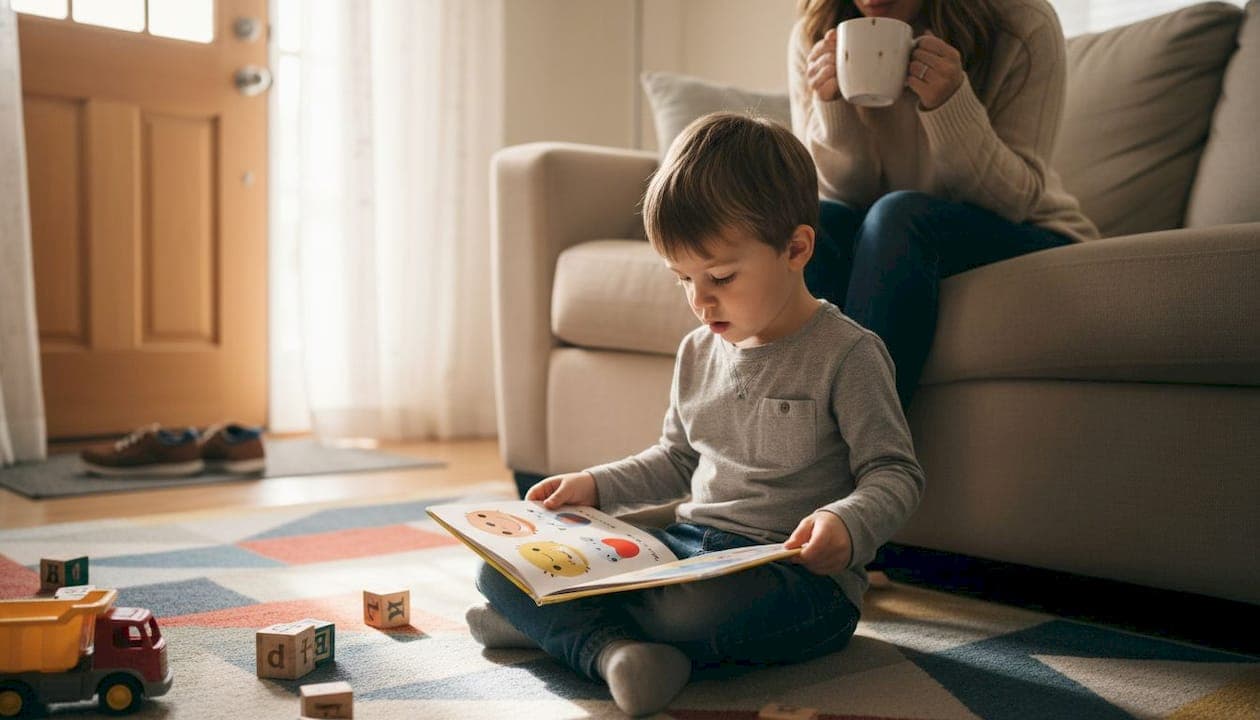
Most parents spend years tracking reading levels, math skills, and report cards. Yet high emotional intelligence predicts better academic performance, social competence, and long-term outcomes than IQ alone. Emotional intelligence, or EI, is the ability to recognize, understand, and manage emotions in yourself and in others. It shapes how your child makes friends, handles frustration, and recovers from setbacks. This article covers what EI is, why it matters so much in the early years, how it develops from infancy through preschool, and what you can do at home and in partnership with educators to nurture it every single day.
Table of Contents
- What is emotional intelligence and why does it matter?
- Key milestones of emotional intelligence in early childhood
- How emotional intelligence shapes learning, behavior, and long-term outcomes
- Supporting emotional intelligence at home: Strategies for parents and guardians
- EI challenges: Adversity, trauma, and special considerations
- A fresh perspective: Why emotional intelligence deserves equal focus with academics
- How Martlet Academy helps build emotional intelligence
- Frequently asked questions
Key Takeaways
| Point | Details |
|---|---|
| EI predicts success | Emotional intelligence drives academic, social, and lifelong achievement more than IQ. |
| Milestones matter | Watching for age-appropriate EI signs helps parents know when to give extra support. |
| Parental guidance helps | Parents can nurture EI with simple daily practices and sensitive interactions. |
| Early intervention works | Children facing adversity or EI challenges benefit most from empathetic, consistent support. |
What is emotional intelligence and why does it matter?
IQ measures how fast a child can process information and solve logical problems. EI measures something different: how well a child understands feelings, manages reactions, and connects with other people. These are not competing skills. But research consistently shows that EI accounts for 58% of life outcomes, compared to just 20% for IQ. That gap is striking, and it matters enormously for how we think about early childhood.
EI is built from five core skills:
- Self-awareness: Recognizing your own emotions as they happen
- Self-regulation: Managing reactions instead of acting on impulse
- Motivation: Staying engaged even when things get hard
- Empathy: Understanding how others feel
- Social skills: Building and maintaining positive relationships
These skills do not appear automatically. They grow through experience, modeling, and safe environments where children feel free to express themselves.
| Factor | Life outcome variance | Academic impact | Social impact |
|---|---|---|---|
| Emotional intelligence | 58% | High | Very high |
| IQ | 20% | Moderate | Moderate |
| Other factors | 22% | Variable | Variable |
For young children, EI is especially critical because the brain is developing at its fastest pace. The connections formed in the first five years shape how children respond to stress, relate to peers, and approach learning. Understanding the early childhood education impact on these foundational years helps explain why EI support cannot wait until kindergarten.
"Emotional intelligence is not a soft skill. It is the foundation on which every other skill is built."
Now that we see EI is more than a buzzword, let's examine its true power in early childhood.
Key milestones of emotional intelligence in early childhood
Understanding EI means knowing what healthy emotional growth looks like in young children. Children do not develop EI all at once. It unfolds in stages, and each stage builds on the last.
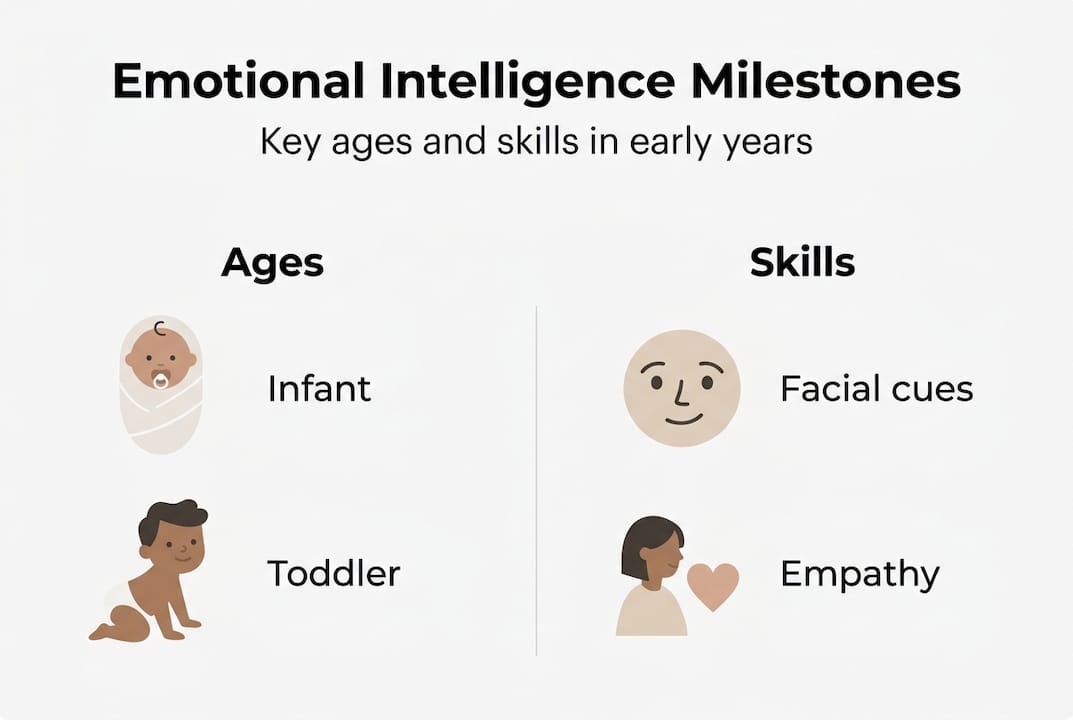
- Infancy (0 to 12 months): Babies recognize emotional expressions on faces, respond to tone of voice, and signal distress through crying. They are already reading the emotional room.
- Toddlerhood (12 to 36 months): Children begin labeling basic emotions like happy, sad, and mad. They seek comfort from caregivers and start to show early empathy, such as patting a crying friend.
- Preschool age (3 to 5 years): Children use words to express feelings, begin to regulate reactions with support, show genuine empathy, and start learning to handle winning and losing with more grace.
| Age range | Typical EI milestone | What to watch for |
|---|---|---|
| 0 to 12 months | Responds to facial expressions | Limited eye contact or social response |
| 12 to 36 months | Labels basic emotions, seeks comfort | Frequent extreme tantrums, no emotion words |
| 3 to 5 years | Uses words, shows empathy | Persistent aggression, difficulty with peers |
Toddlers transition from tantrums to words, preschoolers begin showing empathy, and milestone gaps may indicate a need for additional support. If your child seems significantly behind on several of these markers, it is worth discussing with a pediatrician or early educator.
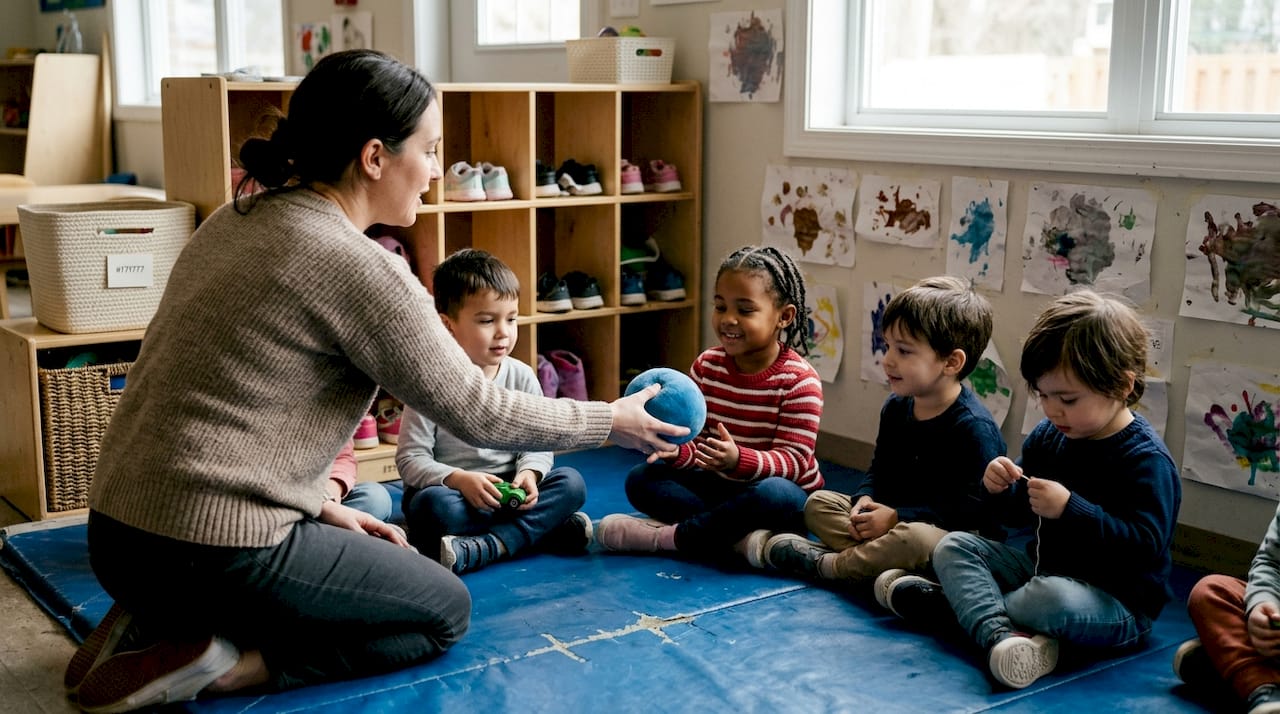
Building social and emotional skills in preschool is most effective inside a safe preschool environment where children feel secure enough to take emotional risks.
Pro Tip: Focus on progress, not perfection. Every child develops EI at their own pace. Celebrating small wins, like using a feeling word instead of hitting, matters far more than expecting flawless emotional control.
How emotional intelligence shapes learning, behavior, and long-term outcomes
With milestones clear, let's look at the evidence for why EI matters for your child's success. The research is consistent and compelling. Children with high EI show better academic performance, fewer behavioral issues, and stronger engagement over time. This is not just about being kind. It is about being ready to learn.
Here is what strong EI looks like in practice:
- Problem-solving: Children who manage emotions can pause and think before reacting
- Conflict resolution: They use words and negotiation instead of aggression
- Resilience: They recover from setbacks faster and stay motivated longer
- Classroom engagement: They listen better, cooperate in groups, and form stronger bonds with teachers
Social-emotional learning, known as SEL, refers to structured programs that teach EI skills in school settings. SEL programs boost outcomes with large effect sizes (r greater than 0.5), meaning the impact is not small or theoretical. It is measurable and meaningful.
"Children who learn to manage their emotions early are better equipped to handle academic pressure, peer conflict, and life's inevitable disappointments."
This is why routine and structure in preschool play such a powerful role. Predictable environments help children regulate emotions because they know what to expect. Similarly, play-based learning gives children the safe space to practice empathy, negotiation, and frustration tolerance naturally, without formal instruction.
Supporting emotional intelligence at home: Strategies for parents and guardians
With evidence in hand, the next step is for parents to put these insights into everyday practice. You do not need a psychology degree to nurture EI. You need consistency, awareness, and a few practical tools.
- Model your own emotions: Name what you feel out loud. "I'm feeling frustrated right now, so I'm going to take a deep breath." Children learn by watching you.
- Validate feelings before fixing problems: Before jumping to solutions, acknowledge what your child feels. "It makes sense you're upset. That was really hard."
- Use emotion charts and books: Visual tools and stories help young children build an emotion vocabulary faster than conversation alone.
- Create a calming space: A cozy corner with soft items and quiet activities gives children a physical place to regulate emotions.
- Play empathy games: Role-play scenarios, puppets, and cooperative play help children practice perspective-taking in low-stakes situations.
Authoritative parenting, emotion vocabulary, and play-based empathy consistently support EI growth. Authoritative parenting means being warm and responsive while also setting clear, consistent limits.
Watch for these warning signs that your child may need extra support:
- Frequent intense meltdowns that do not improve with age
- Difficulty making or keeping friends
- Extreme sensitivity to criticism or change
- Aggressive responses to minor frustrations
Pro Tip: For highly reactive children, parental sensitivity and mind-mindedness are especially important. Mind-mindedness means treating your child as a person with their own thoughts and feelings, not just behaviors to manage. This approach is particularly powerful for children who feel emotions intensely.
The teachers' role in childhood development is a natural extension of what you do at home. When you know what to look for in a quality preschool program, you can choose settings that reinforce the EI work you are already doing.
EI challenges: Adversity, trauma, and special considerations
Even with all the right intentions, challenges can complicate EI development. Some children face circumstances that make emotional growth harder, and it is important to name them honestly.
Common risk factors include:
- Exposure to adversity or trauma, including family conflict, loss, or instability
- Authoritarian parenting styles that dismiss or punish emotional expression
- High-reactivity temperament, where children feel emotions more intensely than peers
- Preterm birth, which can affect early neurological and emotional development
Adversity, trauma, and poor EI are linked to anxiety, depression, and school difficulties. Children who are anger-prone or born preterm benefit especially from tailored, sensitive parenting approaches.
"Responsive support does not erase adversity, but it changes how the brain learns to cope with it."
If your child has experienced significant stress or trauma, the most important thing you can do is maintain predictability, warmth, and emotional availability. You do not need to have all the answers. Being present and regulated yourself is often the most powerful intervention.
Know when to reach out. If challenges persist despite your best efforts, early intervention from a specialist can make a significant difference. The expert parenting resources available through early childhood educators can help you identify the right next steps for your specific situation.
A fresh perspective: Why emotional intelligence deserves equal focus with academics
Stepping back, let's consider why emotional intelligence deserves attention alongside reading and math. Most parents naturally prioritize academics because grades are visible and measurable. EI is quieter. It shows up in how a child handles losing a game, comforts a friend, or recovers after a hard day. Those moments are easy to overlook.
Here is what we have seen: children who enter kindergarten with strong EI tend to adapt faster, build better peer relationships, and engage more deeply with learning. Yet emotional support can be less consistent than instructional support in many settings, even though it is just as vital.
Do not wait for a problem to start paying attention to EI. It is not a remedial concern. It is foundational. The child who can name their feelings, ask for help, and recover from frustration is not just emotionally healthy. They are academically ready. That is exactly what kindergarten preparation looks like when done well.
How Martlet Academy helps build emotional intelligence
If you want your child to develop both head and heart, here is how Martlet can help.
At Martlet Academy, emotional intelligence is not an add-on. It is woven into every program from day one. Our Infant Program creates secure attachments through responsive, sensitive care. Our Toddler Program uses emotion labeling and play to help children find words for big feelings. In our Preschool Program, children practice empathy, cooperation, and self-regulation through structured play and daily routines. Our Kinder Prep Program ensures children arrive at kindergarten not just ready to read, but ready to connect, communicate, and thrive. We would love to show you how we do it.
Frequently asked questions
How does emotional intelligence affect my child's school performance?
EI predicts long-term academic and social outcomes more strongly than IQ, supporting better classroom behavior, peer relationships, and engagement from preschool onward.
What are early signs of emotional intelligence in young children?
Toddlers using words instead of tantrums and preschoolers showing care for upset friends are clear early signs that EI is developing on track.
Can parents teach emotional intelligence at home?
Yes. Parents can foster EI through consistent emotion modeling, validating feelings, using emotion vocabulary tools, and creating calm, supportive routines at home.
What challenges could affect a child's emotional intelligence?
Adversity and trauma disrupt EI development, and children with high-reactivity temperaments need especially sensitive, responsive parenting to build strong emotional skills.
When should I seek professional help for my child's emotional intelligence challenges?
If your child shows persistent emotional or social difficulties despite consistent support at home and in school, consulting a pediatrician, child psychologist, or early childhood specialist is a smart and caring next step.