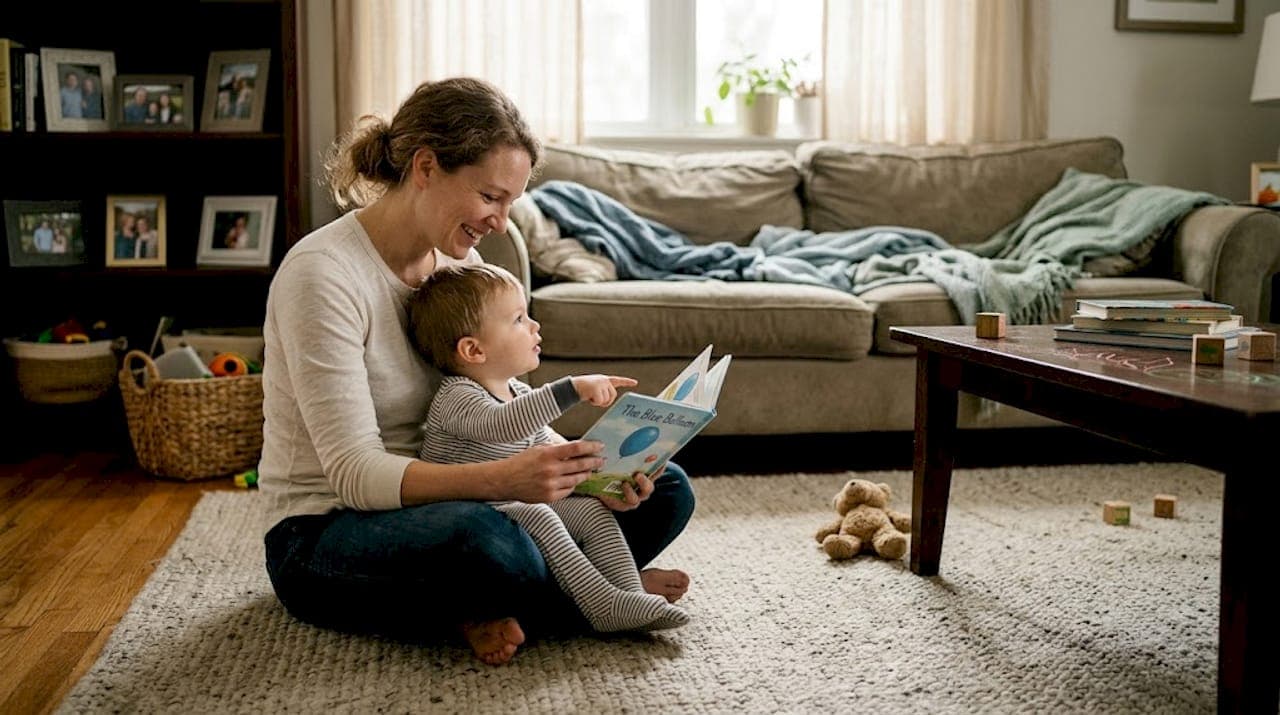
Reading success doesn't begin with flashcards or workbooks. It begins in the everyday moments you share with your child, from the songs you hum during bath time to the stories you tell before bed. Many parents feel overwhelmed trying to figure out which activities actually move the needle. The good news is that reading success grows from four key areas: oral language, phonological awareness, print awareness, and alphabet knowledge. Once you understand these four cornerstones, everything else clicks into place. This article walks you through practical, research-backed strategies that fit real family life and support your child's emotional and developmental needs at every stage.
Table of Contents
- Understand the four foundations of early literacy
- Read aloud daily—even from infancy
- Customize literacy activities for every child
- Spot and support early signs of reading difficulty
- Why playful, flexible literacy support works best
- Unlock even more literacy support with expert programs
- Frequently asked questions
Key Takeaways
| Point | Details |
|---|---|
| Four essential skills | Build oral language, phonological awareness, print awareness, and alphabet knowledge for reading success. |
| Start early, read often | Reading aloud from birth boosts your child’s brain and vocabulary development. |
| Customize support | Adapt literacy strategies to your child’s age, needs, and language background for best results. |
| Watch for warning signs | Spot early literacy risk factors and seek screening if concerns arise. |
| Playful routines matter | Fun, flexible learning helps children thrive and stay engaged as young readers. |
Understand the four foundations of early literacy
Before you can support your child's literacy journey, it helps to know what you're actually building. Oral language, phonological awareness, print awareness, and alphabet knowledge are the four streams that underpin literacy readiness. Think of them as four legs of a table. Remove one, and the whole thing wobbles.
Here's what each one means in plain terms:
- Oral language is your child's ability to understand and use spoken words. A rich vocabulary matters enormously. Children who enter kindergarten with a strong command of spoken language tend to become stronger readers because they already know what words mean when they encounter them in print.
- Phonological awareness is the ability to hear and play with the sounds in language. This includes recognizing rhymes, clapping syllables, and eventually breaking words into individual sounds. It's entirely about listening and speaking, not reading.
- Print awareness is understanding that printed text carries meaning, that books have a front and back, and that we read left to right. Even babies develop this when they see you point to words as you read.
- Alphabet knowledge is recognizing letter shapes and understanding that each letter represents a sound. This is the bridge between spoken and written language.
Vocabulary size matters more than most parents realize. Children who arrive at kindergarten with a broad spoken vocabulary are far better positioned to decode new words and understand what they read. Supporting these lifelong learning foundations early gives your child a genuine head start.
The most effective way to build all four skills is through daily play and conversation. Sing rhyming songs, narrate what you're doing around the house, point to labels on cereal boxes, and let your child handle books freely. Research consistently shows that how children learn best is through joyful, low-pressure exploration rather than formal instruction.
Pro Tip: You don't need a dedicated "literacy time." Weave these skills into moments you already have, like grocery shopping, cooking, or car rides. Ask your child what sound "banana" starts with, or challenge them to find a word that rhymes with "cat."
Read aloud daily—even from infancy
If there is one habit that research returns to again and again, it's reading aloud. Reading aloud from infancy, even prenatally, significantly boosts cognitive stimulation and vocabulary growth. The earlier you start, the more you're shaping the brain's language architecture.
Here's a quick look at how the benefits shift as your child grows:
| Age group | Cognitive benefit | Emotional benefit |
|---|---|---|
| Prenatal to 6 months | Brain exposure to language rhythm and tone | Bonding through your voice |
| 6 to 18 months | Vocabulary input, sound pattern recognition | Comfort and security |
| 18 months to 3 years | Narrative understanding, word explosion | Emotional vocabulary, empathy |
| 3 to 5 years | Story comprehension, print awareness | Confidence, imagination |
The shared reading outcomes research confirms that consistent read-aloud routines across these stages produce measurable gains in language and school readiness.
For busy families, consistency matters more than duration. Even ten minutes a day adds up. Here are routines that actually work:
- Bedtime reading is the easiest habit to anchor because it's already a transition your child expects.
- Morning board books for babies and toddlers set a calm, language-rich tone before the day begins.
- Re-reading favorites is not wasted time. Repetition deepens comprehension and builds confidence.
- Talking about pictures before reading the words activates prediction skills and keeps children engaged.
- Letting your child turn pages gives them physical ownership of the experience.
The role of teachers in modeling expressive read-alouds is well documented, but you don't need training to do this at home. Use different voices for characters, pause to ask "what do you think happens next?", and never rush to finish the book.
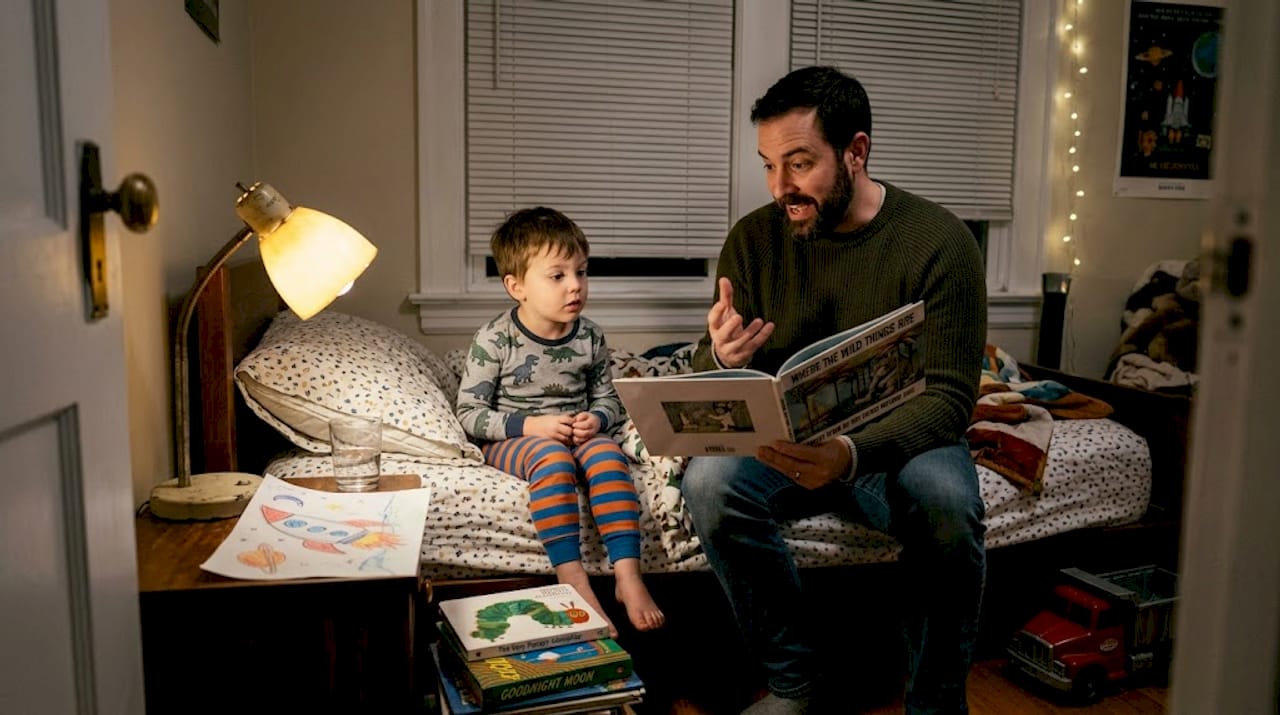
Pro Tip: When your child is anxious about a transition like starting preschool or a new sibling arriving, choose books about that exact topic. Reading about a feeling normalizes it and opens up conversation in a low-pressure way. This is also a key part of kindergarten readiness.
Customize literacy activities for every child
Not every child arrives at literacy through the same door. Infants in the NICU, multilingual learners, toddlers with speech delays, and children from low-income households all have different starting points. The good news is that the research is clear: adapting your approach works far better than a one-size-fits-all strategy.
Shared reading in the NICU aids developmental outcomes, and children from multilingual or low-income households benefit most when families use their native language rather than switching exclusively to English.
Here's a comparison of how to tailor literacy support by context:
| Child's context | Recommended approach | What to avoid |
|---|---|---|
| Infants and preemies | Soft narration, skin-to-skin reading, short sessions | Overstimulation, loud or fast-paced books |
| Toddlers (18 months to 3 years) | Interactive books, naming games, repetition | Passive screen time replacing conversation |
| Bilingual or multilingual | Read in home language AND English | English-only approach that ignores home language |
| At-risk or delayed readers | More frequent one-on-one read-alouds, oral storytelling | Waiting too long before seeking specialist support |
For multilingual families especially, the evidence is reassuring. Home language literacy supports English acquisition, and the myths about bilingual confusion are simply not supported by research.
"Children who develop strong literacy skills in their home language transfer those skills to English more effectively than children who are pushed into English-only environments too early. Bilingualism is an asset, not a barrier."
Key do's and don'ts for multilingual and special-needs contexts:
- Do read in your strongest language so your child hears fluent, expressive speech.
- Do celebrate both languages as equally valuable.
- Don't stop using your home language out of fear it will slow English development.
- Don't compare your child's timeline to monolingual peers.
A nurturing environment and small class sizes also make a measurable difference when children need individualized attention.
Spot and support early signs of reading difficulty
Early identification changes outcomes. Preschool risk factors for dyslexia include slow word recall, limited vocabulary, and difficulty with rhymes. By kindergarten, children should typically recognize 10 to 15 uppercase letters and respond to simple rhyming tasks.
Comprehensive kindergarten screening helps identify persistent, resolving, and late-emerging dyslexia, so families can partner effectively with educators before small gaps become big ones.
Common risk factors to watch for:
- A family history of reading or spelling difficulties
- Delayed speech or language development before age three
- Trouble learning nursery rhymes or recognizing rhyming words
- Difficulty remembering the names of familiar people or objects
- Slow progress in learning letter names despite regular exposure
If you notice several of these signs, here's a practical step-by-step plan:
- Document what you observe. Keep brief notes on specific moments, like "couldn't recall the word 'cup' three times this week," rather than general impressions.
- Talk to your child's teacher or caregiver. Share your notes and ask if they've noticed similar patterns in structured activities.
- Request a formal screening. Most early childhood programs and school districts offer developmental screenings at no cost.
- Connect with a specialist. A speech-language pathologist or literacy specialist can assess phonological awareness and recommend targeted support.
- Keep reading aloud. Even during assessment and intervention, daily read-alouds remain one of the most powerful tools you have.
Advocating for your child works best when you approach it as a partnership. Building social and emotional skills alongside literacy matters too, since children who feel secure and confident take more risks with language. Consistent routines and structure also reduce anxiety, which frees up cognitive space for learning.
Why playful, flexible literacy support works best
Here's something the parenting content world doesn't say often enough: rigid literacy programs can actually get in the way. When the focus shifts to completing a curriculum or hitting a checklist, the emotional context of learning gets lost. And for young children, emotional safety is not a nice bonus. It's the prerequisite.
Pathways to literacy vary widely, and multi-skill, play-based approaches reach more children than rigid methods. Some children crack the code through songs. Others do it through pretend play with puppets. Some need to physically trace letters in sand before they make sense on a page.
At Martlet Academy, we've seen this play out in real classrooms. The children who thrive are rarely the ones who were drilled earliest. They're the ones whose curiosity was protected. When a child feels free to explore a book without being corrected, or to make up a story without being redirected, they build the intrinsic motivation that sustains reading for life.
Pro Tip: Let your child choose the book, even if you've read it forty times. Let them "read" it back to you from memory. That act of retelling is genuine literacy work, and it feels like play.
Flexibility also means adjusting your expectations. Some weeks will be rich with story time. Others will be survival mode. Both are fine. The play-based learning perspective reminds us that learning happens in relationship, not in worksheets.
Unlock even more literacy support with expert programs
You're already doing something powerful by seeking out strategies that work. The tips in this article are grounded in real research and real child development, and they're most effective when they're part of a consistent, supportive environment every single day.
At Martlet Academy, our infant program, preschool program, and kinder prep program are built around exactly these principles. Our educators use play-based, relationship-driven approaches to nurture early literacy in a calm, emotionally safe setting. Every child gets the individualized attention and language-rich environment that research shows makes the biggest difference. We'd love to be part of your child's story.
Frequently asked questions
What is the most important early literacy skill?
The most important early literacy skill is a strong oral vocabulary, as it forms the foundation for later reading comprehension. Children who enter kindergarten with over 5,000 words in their spoken vocabulary are significantly better prepared to read and understand text.
At what age should you start reading to your baby?
You can start reading aloud prenatally or from birth to boost your baby's brain and language development. Reading aloud prenatally and in infancy improves both cognitive and vocabulary outcomes over time.
How do I help my bilingual child with early literacy?
Support your child's development in both your home language and English, since this strengthens overall literacy and does not cause confusion. Biliteracy in the home language actually enhances English literacy acquisition with no evidence of developmental harm.
What are warning signs of reading problems in preschoolers?
Watch for slow word recall, trouble with rhymes, and not recognizing 10 to 15 uppercase letters by kindergarten, and consider requesting a screening. Preschool risks including slow naming and limited vocabulary are well-documented early indicators of dyslexia.
Recommended
- The Role of Teachers in Early Childhood Development — Martlet Academy
- Blog — Martlet Academy
- Why Early Childhood Education Shapes Lifelong Learning — Martlet Academy
- Creating a Safe and Nurturing Preschool Learning Environment — Martlet Academy
- Pre-schooler parenting tips: practical advice for Ilford families